Learning from Cybercriminals: Using Public Tools for Threat Intelligence

Effective cyber threat intelligence is largely about gaining proper context around the risks facing your organization. As SurfWatch Labs chief security strategist Adam Meyer recently wrote, there are three pillars when it comes to evaluating those cyber threats: capability, intent and opportunity.
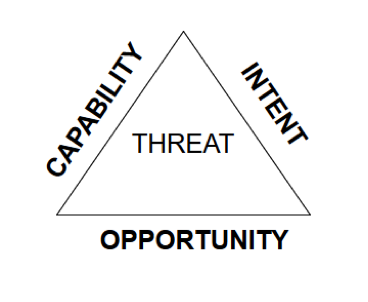
Threat_Triangle.pngThe first two, the capability and intent of threat actors, are mostly external aspects that you have no control over, but the third pillar, the opportunity for actors to exploit your organization, is something that can be controlled, evaluated and improved upon.

Malicious actors are relentless when it comes to finding information on that opportunity, and organizations need to use that same relentlessness when searching for potential weaknesses in their cybersecurity, according to a recent report from SurfWatch Labs.

“Knowing where attackers get their information and how they use it is an important piece of your overall cybersecurity strategy,” noted the paper, Top Sources of Information for Cyber Criminals: Where the Bad Guys Go to Conduct Research on Their Targets.

Over the past few months on this blog, we’ve profiled some of the top cyber threats and items for sale on various dark web marketplaces, but not all malicious activity occurs on this “underground web.” Much of it can be found wide out in the open — using simple tools and services that are available to anyone. Here are the top three public websites and tools used by malicious actors, as described in the paper, and how they can help those actors find the opportunity to attack your organization.

1. Shodan

Shodan was originally launched in 2009 by developer John Matherly and bills itself as “the world’s first search engine for Internet-connected devices.” This simple idea has grown from a basic list of IPs and ports to maps showing where devices are located to screenshots taken from these devices (including webcams, unsecured servers and workstations). The original focus for Matherly’s scans was to highlight the growing problem of the “Internet of Things,” but his research also uncovered industrial control systems, wide open computer systems, unsecured security cameras and more.
shodan

Researchers using Shodan frequently find publicly-exposed data that leads to breach notifications. Just one example is MacKeeper security researcher Chris Vickery discovering personal information from child tracking platform uKnowKids earlier this year.

“One of the uKnowKids databases was configured for public access, requiring no level of authentication or password and providing no protection at all for this data,” Vickery wrote. “There’s no way for me to know for sure how long this data was exposed to the public internet, although the information collected by Shodan.io suggests that the database had been up for at least 48 days.”

uKnowKids CEO Steve Woda reacted by describing Vickery as a hacker whose method “puts customer data and intellectual property at risk.” However, malicious actors can just as easily utilize Shodan to find opportunity for attacks.

As SurfWatch Labs’ paper summarized: “If it’s online, Shodan will find it. The lesson to be learned from this site, without a doubt, is secure something before it goes online.”

2. VirusTotal

VirusTotal describes itself as “a free service that analyzes suspicious files and URLs and facilitates the quick detection of viruses, worms, trojans, and all kinds of malware.” But that simple tagline masks a deeper set of capabilities.
vius-total

Security researchers have previously suspected that malicious actors use VirusTotal as a tool to help test and hone malware before sending it out in the wild, and in 2014 researcher Brandon Dixon confirmed those suspicions by discovering several hacking groups using the tool, including two nation-state groups.

Dixon said nation-state actors using a free online service to fine-tune their attacks was ironic and unexpected, but that speaks to the usefulness of VirusTotal.

“The power behind VirusTotal is how it adds and saves the metadata and behaviors of the files it analyzes,” noted SurfWatch Labs’ paper. “You can use the domain search to look at the IP history of the domain and get the current WHOIS for the domain, but VirusTotal will also show you a list of every time it detected something malicious on the site, as well as list all of the samples that attempted to communicate with the searched for domain.”

In addition to organizations using VirusTotal to help identify if they’ve been previously targeted, VirusTotal should be seen as a baseline site that can be used for detecting and analyzing suspicious and malicious files.

3. Your Own Company Website

The best way to get information about a particular company is often directly from the source: your own company website. Company websites can provide a treasure trove of information that can be leveraged by attackers to target a specific organization. This includes names of VIPs, email addresses of company executives and other employees, photographs, links to LinkedIn profiles and other social media, and more.

But beyond the surface level, there may be even more valuable information, as the paper explained:

Are you hosting any PDFs for people to download? Word documents, or PowerPoint presentations? Did you remember to remove potential metadata from those documents that could potentially contain additional names, email addresses, usernames, or software versions of the program used to create it? Some pretty simple Google searches (just type “site:yourpublicsite.com filetype:pdf” into the google search box) can reveal much more information that you may not have been aware you were “leaking.”

These types of leaks can lead to costly data breaches.
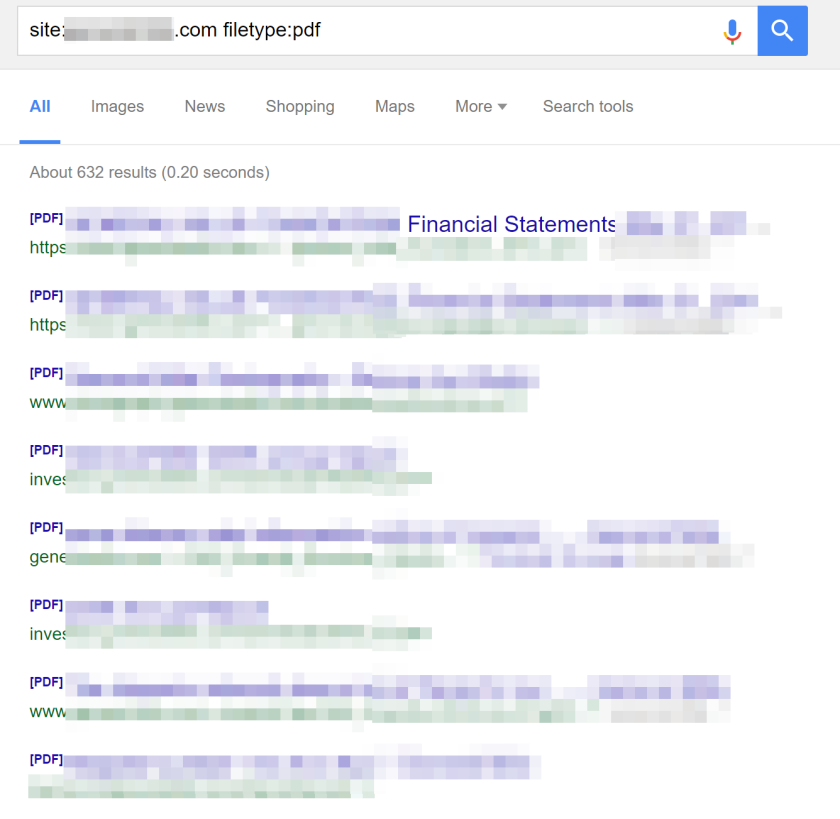
public

Free tools and services such as the ones described above provide malicious actors with valuable insight into the opportunity for cyber-attacks, and they are certainly one of the first places those actors turn to gather information on your organization. To make matters worse, all of this information can be discovered with minimal effort or expertise.

The good news is that those same tools can be used to gather cyber threat intelligence and to ensure that you are performing the same level of diligence as the threat actors who are trying to harm your organization.

Download SurfWatch Labs Top Sources of Information for Cyber Criminals: Where the Bad Guys Go to Conduct Research on Their Targets for more information.

Weekly Cyber Risk Roundup: Yahoo One of Many New Data Breaches

2016-09-23-riskscores

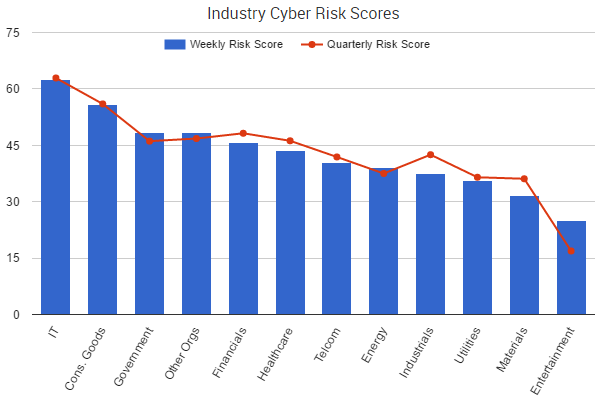
The past week has been full of various data breach announcements that have flown mostly under the radar. One exception is the breach at the World Anti-Doping Agency (WADA). New batches of information on Olympic athletes continue to be leaked, and the Entertainment sector’s cyber risk score has steadily risen to reflect those leaks. Another exception, and one of the biggest data breach stories of the year, is Thursday’s announcement from Yahoo that 500 million users had their information stolen in late 2014 by alleged state-sponsored hackers.

The theft includes names, email addresses, phone numbers, dates of birth, hashed passwords and, in some cases, encrypted or unencrypted security questions and answers.

The New York Times described the Yahoo breach as “the biggest known intrusion of one company’s computer network.” U.S. Sen. Richard Blumenthal said that if claims that Yahoo knew about the breach since August are true, taking two months to inform users is “a blatant betrayal of their users’ trust.” Sen. Mark Warner is using the incident to push for the adoption of a uniform data breach notification standard.

The Yahoo breach is just the latest example of years-old breaches that have come to light in recent months and affected tens or, in Yahoo’s case, hundreds of millions of individuals. The already massive list of potentially exposed passwords continues to grow, making good password hygiene more important than ever. But the Yahoo breach highlights another nagging problem: the use of static, knowledge-based authentication questions.

From Yahoo’s announcement:

“We invalidated unencrypted security questions and answers so they cannot be used to access an account. … Change your password and security questions and answers for any other accounts on which you used the same or similar information used for your Yahoo account.”

Except unlike passwords, static-based questions cannot be changed. How do you change your mother’s maiden name, your favorite teacher, or the name of your first pet? Fake answers can be used – and they are more secure – but what percentage of people will actually take that extra step?

A February survey from password manager LastPass indicates the majority of people are still reusing passwords. Fifty-nine percent of respondents said they reuse passwords across multiple services and 61% said they are more likely to share work passwords than personal passwords.

Organizations need to be aware of recent credential breaches, inform and train users about the threat, and ensure that password policies and procedures reflect the current level of risk surrounding compromised credentials.

What’s Everyone Talking About? Trending Cybercrime Events

2016-09-23-groups

In addition to the highly-publicized data breaches from Yahoo and WADA, many other companies made data breach announcements over the past week.

Some of those apparent breaches are sparse on details – such as the FBI seizing computers at Camden County Courthouse in Missouri or office supplies firm AF Smith taking its Apple website offline after fears of a payment card breach – however, many of this week’s announcements showcased the various ways in which data breach can occur.

Data breaches were caused by:

  • Unauthorized access: Codman Square Health Center is notifying patients of a data breach after an unauthorized individual accessed information through the New England Healthcare Exchange Network. Mobile review site MoDaCo said a data breach of 875,000 accounts likely occurred by way of a compromised administrator account. A Florida man has been arrested on charges of hacking into computers operated by the Linux Kernel Organization and the Linux Foundation using compromised credentials. A Kennesaw State University student used a professor’s account to hack into the school’s system to change grades and steal personal information. Police also discovered the usernames and passwords of at least 36 faculty members in a notebook in his home. The Pokemon battle simulator Pokemon Showdown was breached and the hacker was able to steal a database dump by compromising administrator’s credentials via social engineering and then using a privilege escalation vulnerability.
  • Improper court filings: WakeMed Health and Hospitals has been ordered by a federal judge to notify thousands of patients that their personal and medical information was disclosed in court filings over a six-year period.  Most of WakeMed’s bankruptcy claims were filed by now-retired employee Valeria Soles. In court testimony, Soles said she had no training and no supervision with regard to filing claims and that no one else in her department knew how to file bankruptcy claims.
  • Missing devices: The University of Ottawa is investigating the disappearance of an external hard drive containing the personal information of approximately 900 students. According to CBC News, the hard drive was used to back up personal information on students with physical or learning disabilities or mental health issues that applied for special academic accommodations.
  • Employee error: The recent leak of NSA hacking tools by a group known as Shadow Brokers is suspected to have originated with an employee or contractor who made the mistake three years ago. The theory is that tools were left on a remote computer during an operation and that Russian hackers eventually found them.
  • Third parties: A data breach at the payroll service used by Oconee County, South Carolina, led to 230 county employees not receiving their scheduled direct deposits. The investigation is ongoing and the source of the breach is currently unknown.
  • Cybercriminal hackers: Hackers claim to have stolen a database from Australian point-of-sale vendor H&L Australia, and the alleged 14.1 gigabytes of data along with an active backdoor to the company’s network was apparently offered for sale more than two months ago.

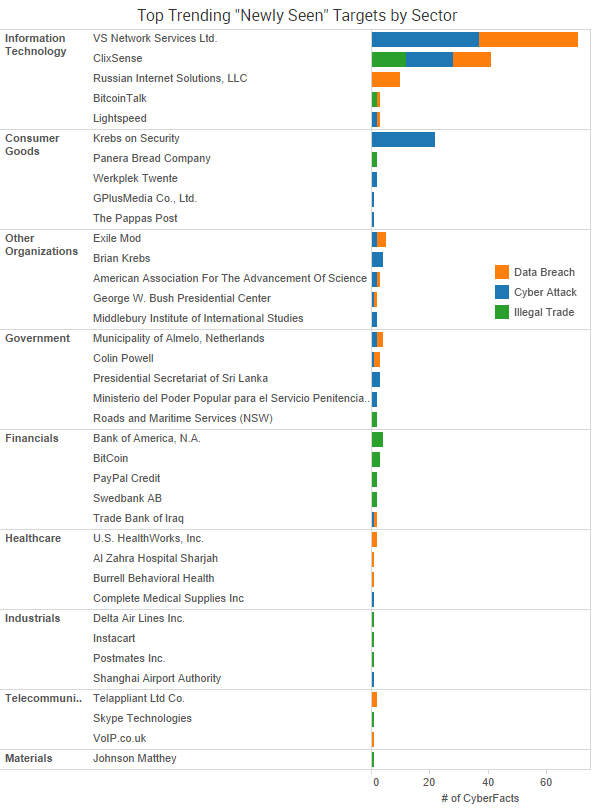
In addition to the data breaches listed above, SurfWatch Labs also collected data on many different companies tied to cyber-attacks and illegal trading over the past week. Some of those newly seen targets are shown in the chart below.

2016-09-23-ittnew

Closing the C-Suite Knowledge Gap with Cyber Threat Intelligence

I spend my work days digging through SurfWatch Labs’ cybercrime data and writing blogs and reports on the latest cyber threat intelligence trends, so it should come as no surprise that among my friends and family, I’ve become the “cybersecurity guy.”

In fact, many of those same people in my personal life would be happy to shove everything “cyber” in a box and put it far out of sight to never deal with again. Because of this, I’m not shocked when I read the latest studies about those in the C-suite having that same attitude — such as 90 percent of corporate executives saying they cannot read a cybersecurity report.

I have a confession to make myself: I’m not much of a technical IT guy either.

I view myself as more of a business analyst, and through that lens, the separation of cyber risk and business risk doesn’t make much sense. My sister getting Craigslist messages trying to dupe her out of money is no different than the scammers on the street pitching their elaborate stories in person. Likewise, a competitor stealing employee credentials in order to access valuable intellectual property isn’t much different than the paper-driven corporate espionage that existed before the Internet.

It’s the same risk, just in a different medium. If anything, the main difference is in volume. Actors halfway across the globe can target your organization, and expanding digital supply chains means there is a growing number of attack vectors and an ever-changing list of exploits that can be used to steal that information.

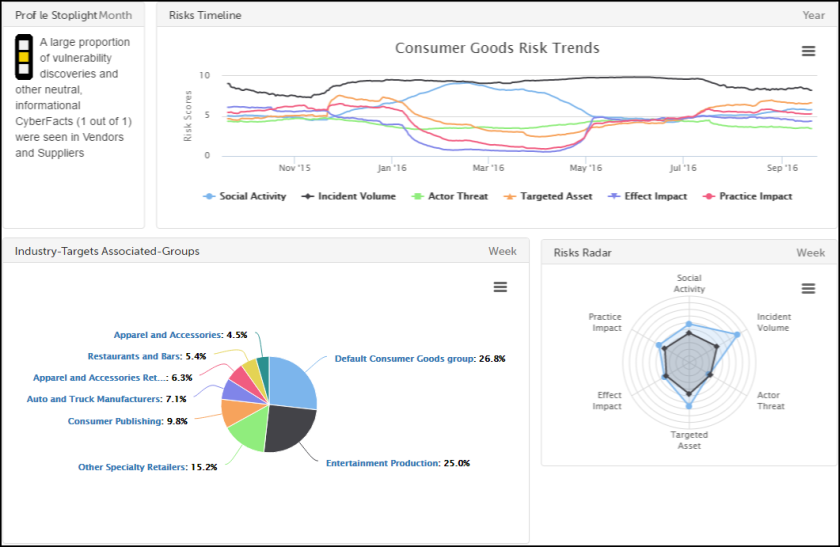
You may not be an expert on a specific threat or a risk out of the box, but that’s where cyber threat intelligence can help. With the right intelligence you can make more informed decisions that can dramatically improve your cybersecurity and resiliency.

screenshot-1474406400130
Dashboard of Consumer Goods risk from SurfWatch Threat Analyst

I’m reminded of a famous quote attributed to Socrates: “The only true wisdom is in knowing you know nothing.” Cyber threat intelligence is the wisdom that although individually we may know nothing, collectively we have great knowledge that can be leveraged.

Much has been written about cybercrime-as-a-service model and the way that malicious actors leverage past successes and individual expertise to create more effective tools and tactics. Cyber threat intelligence is about having that same effective and coordinated approach to risk management that the bad actors have when it comes to trying to exploit cyber risk.

The cybersecurity conversation has come a long way over the past few years, but what’s still missing from many organizations is that coordinated approach to cybersecurity — one that begins at the board of directors and goes down to the newest employee. As we previously noted, a proactive strategy backed by an engaged C-suite and board of directors has been shown to reduce the growth of cyber-attacks and data breaches.

It’s easy to berate the clueless executive, but I try to imagine them with the same level of knowledge that I once had — before I first picked up the phone, began interviewing cybersecurity experts, and had all of this cyber threat data at my fingertips.

We don’t all have to be experts. There are plenty of experts out there already. What those organizations need is a way to harness that collective knowledge, to compare that external data against their own internal intelligence, and to have that cyber threat information presented in an ongoing, easy-to-understand manner.

When customers ask our analysts about new threats or use our threat intelligence to improve their organization’s cybersecurity, we’re all working together to better defend against malicious actors by focusing resources on the threats that directly impact each organization. That collaboration and sharing of knowledge is what cyber threat intelligence is all about.

Weekly Cyber Risk Roundup: Ransomware Ups the Ante and Other Headlines

2016-09-16-ITT.png

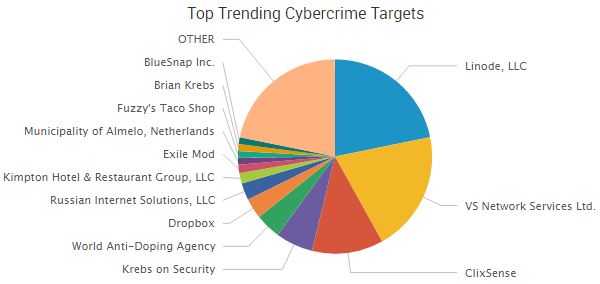
Three of this week’s top four trending industry targets centered around DDoS attacks. Linode, which made last week’s roundup over reported DDoS attacks, was targeted once again. The cloud hosting company has seen DDoS attacks throughout the month, with the latest attack coming on September 13, according to company logs. Additionally, Brian Krebs’ website was hit with DDoS attacks after his reporting on the booter service VDoS led to the arrest of two young Israeli men who allegedly ran the cybercrime-as-a-service operation.

Trending new data breaches and cyber-attacks recently observed in SurfWatch Labs’ data are shown below.

2016-09-16-ittnew

Noteworthy cybercrime events from the past week include:

    • Variety of New Breaches Reported: Dutch news sources are reporting that hackers have stolen 22 gigabytes of data from municipal servers in Almelo, though at the moment it is unclear what data may have been compromised. London-based VoIP Talk is emailing customers about a potential breach after discovering “attempts to exploit vulnerabilities in our infrastructure to obtain customer data.” The paid-to-click site ClixSense suffered a data breach in which a hacker exposed 2.2 million subscriber identities and put another 4.4 million up for sale. The Exile Mod gaming forum website was hacked and the personal details of nearly 12,000 users was posted online by a group going by the name “Expl.oit.” EurekAlert!, which is used to distribute scientific press releases, temporarily shut down their website after a breach compromised usernames and passwords and two embargoed news releases were prematurely released. The personal information of 29 Olympic athletes has been stolen from the World Anti-Doping Administration. Finally, a data breach at Regpack, an online enrollment platform serving the private education industry, has led to 324,000 people having personal information exposed.
    • More Extortion Attacks: A hacker attempted to extort Bremerton Housing Authority in Washington for 6 bitcoins (around $3,700) after gaining access to its website and stealing a database of 1,100 client names and the last four digits of Social Security numbers. University Gastroenterology in Rhode Island is notifying patients of a data breach after what sounds like a ransomware attack. In its notification letter, it wrote that an unauthorized individual had gained access to an electronic file storage system from  Consultants in Gastroenterology, which it acquired in 2014, and “encrypted several files.”
    • Political Parties Continue to be Targeted: State Democratic Party officials are being breached and impersonated by hackers, according to a warning from the Association of State Democratic Chairs. The message urged recipients to avoid searching the leaked DNC information posted by WikiLeaks due to concerns over malware being embedded in the links. Additionally, a “serious misconfiguration” on Donald Trump’s website exposed the resumes of prospective interns, according to security researcher Chris Vickery.
    • Stolen Laptops Continue: M Holdings Securities, a subsidiary of M Financial Holdings, had a password-protected laptop with information on 20,000 clients stolen from the trunk of an employee’s car on July 29. Roughly 2,000 of those clients had Social Security numbers potentially compromised. U.S. Healthworks began notifying 1,400 patients of a data breach earlier this month after a laptop and the laptop’s password were stolen from an employee.

Other Noteable Cyber Risk News

2016-09-16-RiskScores.png

This week saw little movement among most sectors’ overall cyber risk scores. Other Organizations – which includes groups such as political parties, schools, and charities – saw the week’s biggest rise in risk, up 1.6%.

Ransomware was at the forefront of much of the week’s cybercrime news. CBC News reported that a school board and a support group for cancer patients, both in Canada, were infected with the Zepto ransomware, and the actor behind the attack demanded $20,000 in payment to decrypt the files. Those high prices may become more commonplace, the FBI warned in an alert published on Thursday. Recent ransomware variants have been seen targeting vulnerable business servers rather than individual users, and the actors behind these targeted attacks have been upping their ransom demands as the data they encrypt grows more valuable.

“This recent technique of targeting host servers and systems could translate into victims paying more to get their decryption keys, a prolonged recovery time, and the possibility that victims will not obtain full decryption of their files,” the alert warns. “Recent victims who have been infected with these types of ransomware variants have not been provided the decryption keys for all their files after paying the ransom, and some have been extorted for even more money after payment.”

The FBI isn’t the only government agency warning of the threat. In July, the Department of Health and Human Service stated that PHI being encrypted by ransomware qualifies as a “breach” in most circumstances, and FTC chairwoman Edith Ramirez warned this week that “a company’s unreasonable failure to patch vulnerabilities known to be exploited by ransomware might violate the FTC Act.”

It’s worth taking a moment to review this week’s advice on combatting ransomware from the FBI alert:

  • Regularly back up data and verify the integrity of those backups. Backups are critical in ransomware incidents; if you are infected, backups may be the best way to recover your critical data.
  • Secure your backups. Ensure backups are not connected to the computers and networks they are backing up. Examples might include securing backups in the cloud or physically storing them offline. It should be noted, some instances of ransomware have the capability to lock cloud-based backups when systems continuously back up in real-time, also known as persistent synchronization.
  • Scrutinize links contained in e-mails and do not open attachments included in unsolicited e-mails.
  • Only download software – especially free software – from sites you know and trust. When possible, verify the integrity of the software through a digital signature prior to execution.
  • Ensure application patches for the operating system, software, and firmware are up to date, including Adobe Flash, Java, Web browsers, etc.
  • Ensure anti-virus and anti-malware solutions are set to automatically update and regular scans are conducted.
  • Disable macro scripts from files transmitted via e-mail. Consider using Office Viewer software to open Microsoft Office files transmitted via e-mail instead of full Office Suite applications.
  • Implement software restrictions or other controls to prevent the execution of programs in common ransomware locations, such as temporary folders supporting popular Internet browsers, or compression/decompression programs, including those located in the AppData/LocalAppData folder.

Tracking the exact number of ransomware victims is difficult, the FBI said, since many attacks go unreported. The FBI is urging victims to report ransomware incidents regardless of the outcome so that they can better understand who is behind the attacks and how they operate.

Short Selling Vulnerabilities Latest in String of Stock Market Manipulation

Medical device company St. Jude filed a lawsuit yesterday against Muddy Waters and MedSec Holdings over a “false” report about cybersecurity issues in St. Jude’s cardiac devices. The August report caused the company’s stock to drop more than ten percent on the heels of those allegations and raised questions around a pending $25 billion deal to be acquired by Abbott Laboratories.

The heart of the issue is that MedSec Holdings, which discovered the alleged flaws, did not disclose them to St. Jude; rather, they took their findings to short-selling firm Muddy Waters in order to short St. Jude stock and turn a profit from the public disclosure.

Capture.PNG
MedSec contacted Muddy Waters with the proposal to short St. Jude stock after spending 18 months doing research and not generating any revenue, CEO Justine Bone said. Money made from shorting the stock will help finance development of secure medical device technology.

In its lawsuit, St. Jude said, “This insidious scheme to try to frighten and confuse patients and doctors by publicly disseminating false and unsubstantiated information in order to gain a financial windfall and thereby cause investors to panic and drive the St. Jude stock price down must by stopped and defendants must be held accountable so that such activity will not be incentivized and repeated in the future.”

The public battle has been at the center of an ongoing debate over the past two weeks — once again putting the issue of manipulating the stock market via cyber front and center.

Malicious Actors Profit From Stock Market

It’s no secret that malicious actors seek similar types of non-public information that can be used to leverage big profits in the stock market.

Perhaps the most famous recent case involves the theft of press releases from various newswire services. According to an August 2015 complaint filed by the Securities Exchange Commission (SEC), hackers gained access to the services, stole more than 100,000 press releases for publicly traded companies, and then used that information – often quarterly or annual earnings data – to reap over $100 million in unlawful profits.

As we noted in our 2015 Cyber Risk Report, the hackers worked with a network of traders to capitalize on the window between when a draft of a press release was provided and when it was made available to the public. In some instances that window was only a few minutes, but having that knowledge was extremely profitable, as the SEC complaint demonstrated.

2h2015_sec
By using non-public earnings information, the network of traders listed above were able to generate millions of dollars in profits through illegal trades.

Additionally, last summer reports of the hacking group Fin4 breaking into corporate email accounts to steal mergers and acquisitions data sparked the SEC to approach companies about possible breaches.

“The SEC is interested because failures in cybersecurity have prompted a dangerous, new method of unlawful insider trading,” John Reed Stark, a former head of Internet enforcement at the SEC, told Reuters.

Other cybercriminals have used less sophisticated methods to manipulate stock prices.

In July Gery Shalon, 32, and Ziv Orenstein, 41, were extradited from Israel and pled not guilty to charges that included a breach at JPMorgan Chase, which authorities described as the  “largest theft of customer data from a U.S. financial institution in history.” The stolen contact information was used to send deceptive communications in order to inflate stock prices, a practice known as pump and dump.

First, they would execute prearranged manipulative trades to cause the stock’s price to rise small amounts on successive days. Then they would send spam emails — sometimes millions a day — touting the stock. Finally, after artificially pumping up the price, they would dump their shares of the stock for huge profits.

A New White-Hat Shorting Strategy

While cyber-experts have long-pointed to the massive profits criminals can make from combining cyber-attacks with strategies such as shorting, the move towards white-hat hackers doing the same thing has created some concern.

MedSec CEO Justine Bone said she knows the approach they used will lead to criticism, but that it was the most powerful way to inflict pain on St. Jude over the company’s “negligent level of attention to cybersecurity.”

Although many companies have implemented bug bounties in an effort to encourage researchers and other hackers to disclose vulnerabilities in a responsible manner, those programs often don’t come with big payouts or spur the change desired by the person who disclosed the bug. Those players may attempt to copy the MedSec strategy — resulting in more profits and more public pressure to respond to alleged vulnerabilities. That gives yet another reason for investors to be concerned over potential cyber issues.

Medical device consultants Billy Rios and Jonathan Butts told Bloomberg that traders were clearly blindsided and scrambling over this new idea, having been inundated with requests from hedge funds, short sellers and other investors about the Muddy Waters report.

“This is almost like The Big Short,” Butts said. “Someone saw something that nobody else did.”

POS Breaches: Bankrupting Small Businesses and Impacting the Supply Chain

There’s a popular cybercrime statistic that has been vexing me for years, and if you read cybersecurity news regularly, I’m sure you’ve seen it cited a few dozen times as well:

60% of small businesses close their doors within six months of a cyber-attack.

I’ve always been skeptical of that bold statistic. As Mark Twain wrote in his autobiography, attributing the now famous quote to British Prime Minister Benjamin Disraeli, “There are three kinds of lies: lies, damned lies and statistics.” Sixty percent is incredibly high (and what percent of these companies would have failed anyway, cyber-attack or not?); nevertheless, I’ve always wanted to find the source of that data and delve into the stories behind that number.

I’ve largely failed on both of those fronts over the past few years.

First, the statistic is most often attributed in some vague way to either the National Cyber Security Alliance or the U.S. House Small Business Subcommittee on Health and Technology. In fact, National Cyber Security Alliance executive director Michael Kaiser did quote that statistic before the House Small Business Subcommittee on Health and Technology in December 2011, but he was actually citing a Business Insider article from three months prior. The Business Insider article is similarly vague, saying only that “about 60 percent of small businesses will close shop within six months of an attack” — but providing no other context to back up that assertion.

Second, my repeated attempts to find small businesses that have failed due to cyber-attacks — and are willing talk publicly about those failures — have come up mostly empty.

When Breaches Lead to Bankruptcy

All of this serves as a backdrop to the recent conviction of Roman Valerevich Seleznev, aka Track2, 32, of Vladivostok, Russia. Seleznev was convicted on August 25 of 38 counts related to hacking point-of-sale systems and stealing payment card information. According to trial testimony, Seleznev’s scheme led to more than $169 million in losses across 3,700 financial institutions.

Perhaps most interesting — at least when it comes to my ongoing quest to chronicle small businesses being put out of business by cybercrime — was this tidbit from the Department of Justice press release:

Many of the businesses [targeted by Seleznev] were small businesses, some of which were restaurants in Western Washington, including the Broadway Grill in Seattle, which was forced into bankruptcy following the cyber assault.

According to the indictment, Seleznev and others used automated techniques such as port scanning to identify vulnerable retail point-of-sale systems that were connected to the Internet and then infect those systems with malware.

“[Seleznev and others] hacked into, installed malware on, and stole credit card track data from, hundreds of retail businesses in the Western District of Washington and elsewhere,” the indictment stated. “[They] stole, in total, over two million credit card numbers, many of which they then sold through their dump shop websites … generating millions of dollars of illicit profits.”

Seattle’s iconic The Grill on Broadway was one of those small businesses to be hit by point-of-sale malware in 2010. The incident, along with other issues inherited from previous owners, led to the restaurant being closed in 2013.

“It became a target of a credit card number harvesting scheme that claimed a number of businesses on Broadway as victims,” the Seattle Gay Scene wrote at the time of the closing. “Several years of missed software updates played a significant role in the incident and [owner Matthew] Walsh and his team discovered this fact only a few months after purchasing the business. The effects were devastating to The Grill, generating massive amounts of negative publicity and drastically reduced revenue at the restaurant.”

The resources required to stay afloat were simply too much.

“In spite of what it may seem, we’re a very small business,” Walsh said. “We don’t have endless financial resources to keep us afloat like a chain restaurant or large corporation could.”

Recent Supply Chain Issues Affect POS Systems

The conviction of Seleznev over stolen payment card information and the re-emergence of The Grill on Broadway’s story comes during the same month that several point-of-sale vendors, including Oracle MICROS, have announced potential compromises — and a series of retailers and hotels have subsequently published data breach notifications.

Those breaches haven’t been explicitly connected, but several of the hotels to recently announce breaches have previously confirmed using MICROS products.

For example, Millennium Hotels & Resorts (MHR), which recently announced a data breach affecting food and beverage point-of-sale systems at 14 hotels, said it was notified by a third-party service provider about “malicious code in certain of its legacy point of sale systems, including those used by MHR.”

“The third party is a significant supplier of PoS systems to the hotel industry,” a spokesperson responded when SurfWatch Labs inquired about problems stemming from the supply chain. “It is aware of these issues. We are not disclosing the name.”

However, in 2008 MICROS Systems, now owned by Oracle, announced that Millennium Hotels & Resorts would be using MICROS “as the standard food and beverage point-of-sale solution for its 14 Millennium Hotel properties located in the United States” — so it’s possible there’s some connection between the breaches.

The same Russian group that hit MICROS has targeted at least five other cash-register providers, according to Forbes’ Thomas Fox-Brewster. Investigations are ongoing, but as we noted in our recent report, cybercrime is increasingly interconnected and compromises can quickly move down the supply chain, affecting everyone from small businesses to large enterprises.

If that 60% statistic is true, even partially, then it begs the question: will these recent breaches in the point-of-sale supply chain lead to more shuttered doors in the future?

And will we hear those businesses’ stories if it does happen? Or will they just become another vague statistic that we all continue to reference?

Banner Health Data Breach Leads to Series of Class Action Lawsuits

Earlier this month, Banner Health announced a data breach affecting approximately 3.7 million people. Since then, a series of class action lawsuits have been filed against the healthcare provider.

The breach involved two separate attacks, Banner Health said. The first targeted payment cards used at food and beverage outlets across some Banner Health locations. The second targeted patient, insurance, and provider information.

The sensitive healthcare information that was stolen is what sets this case apart from other recent data breach lawsuits, said Michella Kras, of counsel, Hagens Berman Sobol Shapiro. Kras is one of the attorneys working on the Banner data breach case filed by the firm, which she discussed on this week’s Cyber Chat podcast.

Hagens Berman Sobol Shapiro filed the class action lawsuit on behalf of Howard Chen, an Arizona doctor whose information was stolen in the breach.

“Dr. Chen’s personal information was compromised in three different ways: as an employee, insurance customer, and health provider,” the lawsuit states. “Dr. Chen is concerned that as a result of Banner’s conduct, his personal information, provider information, and health information is vulnerable to use by third parties.”

Banner Health has offered one-year of free credit monitoring to those affected by the breach, but that’s not enough, said Kras, who estimated Banner Health may pay $6 per person for the service.

“That’s not much of an incentive for them to change their practices because that’s such a small amount to a company that big,” Kras said. “It needs to be something greater than that to spur them to make changes.”

Listen to the podcast for more on Banner Health, class action lawsuits in general, and what companies can do to limit their liability.


After Slow Start in 2016, Point-of-Sale Breaches Surging

Last week Eddie Bauer became the latest in a growing string of companies to announce a major point-of-sale-related breach. All 350 North American stores were affected by malware that may have siphoned off customers’ payment card information between January and July of this year.

Not all cardholder transactions were impacted, the company said, and the breach does not include any online transactions; however, the announcement comes during the same month that Oracle MICROS, HEI Hotels & Resorts and several other companies posted similar breach announcements.

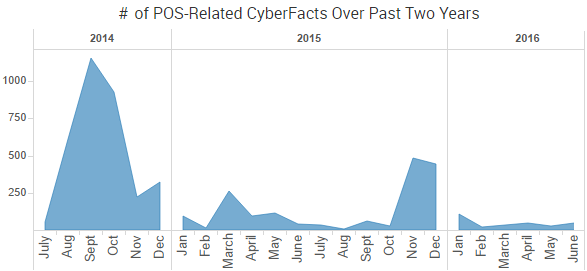
The recent surge follows a comparatively quiet period over the first half of 2016, as this chart from our Mid-Year 2016 Cyber Risk Report highlights.

POS
Compared to the large number of POS breaches and chatter in 2014, the past year and a half has been relatively quiet — other than a spike in late 2015 tied to several different hotel breaches, the report said.

“This dip in discussion is accentuated by the extreme number of high-profile organizations affected by POS breaches in 2014, perhaps skewing the perception for what ‘normal’ levels of activity should be,” the report noted. “Point-of-sale breaches are not making as many headlines, but breaches so far this year have proven that for many organizations the associated costs are as high or higher than they have ever been.”

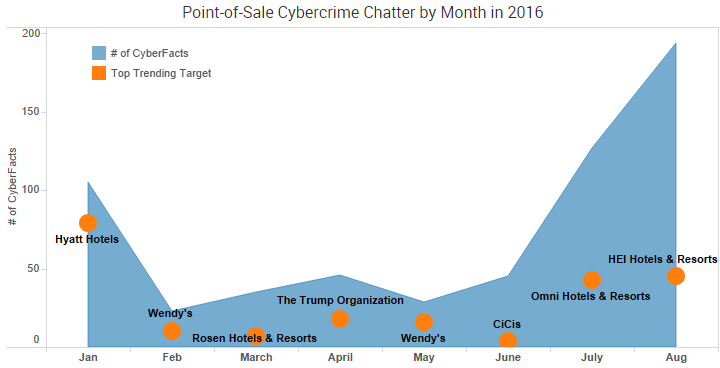
Revisiting that chart a month and a half later, it appears the activity level is now kicking up to match those high costs. SurfWatch Labs has collected more point-of-sale-related CyberFacts in August (through just 21 days) than any other month so far this year.

2016-08-22_POS_Chatter.png
The number of point-of sale CyberFacts collected by SurfWatch Labs has surged in recent months (data through August 21). HEI Hotels & Resorts is the highest trending POS-related target this month after announcing a data breach.

Oracle, Other Vendors Compromised

Adding to the concern around point-of-sale systems, Brain Krebs recently broke the news of a breach of hundreds of computer systems at Oracle, including a customer support portal for companies using Oracle’s MICROS point-of-sale credit card payment systems.

Sources said the MICROS customer support portal has been observed communicating with a server known to be used by the Carbanak Gang. That’s alarming since the gang is suspected be behind the theft of more than $1 billion from financial institutions in recent years.

“This breach could be little more than a nasty malware outbreak at Oracle,” Krebs wrote. “However, the Carbanak Gang’s apparent involvement makes it unlikely the attackers somehow failed to grasp the enormity of access and power that control over the MICROS support portal would grant them.”

The investigation is ongoing, and Oracle so far has not provided customers or media outlets with many answers.

To make matters worse, Forbes’ Thomas Fox-Brewster reported that several other cash register suppliers besides MICROS have been breached recently.

“It now appears the same allegedly Russian cybercrime gang has hit five others in the last month: Cin7, ECRS, Navy Zebra, PAR Technology and Uniwell,” he wrote. “Together, they supply as many as, if not more than, 1 million point-of-sale systems globally.”

Hotels Remain Top Trending POS Target

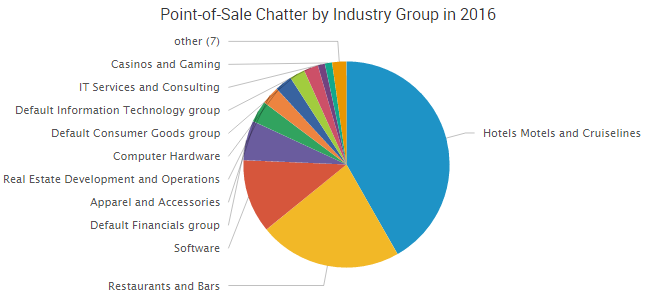
In our mid-year report, the “Hotels, Motels and Cruiselines” subgroup of Consumer Goods dominated the chatter around point-of-sale breaches, and not much has changed in the two months since that report. In fact, nearly 42% of all the point-of-sale CyberFacts collected by SurfWatch Labs so far this year have fallen into that group.

2016-08-22_POS_Groups
More than 60% of SurfWatch Labs’ point-of-sale related CyberFacts collected this year fall into either the Hotels, Motels and Cruiselines or Restaurants and Bars groups.

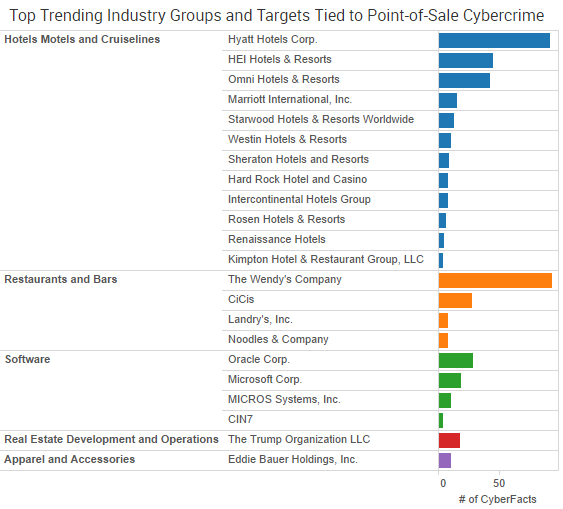
The top trending point-of-sale target this month is HEI Hotels & Resorts, which announced a breach involving 20 hotels on August 12. The malware was discovered in June on point-of-sale systems used at restaurants, bars, spas, lobby shops and other facilities, according to Reuters. Twelve Starwood hotels, six Marriott International properties, one Hyatt hotel and one InterContinental hotel were impacted.

If those names sound familiar, it’s because several of them have already made news for data breaches of late, including Hyatt in December 2015 and Starwood in January 2016.

Other data breaches this year involving hotels include Kimpton Hotels, Hard Rock Hotel & Casino Las Vegas, Rosen Hotels & Resorts and the Trump Hotel Collection.

2016-08-22_POS_Groups_ITT

Although the various incidents that have been announced in recent weeks have not been explicitly connected by either researchers or law enforcement, the breach notice from Eddie Bauer did signify that other organizations have been targeted with a similar campaign.

“Unfortunately, malware intrusions like this are all too common in the world that we live in today,” the company wrote. “In fact, we learned that the malware found on our systems was part of a sophisticated attack directed at multiple restaurants, hotels, and retailers, including Eddie Bauer.”

Other experts such as Gartner fraud analyst Avivah Litan have speculated that the breach at Oracle “could explain a lot about the source of some of these retail and merchant point-of-sale hacks that nobody has been able to definitively tie to any one point-of-sale services provider.”

At the moment many questions remain, but if these investigations lead to the discovery of further compromises, expect to see more breach announcements and more payment card information being sold on Dark Web markets in the months to come.

Does Your Cyber Threat Intelligence Tell a Story?

I began at SurfWatch Labs several years ago with one primary directive: be a story teller. Cybercrime impacts everyone, I was told, yet many business owners, executives and employees know next to nothing about cybersecurity. 

For the most part those people were either unaware, assumed their business would never be a targeted by hackers, or put the onus on the tech guys to handle those threats. Those who did take cybersecurity seriously and wanted to learn — well, without a technical background cyber-related writing has a tendency to induce a mini-coma within the first three paragraphs.

Essentially, there was large disconnect between the numerous cyber-attacks and data breaches and everyone who was being impacted by those incidents. That gap has closed quite a bit the last few years, but a gap still remains. Unlike regular crime, which tends to evoke much a more visceral reaction, cybercrime and the reporting on it often feels one step removed from our daily lives. Even as we currently find ourselves speculating how cyber-issues could help decide a presidential election, people are still surprised when they become the target of a cyber-attack.  

Take Patrick Feng, an adjunct assistant professor who studies technology and sustainability policy at the University of Calgary in Canada. As Scientific American reported, on May 28 a ransomware attack left many of the university’s researches locked out of their own data and email, leading the university to make a ransom payment of $15,500 to ensure nothing was lost.

“Even though I teach technology policy, and am aware of these kinds of issues, I still thought it was never going to happen to me,” Feng said.

Yes, presidential candidates are targeted, but little ol’ me? C’mon.

That disconnect is why I wrote back in 2014 that the story of celebrity nude photos being stolen may have been the most important cybercrime event of that year:

For most of us, we are not celebrities, and it does not affect us. But when I read that story, or stories like that of [Miss Teen USA] Cassidy Wolf, who described her reaction to being sextorted by a similar creep – “I literally threw my phone across the room and started screaming. It did not feel real, it was like a horror movie.” – it stays with me in a way that a hundred stories of credit cards being stolen from Home Depot will never do.

We need stories to help spur action across all aspects of our lives, including cybersecurity. In a sense, that is what effective cyber threat intelligence is all about. Our goal here at SurfWatch Labs is to tell those stories, to help connect those dots so that everyone from the newly hired employee to the board of directors can understand the risks posed to them both individually and to their organization as a whole.

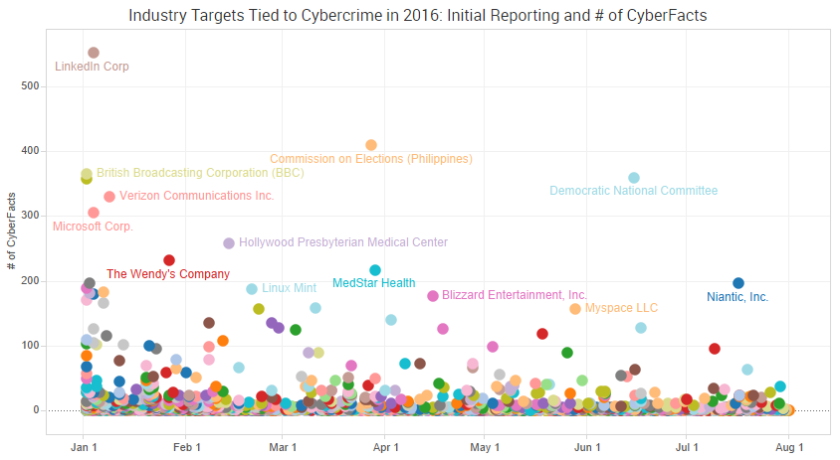
It’s also why charts like this are among my favorite ways to look at SurfWatch Labs’ cyber threat intelligence data — not because it’s a useful chart in any practical sense, but because of the way it highlights this year’s cybercrime events and shows the stories that collectively we are, and aren’t, paying attention to.

2016-08-05_firstseen.png
This chart shows the more than 1,000 industry targets SurfWatch Labs has collected data on this year (not including dark web data), as well as the date they first appeared in our data and how many CyberFacts we have collected pertaining to each organization.

In the cybersecurity space, we tend to define time by the major breaches — Target, Home Depot, Sony Pictures, Anthem, the U.S. Office of Personnel Management, Ashley Madison, LinkedIn, the Democratic National Committee — but doing so can negate the real story. As we noted in our recent cyber trends report, most attacks are not sophisticated. They are not high-profile incidents that garner national headlines. Rather, they are a steady wave of relatively simple and often automated attacks that continues to wash over those without proper awareness or understanding of their cyber risk.

Only a tiny fraction of cybercrime events cross over that gap and become part of the public consciousness. For the many more organizations that remain under the radar, cybercrime still has significant real-world consequences  — as well as for the employees, executives, shareholders and boards of directors that are tied to those various data breaches, denial-of-service attacks, extortion attempts, account takeovers, cyber-espionage, insider threats and other forms of cybercrime.

With cyber threat intelligence becoming one of the latest cybersecurity buzzwords, people are often trying to define what it is. What’s the proper balance between raw data and human analysis? Who is the target audience? How does that intelligence translate into specific action? In simpler terms, it is just telling the story of your organization’s cyber risk — with proper context and in a way that everyone can understand and take action on.

To continue to close that cybersecurity gap we need more training and more technological innovations and more smart leaders, but we also need to connect all of that together and drive progress forward somehow. That’s what cyber threat intelligence, and the stories it can tell, is all about.

Typosquatting: Easy Attack Vector That Produces Results

Every week here at SurfWatch Labs our team of threat analysts write about new vulnerabilities, malware developments and cyber-attacks.  One attack vector that is not mentioned very frequently but can be a significant threat for organizations and consumers alike is a technique called typosquatting.

Typosquatting is an attempt to trick users into thinking they have landed on their desired website, but in reality the user has landed on a website with a similar looking domain name that is controlled by cybercriminals. It’s an old technique, and security-conscious organizations often try to secure those domain variations that arise from typos.

However, a study last year described how companies remain vulnerable to typosquatting and found that most organizations do very little to protect their customers from the threat.

Key findings from the study:

  • Few trademark owners protect themselves against typosquatting by defensively registering typosquatting domains for their own domains.
  • The study found that 95% of the most popular 500 websites researched were targeted with typosquatting.
  • Hackers are increasingly targeting longer domains.
  • Some companies secure potential typosquatting domains but then choose not to renew them, leaving them vulnerable.

TypoSquatting Attack Example

A great example of a typosquatting attack was used against the popular online first-person shooter game Counter-Strike: Global Offensive. The hackers set up a convincing spoof, tricking gamers into believing they were on a legitimate site for the game. The fake site was listed as csgoloungcs.com, while the legitimate site is csgolounge.com.

Not only were visitors of the fake site tricked into sharing their login credentials, a Trojan downloader was pushed on them, leading to malware infections.

Another example found malicious actors taking advantage of the .om top level domain. Earlier this year, Netflix users who mistyped the address as netflix.om were redirected to a fake Flash update page.

Typosquatting is one example of the many opportunistic type of threats facing organizations. It doesn’t require sophisticated techniques, and it’s an easy way to leverage popular brands in order to entrap customers who aren’t aware of such scams.

Typosquatting scams can lead to a variety of consequences for users — from account takeover to identity theft — and those consequences can easily spill over to the organizations being impersonated in the form of disgruntled customers, bad press, or having to deny a breach when stolen credentials are put up for sale on the Dark Web.

All that trouble can be largely avoided by being vigilant about identifying common typographical mistakes related your organization’s domains and purchasing them to keep them out of malicious actors’ hands.