Fraudsters Exploit Hurricane Matthew to Create More Victims

Hurricane Matthew is over — having been officially downgraded on Sunday — and a clearer picture of the aftermath has begun to emerge. More than 1,000 people were killed by the hurricane, including at least 35 in the United States. Although the storm has moved out to sea, flooding continues here in the U.S., and in Haiti, which was hit hardest by the storm, officials are warning of the possibility of starvation and the spread of Cholera.

With the world’s attention focused on the natural disaster, cybercriminals are once again capitalizing on the devastation with a wave of phishing attacks and other scams. The South Carolina Emergency Management Division is warning Hurricane Matthew victims to be wary of any emails, phone calls and text messages — as well as scams impersonating one of the thousands of disaster workers expected to travel to the state.

US-CERT is also warning of deceptive donation requests that attempt to steal financial information from those who wish to help the victims.

HurricanePhishign.PNG
Alert from US-CERT

As US-CERT noted, this type of activity commonly occurs after natural disasters. Cybercriminals are always looking for new individuals to target, and national disasters provide a large bucket of concerned people that can potentially be exploited.

Similar warnings were issued following:

  • August flooding in Louisiana, which led to concern over fraudulent charity requests that attempt to steal personal and banking information or infect devices with malware.
  • The May wildfire in Alberta, Canada, which forced 90,000 people to evacuate and led to individuals impersonating evacuees and using fake websites and Go Fund Me pages to mimic disaster relief programs.
  • April floods in Texas, which FEMA warned would likely lead to scammers impersonating building contractors, FEMA employees, and volunteer groups in order to steal sensitive personal information.

“Fraud is an unfortunate reality in post-disaster environments,” said National Insurance Crime Bureau CEO Joe Wehrle in a press release warning of Hurricane Matthew rebuilding scams. “The last thing victims of disaster need is to be victimized again.”

As SurfWatch Labs noted earlier this year, social engineering is one of the most difficult problems related to cybersecurity. It’s also one of the most common tags in SurfWatch Labs’ cybercrime data.

2016-10-12_socialengineering
Email phishing remains the most common form of social engineering due to the ease of targeting a large number of potential victims.

Social engineers often use a few simple and effective tactics in order to dupe their victims. These include having a simple backstory, appearing as though they belong and projecting authority.

One of the reasons cybercriminals capitalize on events such as Hurricane Matthew is that it is very easy for them to use that trifecta of tactics. The natural disaster provides an instant backstory that is immediately understood by a large number of people. People are expecting to see a wide variety of victims and volunteers both seeking and offering help, so its easy for fraudsters to appear as though they belong. Victims are expecting to have to deal with authority figures, making it easy to impersonate government officials, insurance agents or other disaster workers.

Some tips to help stay safe when it comes to social engineering include.

  • Never click on links or open attachments unless you know who sent it and what it is. Malicious email attachments and links are among the most common ways for cybercriminals to spread malware and steal information.
  • Never reply to emails, text messages, or pop-ups that ask for personal information.
  • Cybercriminals may use a combination of fraudulent emails and phone numbers to increase their appearance of authority. Always verify that communication is valid by contacting the organization directly before providing any sensitive information.
  • If donating to a charity, make sure it is one you know and trust. The FTC recommends checking out charities via the Better Business Bureau’s (BBB) Wise Giving Alliance, Charity Navigator, Charity Watch or GuideStar.
WADA, Presidential Election Highlight Threat of Data Being Altered

Last week the World Anti-Doping Agency (WADA) released an update about its investigation into the recent hack and subsequent leaks of Olympic Athletes’ confidential information, and one of the more interesting revelations was that some of the stolen data may have been manipulated prior to being leaked.

“WADA has determined that not all data released by Fancy Bear (in its PDF documents) accurately reflects ADAMS [Anti-Doping Administration and Management System] data,” the agency wrote in a blog post. “However, we are continuing to examine the extent of this as a priority and we would encourage any affected parties to contact WADA should they become aware of any inaccuracies in the data that has been released.”

WADA did not elaborate on which athletes’ data may have been altered or provide any other explanations for the discrepancies, but it does highlight a unique cybersecurity concern that has surfaced recently: threat actors manipulating stolen data in order to increase the fallout from a breach.

A History of Fake and Exaggerated Breaches

Hackers have a long history of re-purposing data in order to claim new attacks.

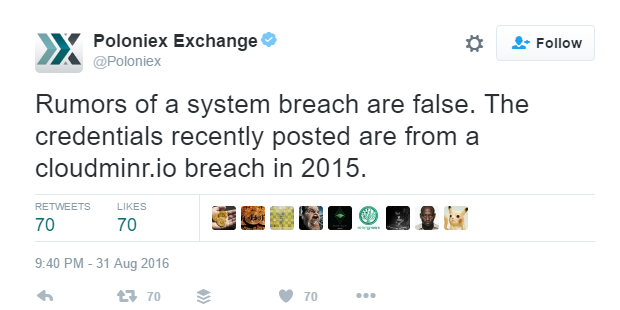
Just last week the actor known as Guccifer 2.0 posted a dump of data allegedly stolen from the Clinton Foundation, claiming that “it was just a matter of time to gain access to the Clinton Foundation server.” However, a variety of news outlets have since reported the data appears to be from a previous hack of the Democratic Congressional Campaign Committee and the Democratic National Committee — not the Clinton Foundation. Prior to that there was a Pastebin post alleging a “full database leak” at cryptocurrency exchange Poloniex. Once again, the company was quick to dispute the claim, posting on social media that the data was actually from another company’s breach a year prior.

poloneix.PNG
Tweet from Poloniex Exchange

Claims of fake or exaggerated data breaches are troublesome for organizations, but they’re not as insidious as the manipulation of legitimate data.

“Imagine trying to explain to the press, eager to publish the worst of the details in [leaked] documents, that everything is accurate except this particular email. Or that particular memo,” security blogger Bruce Schneier wrote last month. “It would be impossible. Who would believe you? No one.”

WikiLeaks, Sputnik News and Donald Trump

An example of this potential issue was highlighted yesterday through a combination of WikiLeaks, Russia’s Sputnik News, and Donald Trump. On Monday morning, WikiLeaks released 2,000 emails that appear to be from the account of Hillary Clinton’s campaign chairman, John Podesta. One of those emails was from Clinton ally Sidney Blumenthal and contained a Newsweek article about the Benghazi hearings. Sputnik News then incorrectly reported on the email — either intentionally or as a result of sloppy journalism — quoting the Newsweek article email as if it were Blumenthal’s own thoughts on the subject. Hours later, Donald Trump quoted that false Sputnik News article at a rally in Wilkes Barre, Pennsylvania, telling the crowd that Blumenthal said the “attack was almost certainly preventable” and that Blumenthal was “now admitting they could have done something about Benghazi.”

That falsehood could be the result of the miscommunication inherent in a game of telephone — from Podesta’s email to WikiLeaks to Sputnik News to Donald Trump to the booing crowd — or it could be, as the author of the original Newsweek article suggested, an intentional effort from Russia.

This is not funny. It is terrifying. The Russians engage in a sloppy disinformation effort and, before the day is out, the Republican nominee for president is standing on a stage reciting the manufactured story as truth.  How did this happen? …

The Russians have been obtaining American emails and now are presenting complete misrepresentations of them—falsifying them—in hopes of setting off a cascade of events that might change the outcome of the presidential election.

It was just last week that Congressman Adam Schiff put forth this very idea in The New York Times. Russia could take already-stolen emails, alter them, and give the impression that one of the presidential candidates had done something outrageous or illegal, potentially altering the election.

The Blumenthal story was quickly corrected by viewing the source email on WikiLeaks, but what if the source itself had been altered? In a dump of 2000 legitimate-looking emails, who would believe that one email or one line within an email was altered.

As Schneier wrote: “No one.”

Tactic Beyond Nation-States?

The examples cited above have been extremely high-profile events. Leaked data tied to the Olympics or a presidential race faces a far higher level of journalistic scrutiny than an ordinary dump of company documents, communications or other internal data. For those breached organizations, proving that leaked data was altered may be more difficult, and it may prove harder still to spread news of that proof without a media echo chamber to amplify that message.

While altering data may not be the most profitable avenue for cybercriminal groups, not all threat actors are concerned about profits. Hacktivists could alter data to create a scandal for political purposes. Malicious insiders may manipulate leaked communications to embarrass an executive or otherwise harm their organization. Competitors may tweak stolen documents to damage their rivals’ reputation and steal customers.

Even those motivated by profit may find ways to incorporate data alteration into their toolset. Data destruction has quickly become a common tag in SurfWatch Labs’ cyber threat intelligence data due to the surge in ransomware infections in recent years, and actors who are demanding tens or hundreds of thousand of dollars in extortion are likely to use every tool available to them to push organizations towards paying ransoms.

Many of the stories related to altered data currently revolve around nation-states, but like everything in cybersecurity, copycats can be expected if it proves to be a successful tactic. It’s just one more cyber risk facing organizations — and one more reason to prioritize keeping your organization’s data safe from malicious actors.

Weekly Cyber Risk Roundup: Internet of Things Sparks Security Concerns

There has been growing concern around distributed denial-of-service (DDoS) attacks this week as the source code for the Internet-of-Things (IoT) driven botnet “Mirai” has been publicly released by a user on Hackforums. The Mirai botnet has been tied to the recent massive DDoS attack against Brian Krebs website and is made up of a growing number of Internet-connected devices.

2016-10-07_ITT.pngThe botnet includes a variety of compromised home and small office items such as routers, DVRs and security cameras – many of which use default usernames and passwords. The IoT devices are aimed at users often more concerned about convenience than security, and as Brian Krebs pointed out, even if users do take steps to secure devices by changing default credentials the malware may still spread.

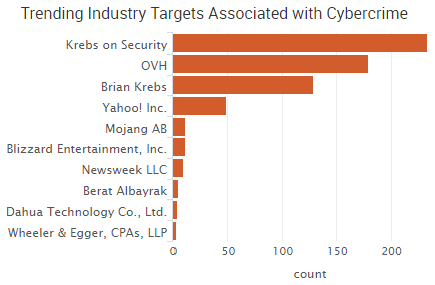
Cybercriminal actors may use botnets like Marai to create more powerful DDoS attacks against industries that are traditionally vulnerable to extortion, such as gaming and ecommerce, but the Marai source code release also empowers actors looking to disrupt organizations for ideological or political reasons. For example, Newsweek alleged it was the victim of such an attack this week when its website was hit with a DDoS attack after publishing a story claiming that one of Donald Trump’s companies violated the Cuba trade embargo in 1998. In part due to that attack, consumer publishing was the most discussed industry group associated with cybercrime over the past seven days.

With Marai added to the growing list of free tools available to actors, expect to see more DDoS attacks like the ones against KrebsOnSecurity and Newsweek, which appear to be aimed at silencing or punishing critics.

2016-10-07_groups

Other trending cybercrime events from the week include:

  • Another week, another list of companies hit with ransomware: Cloud service provider VESK paid £18,600 after being infected with a new strain of the Samas DR ransomware. The New Jersey Spine Center paid an undisclosed amount after a July CryptoWall attack encrypted all electronic medical records and the most recent backup as well as disabled the phone system. The forest department of the state government of Kerala in India was infected with ransomware known as RSA-4096. Urgent Care Clinic of Oxford is notifying patients that their data may have been compromised by what appears to be a ransomware attack. A “glitch” after a ransomware attack led the Marin Healthcare District and Prima Medical Foundation to notify more than 5,000 patients that some of their medical data has been lost, even though they paid the ransom.
  • Data exposed through mistakes and flaws: C&Z Tech Limited acknowledged that a database of more than 1.5 million user records was exposed online, but said that the leak was from a test database; however, ZDNet disputes that claim, writing that their own verification of the data found “no reason to believe that this is test or dummy data.” Census data on 96,000 employees of the Australian federal government was downloaded nearly 60 times before being removed from official websites.  A vulnerability discovered in the Charter Communications website could have exposed the personal information of customers. Customers of Ottawa marijuana dispensary chain Magna Terra Health Services had their email addresses exposed when an employee sent an email with 470 of their customers cc’d.
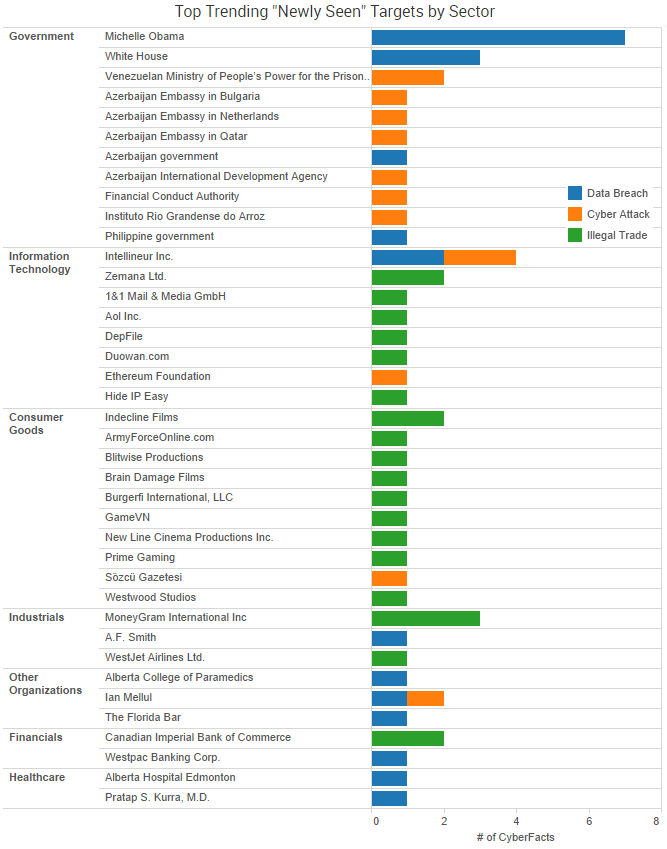
  • Alleged political dumps, both old and new: A hacker who goes by the name Guccifer 2.0 published an 860-megabyte file of donor information allegedly stolen from the Clinton foundation servers; however, a variety of news outlets have reported that the data appears to actually be from a previous hack of the Democratic Congressional Campaign Committee and the Democratic National Committee. Berat Albayrak, Turkey’s Energy Minister and son-in-law of President Erdoğan, is the week’s second highest trending new target (after Newsweek) on the heels of hacking group RedHack leaking 17 gigabytes of data, which the group said was stolen by discovering Albayrak’s mobile operating system, writing an exploit to steal his password, and gaining access to his iPad after several weeks of attempts.
  • More data breach announcements: Hutton Hotel is notifying customers of a payment card breach affecting guests who placed hotel reservations during the period from September 2012 to April 2015, as well as those who made purchases at the onsite food and beverage outlets from November 2015 to June 2016. Hackers gained access to computer systems at Wheeler & Egger, CPAs and used the information to fraudulently file 45 tax returns. Apria Healthcare, a provider of home respiratory services and other medical equipment, is notifying patients that an employee’s email account was compromised.
  • Out with the old hacktivists, in with the new: Federal authorities in Chicago have charged two suspected members of the hacking group Lizard squad for operating DDoS-for-hire websites. Although Lizard Squad has been quiet of late, other hacking groups continue to disrupt organizations. For example, OurMine defaced and deleted several articles on the BuzzFeed website in retaliation for a story claiming to have identified one of the group’s members as a Saudi teen called “Ahmad Makki.”

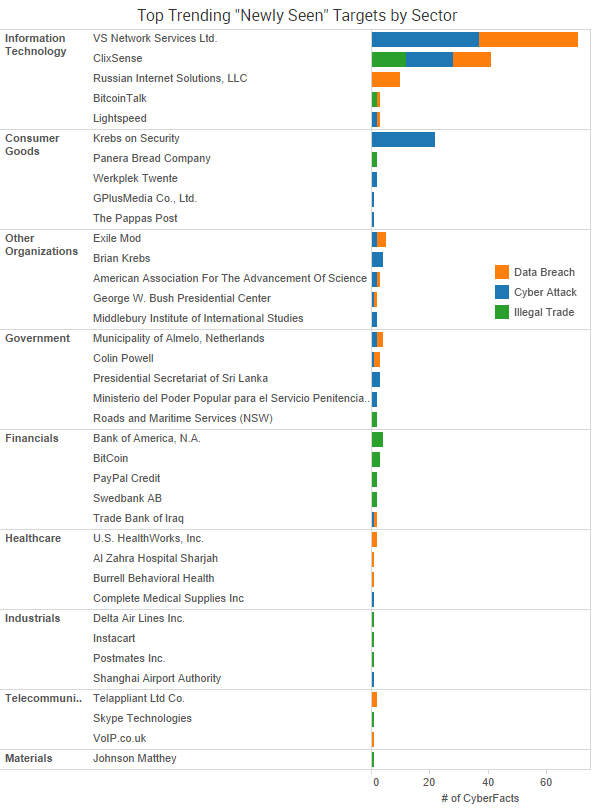
SurfWatch Labs collected data on many different companies tied to cybercrime over the past week. Some of those “newly seen” targets, meaning they either appeared in SurfWatch Labs’ data for the first time or else reappeared after being absent for several weeks, are shown in the chart below.

2016-09-30-ittnew

Insulin Pump Vulnerability and Other Advisories

The focus on IoT devices was prevalent throughout SurfWatch Labs’ data this week. In addition to all of the botnet-related discussion, Johnson & Johnson announced that a security vulnerability in its Animas OneTouch Ping insulin pump that could be exploited to overdose diabetic patients with insulin.

2016-10-07_advisoriesThe Reuters story cited medical device experts who claim this is the first time a manufacturer has issued such a warning to patients about a cyber vulnerability in their devices; however, the company’s letter to patients described the risk as “extremely low.”

“It would require technical expertise, sophisticated equipment and proximity to the pump, as the OneTouch Ping system is not connected to the internet or to any external network,” the letter said.

The issue, which was discovered by Rapid7 researcher Jay Radcliffe, is that a hacker can spoof communications between a wireless remote control and the insulin pump since that communication is not encrypted. About 114,000 patients use the device in the United States and Canada.

The company said that if patients were concerned, they could stop potential attacks by discontinuing use of the wireless remote control and programming the pump to limit the maximum insulin dose. Johnson & Johnson said it first reviewed the vulnerability with the FDA, which issued draft guidance on managing cybersecurity vulnerabilities in medical devices in January.

2016-10-07_advisories3

Other noteworthy advisories and cybercrime news from the week include:

  • 68 million stolen Dropbox credentials published online: The previously stolen database of more than 68 million user records has been published online by Thomas White on his I’m Cthulhu blog. Nearly half of the passwords are secured with the strong hashing function bcrypt, Motherboard wrote. The other half appear to use the older SHA-1 algorithm. The publication adds to the already massive list of now-public user credentials.
  • Vulnerability discovered in OpenJPEG: Cisco Talos researchers have disclosed a zero-day vulnerability in the jpeg2000 image file format parser as implemented in the OpenJpeg library. The vulnerability can lead to an attacker executing arbitrary code. “For a successful attack, the target user needs to open a malicious jpeg2000 file,” the researchers wrote. “The jpeg2000 image file format is mostly used for embedding images inside PDF documents and the OpenJpeg library is used by a number of popular PDF renderers making PDF documents a likely attack vector.”
  • Users report suspected malvertising on Spotify: Users of Spotify’s free desktop streaming service are reporting strange behavior that is suspected to be related to malvertising. “If you have Spotify Free open, it will launch – and keep on launching – the default internet browser on the computer to different kinds of malware/virus sites. Some of them do not even require user action to be able to cause harm,” wrote one user. “I have 3 different systems (computers) which are all clean and they are all doing this, all via Spotify – I am thinking it’s the Ads in Spotify Free. I hope this has been noticed and Spotify staff are fixing it – fast.”
  • TalkTalk fined £400,000 over data breach: The UK’s Information Commissioner’s Office (ICO) has issued a record £400,000 fine to TalkTalk over a data breach that “could have been prevented if TalkTalk had taken basic steps to protect customers’ information.” In October 2015, a hacker used SQL injection to access the personal data of 156,959 customers including their names, addresses, dates of birth, phone numbers and email addresses. In more than 15,000 cases, bank account details and sort codes were also compromised. “The data was taken from an underlying customer database that was part of TalkTalk’s acquisition of Tiscali’s UK operations in 2009,” the ICO said. “TalkTalk failed to properly scan this infrastructure for possible threats and so was unaware the vulnerable pages existed or that they enabled access to a database that held customer information.”

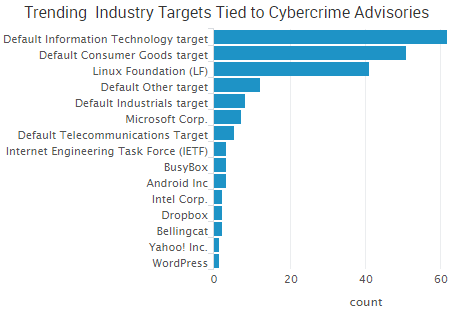
SurfWatch Labs collected data on a variety of cybercrime advisories over the past week. Some of the trending practice tags associated with those advisories are shown in the chart below.

2016-10-07_advisoriestags

Stolen Data, Extortion and the Media: A Look at TheDarkOverlord

After making headlines by targeting a number of healthcare organizations over the summer, the cybercriminal actor known as TheDarkOverlord re-emerged last week with a new victim: California investment bank WestPark Capital.

As we noted in last week’s cyber risk roundup, the leak of documents from WestPark Capital is the first time SurfWatch threat analysts have observed TheDarkOverlord targeting the financials sector. The approximately 20 documents leaked so far — several of which have been confirmed to be legitimate by various news sources — include items such as non-disclosure agreements, meeting agendas, contracts and more.

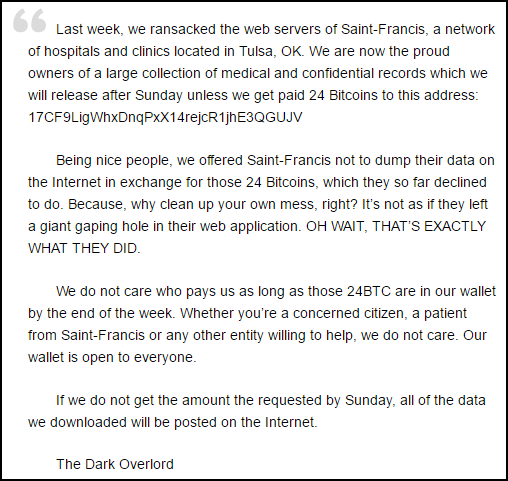
“WestPark Capital is a ‘full service investment banking and securities brokerage firm’ whose CEO, Richard Rappaport, spat in our face after making our signature and quite frankly, handsome, business proposal and so our hand has been forced,” TheDarkOverlord wrote on Pastebin.

TheDarkOverlord ended its post by reiterating a simple message to current and future victims: “pay up.”

TheDarkOverlord’s Signature “Business Proposal”

Like previous attacks from TheDarkOverlord, it appears that the actor first tried to quietly extort the victim company with stolen data, and like previous victims, WestPark Capital refused to pay the ransom. As a result of non-payment, TheDarkOverlord published a portion of the stolen data. This publication may serve several purposes for TheDarkOverlord. First, it generates media attention around the breach that can be used to pressure WestPark Capital into paying the ransom before more damage is done. Second, and perhaps more importantly, it helps establish TheDarkOverlord as a credible threat when it comes time to extort the next victim.

This tactic was noted by SurfWatch threat analysts back in July, when TheDarkOverlord’s targeting of healthcare organizations pushed the actor into the spotlight.

healthcare_database_cropped
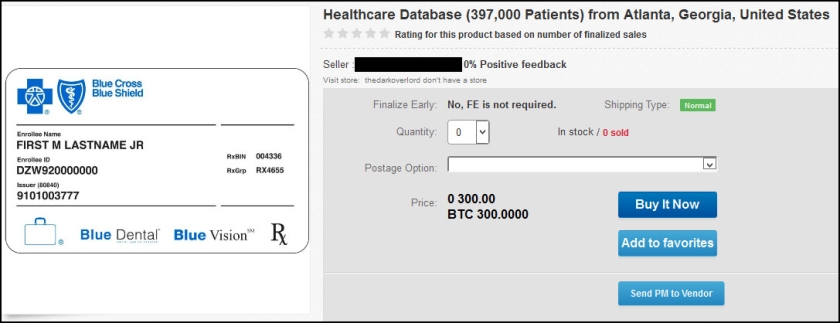
TheDarkOverlord posted several stolen healthcare databases for sale on TheRealDeal Market this summer. The largest set of data was listed at 750 bitcoin, or nearly half a million dollars.

“There is suspicion that TheDarkOverlord is using the media to apply pressure to breached organizations to pay the actor’s extortion threats,” SurfWatch Labs wrote in a customer alert. “It is a plausible scenario that the actor’s true monetary motivation is to receive payment from breached organizations rather than sell the data openly on the Dark Web, especially at the high price the actor has set, which insinuates that the advertisements are primarily meant as a marketing tool.”  

TheDarkOverlord has been particularly adept at generating media attention through a combination of high initial prices on the stolen data, leaking portions of that data, and being available to various news outlets in order to push the actor’s extortion agenda.

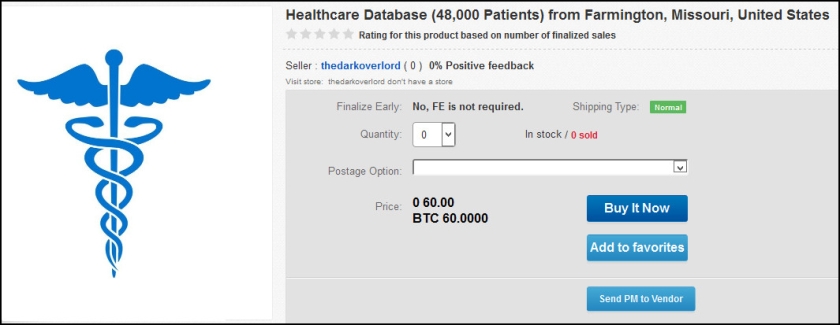
For example, one of the first databases the group put up for sale belonged to a healthcare organization in Farmington, Missouri. Several days later, after several news stories had identified the name of that organization as Midwest Orthopedic Clinton, TheDarkOverlord took to publicly shaming the victim.

thedarkoverlord
A healthcare database posted for sale on TheRealDeal Market by TheDarkOverlord.

“[Owner] Scott a. Vanness should have just paid up to prevent this leak from happening,” TheDarkOverlord told The Bitcoin News. “He can still salvage the rest of the records and save himself from other things that we have made him aware of.” When asked if there would be more data leaked from other companies, the contact wrote back, “If they do not pay yes.”

That message is similar to statements made recently towards WestPark Capital — essentially, pay the extortion or face further leaks and public shaming.

It’s unclear if any previous organizations have paid ransom demands to TheDarkOverlord, but the actor’s statements often appear aimed at addressing future victims.

For example, TheDarkOverlord warned companies in June via DeepDotWeb, “Next time an adversary comes to you and offers you an opportunity to cover this up and make it go away for a small fee to prevent the leak, take the offer.” In addition, TheDarkOverlord told Motherboard that the ransom would be “a modest amount compared to the damage that will be caused to the organizations when I decide to publicly leak the victims.”

Who is the TheDarkOverlord?

TheDarkOverlord portrays itself as a group of hackers — frequently using “we” and “us” in its latest posting; however, TheDarkOverlord has on occasion implied that one person was behind the decision making, as the Motherboard quote above indicates. It’s unclear if TheDarkOverlord is a group of actors or if the language is just another attempt to build up TheDarkOverlord brand as a wide-reaching cyber threat. 

thedarkoverlordpastebin
From TheDarkOverlord’s recent Pastebin post on WestPark Capital.

TheDarkOverlord did say that other hackers recently exploited the group’s name in a data breach at St. Francis Health System.

This isn’t surprising as copycat actors often use already-established cybercriminal names. For example, earlier this year a string of attacks used the Armada Collective’s name to successfully extort companies with the threat of DDoS attacks. Actors looking to extort companies can leverage the well-known TheDarkOverlord name to make the threat appear more credible.

thedarkoverlordnote
Statement from alleged copycat actors, as shown on databreaches.net.

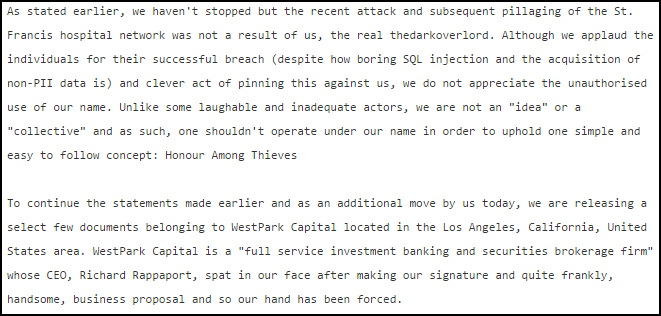
“Although we applaud the individuals for their successful breach (despite how boring SQL injection and the acquisition of non-PII data is) and clever act of pinning this against us, we do not appreciate the unauthorised use of our name,” TheDarkOverlord wrote. “Unlike some laughable and inadequate actors, we are not an ‘idea’ or a ‘collective’ and as such, one shouldn’t operate under our name in order to uphold one simple and easy to follow concept: Honour Among Thieves.”

TheDarkOverlord does have an interesting approach to extorting companies. Unlike the former Armada Collective’s DDoS attacks or the ongoing surge of ransomware attacks — which actually disrupts service and prevents customers or employees from accessing resources — TheDarkOverlord has relied on a more traditional blackmail approach of causing damage via stolen and leaked data.

At the moment it is unclear how successful that approach is when compared to more disruptive attacks, but if the group and its copycats continue to leverage this approach, one can assume that it must be a profitable avenue of attack.

Weekly Cyber Risk Roundup: Executives Scrutinized Over Cyber-Issues

What’s Everyone Talking About? Trending Cybercrime Events

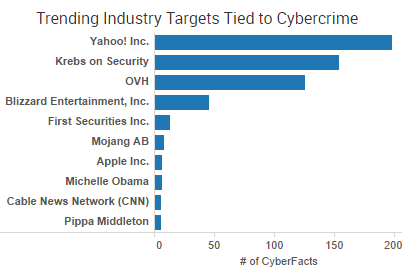
2016-09-30-ITT.pngYahoo was the week’s top trending cybercrime target as the fallout of a breach affecting more than 500 million accounts continues to play out. CEO Marissa Mayer has faced intense scrutiny from lawmakers and others over the handling of the company’s cybersecurity.
A Wednesday New York Times article citing a group of current and former employees painted a picture of Mayer as a CEO that often clashed with the security side of the organization over spending and refused to take action in several instances – including rejecting an automatic reset of user passwords after discovering a breach.

“Employees say the move was rejected by Ms. Mayer’s team for fear that even something as simple as a password change would drive Yahoo’s shrinking email users to other services,” the Times wrote.

A group of senators issued a letter to Mayer calling the two-year gap between the initial breach and announcement of the breach “unacceptable.” Sen. Mark Warner is also urging the Securities and Exchange Commission to investigate whether Yahoo properly informed investors of its data breach after reports surfaced indicating that Mayer was aware of the breach as early as July of this year.

“Yahoo has been engaged in an effort to sell its Internet business, including the unit affected by the breach, to Verizon since at least July 25, 2016, yet Yahoo reportedly did not inform Verizon of the breach until September 20, 2016,” Sen. Warner wrote in a letter to the SEC. “More puzzlingly, the company noted in a proxy statement as recently as September 9, 2016 that, ‘To the knowledge of Seller, there have not been any incidents of, or third party claims alleging, (i) Security Breaches, unauthorized access or unauthorized use of any of Seller’s or the Business Subsidiaries’ information technology systems.’”

Mayer isn’t the only CEO to come under fire from lawmakers this week. Wells Fargo CEO John Strumpf has become the butt of jokes on late night talk shows after being publicly lambasted by members of the House Financial Services Committee over the bank fraudulently opening more than 2 million customer accounts without their knowledge. Sen. Elizabeth Warren has repeatedly called for Strumpf to resign, and Rep. Michael Capuano said yesterday that Stumpf is “clearly and unequivocally guilty” of a range of crimes related to the scheme, including conspiracy to commit fraud, conspiracy to commit identity theft and racketeering. The backlash led to Wells Fargo announcing this week that Strumpf and former head of community banking Carrie Tolstedt would not receive a total of $60 million in unvested equity awards.

In addition to angry lawmakers, a group of former employees is suing the company, saying that they were forced to choose between either committing fraud by opening unauthorized accounts or losing their job. That lawsuit adds to a growing list of lawsuits that have filed against both Wells Fargo and Yahoo.

2016-09-30-ittnew

SurfWatch Labs collected data on many different companies tied to cybercrime over the past week. Some of those “newly seen” targets, meaning they either appeared in SurfWatch Labs’ data for the first time or else reappeared after being absent for several weeks, are shown in the chart above.

Cyber Risk Trends From the Past Week

2016-09-30-riskscores

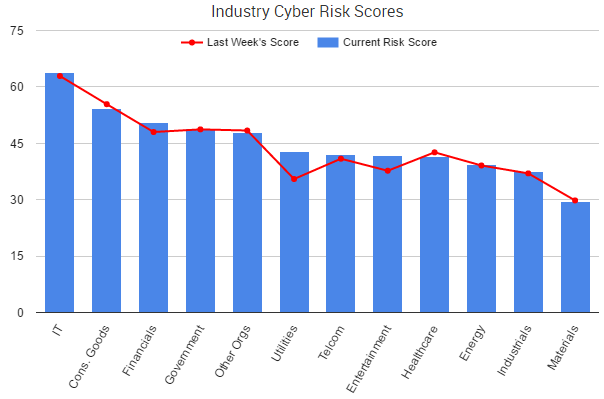
The financials sector was among the biggest risers in cyber risk this week as its SurfWatch Labs’ cyber risk score rose nearly 5.7 percent compared to the previous week. Much of that was driven by chatter on the Dark Web and data leaks such as the one impacting California investment bank WestPark Capital.

On Sunday, a hacker or group of hackers known as TheDarkOverlord released about 20 files allegedly stolen from WestPark Capital after an unsuccessful ransom attempt against the company. They also claimed other groups were using their name to perform attacks in a Pastebin post.

darkoverlordpastebin

The “signature” business proposal referenced in the Pastebin post is likely similar to the series of extortion attempts the group made earlier this year against various healthcare organizations. TheDarkOverlord has frequently used the media and leaked samples of stolen data to build up a reputation as a legitimate threat and to put pressure on victim companies in hopes that they will decide to pay the group’s ransom demands.

This is the first instance SurfWatch Labs has observed TheDarkOverlord targeting financial organizations, but – if the group’s Pastebin post is to be believed – the media attention is leading to copycats using both TheDarkOverlord’s name and extortion methods. Similar attacks may occur in the future.

Other trending cybercrime events from the week include:

  • State-Sponsored Actors Target Government: Data breaches previously attributed to nation-state actors trying to de-legitimize the outcome of the upcoming U.S. elections have widened. Law enforcement officials now believe about 10 state election databases have had their systems probed or breached, and the FBI is reaching out to some Democratic Party staffers to investigate possible hacking into cell phones. However, despite all the attention on state-sponsored actors, a new SurfWatch Labs report noted that hacktivists tend to make up the bulk of government-related cyber-attacks, such as the Monte Melkonian Cyber Army leaking data claiming to be from Azerbaijani military, police and bank servers this week.
  • Employees Continue to Cause Data Breaches: A former Verizon Wireless technician pleaded guilty to using Verizon computer systems to access call records and locations of customers and then sending that information to a private investigator. Congressman Mike Honda is suing Ro Khanna, the man he’s running against in the November 2016 election, over a former intern allegedly stealing thousands of donors’ information from an old Dropbox account years after his access should have been revoked. A former employee of Alberta Hospital Edmonton inappropriately accessed the records of 1,309 patients over an 11+ year period. A former employee of Mastic Beach village impersonated the chief of police and illegally accessed information on 488 Mastic Beach residents. Sensitive Medicare information on Australian citizens was uploaded to the Internet several months ago, potentially putting patients at risk. A software update to the Alberta College of Paramedics’ (ACP) navigation portal led to a security breach.
  • Hackers Cause Plenty of Data Breaches Too: A hacker said he downloaded more than 2.2 million email addresses and plaintext passwords from social hangout site i-Dressup and that the entire database of 5.5 million entries could be stolen using an SQL injection attack. The entire Florida Bar Association database appears to have been stolen including email addresses, phone numbers, fax numbers, mailing addresses and more, according to databreaches.net. NZME, a media company in New Zealand, said that details of competition entrants may have been accessed due to a cyber-attack on a third-party cloud server. Software company Jive is asking some users of its task management software Producteev to reset their passwords after an August data breach that exposed some email addresses and passwords.
  • Worry Over Terrorism and Hacking: A hacker who helped to publish a “kill list” of 1,300 U.S. military and other government personnel has been sentenced to 20 years in prison. “This case represents the first time we have seen the very real and dangerous national security cyber threat that results from the combination of terrorism and hacking,” said Assistant Attorney General Carlin.


Hacktivists Use Automated Tools, Growing Reach to Target Government Organizations

Despite recent media attention surrounding nation-state hackers infiltrating government organizations and attempting to influence elections, the bulk of government-related cybercrime tends to be driven by less sophisticated and more ideologically-motivated campaigns carried out by hacktivist actors, according to a new report from SurfWatch Labs.

govriskchart
Government sector risk scores compared to the average for all sectors over the past year.

Government is the third most active sector when it comes to cybercrime, behind only information technology and consumer goods, and more than a third of the government CyberFacts collected by SurfWatch Labs this year have been related to hacktivist activity — far more than any other sector.

“The global reach of the Internet and social media along with the relative anonymity of cyber-attacks has provided hacktivists with a larger platform than ever to share their message, recruit new actors, and ultimately impact organizations,” noted the report, Cybercrime Gets Political: Automated Tools and Growing Reach Empowers Hacktivists.

It continued: “As a result, the most common cybercrime story in the government sector has involved websites and data being targeted by hacktivist groups resulting in service downtime, website defacement, and various types of information being stolen and publicly leaked.”

government-atep-4
SurfWatch Labs’ data shows that hacktivists have been the top trending actor category across many different government subgroups so far this year – in some cases appearing in more than two-thirds of CyberFacts.

Hacktivist-driven data breaches are not a new problem for the government sector. In 2013, the FBI warned that anonymous hacktivists using Adobe exploits were able to infiltrate agencies such as the U.S. Army, the Department of Energy, and the Department of Health and Human Services in order to steal sensitive information.

“It is a widespread problem that should be addressed,” the 2013 alert stated.

Three years later,  hacktivists remain as a top source of government-sector data breaches.

2016-09-27-govbreachactors
Hacktivists are the top trending known actor group associated with government data breaches so far in 2016.

Government agencies across the world have been targeted by hacktivists using well-known attack vectors such as SQL injections, social engineering and stolen credentials.

For example:

  • Shortly after Anonymous Philippines defaced the COMLEC website in protest of “questions and controversies” surrounding the country’s electoral process, LulzSec Pilipinas posted the entire COMLEC database online. The incident has been described as the largest government-related data breach in history – affecting more than 55 million people.
  • A hacker supporting Palestine published the names and personal information of FBI and Department of Homeland Security employees. The hacker said he first compromised the email account of a Department of Justice employee. Then he socially engineered access to the portal by pretending to be a new employee. Finally, he was able to find databases of employee information on the DOJ intranet.
  • The Anonymous #OpAfrica campaign led to several breaches including a one terabyte dump of information from Kenya’s Ministry of Foreign Affairs and International Trade. Kenya’s Ministry of Information and Communications Technology cabinet secretary Joseph Mucheru said the information was stolen due to a phishing attack that duped employees into clicking a link to change their credentials, which provided the hacktivist access to email accounts.
  • A hacker known as Hanom1960 breached several government agencies – including the Costa Rica Ministry of Culture and Foreign Affairs, the Columbia Ministry of Information Technologies and Communications, and Columbia’s Ministry of National Education – and subsequently leaked information on various government employees. “I see many mistakes in [their IT] systems,” the hacker told news outlets. “It is something that does not concern governments.”

government_hacktivistmicroeffectHacktivists are often characterized as graffiti artists or vandals that simply deface websites and cause other nuisance-level problems for organizations.
Those types of attacks are common, with SurfWatch Labs’ data showing that website downtime and website defaced are the most popular effects of hacktivism; however, the threats from hacktivists go beyond those simple attacks.

According to the report:

“Government officials noted in 2015 that the bulk of the cybercrime-as-a-service economy may be powered by as few as 200 individuals, yet those services put traditional cybercrime tools such as malware, botnets and DDoS attacks at the fingertips of a vastly larger pool of actors. … This trend, along with the large number of federal, state and local government agencies across the world, the global reach of hacktivist actors, and a never-ending series of political causes means that hacktivists have the ability, reach and will to cause harm to government organizations on a level never before seen.”

Hacktivists don’t have the resources of state-sponsored actors, but they are much more open about their attacks — often using public channels to coordinate attacks, gain media attention and recruit other actors to the campaign.

“This chatter can lead to valuable threat intelligence around what types of organizations are being targeted, how those attacks are impacting organizations and, ultimately, what can be done to better protect your organization,” the report concludes. “Monitoring hacktivist chatter and utilizing external cyber threat intelligence, along with your own internal data, can help to paint a full picture of the cyber risks facing your organization, determine what assets are at greatest risk, and inform where cyber defense efforts should be focused in the future.”

For more information, download the full report, Cybercrime Gets Political: Automated Tools and Growing Reach Empowers Hacktivists.

Learning from Cybercriminals: Using Public Tools for Threat Intelligence

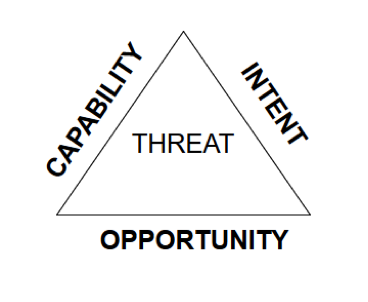
Effective cyber threat intelligence is largely about gaining proper context around the risks facing your organization. As SurfWatch Labs chief security strategist Adam Meyer recently wrote, there are three pillars when it comes to evaluating those cyber threats: capability, intent and opportunity.

Threat_Triangle.pngThe first two, the capability and intent of threat actors, are mostly external aspects that you have no control over, but the third pillar, the opportunity for actors to exploit your organization, is something that can be controlled, evaluated and improved upon.
Malicious actors are relentless when it comes to finding information on that opportunity, and organizations need to use that same relentlessness when searching for potential weaknesses in their cybersecurity, according to a recent report from SurfWatch Labs.

“Knowing where attackers get their information and how they use it is an important piece of your overall cybersecurity strategy,” noted the paper, Top Sources of Information for Cyber Criminals: Where the Bad Guys Go to Conduct Research on Their Targets.

Over the past few months on this blog, we’ve profiled some of the top cyber threats and items for sale on various dark web marketplaces, but not all malicious activity occurs on this “underground web.” Much of it can be found wide out in the open — using simple tools and services that are available to anyone. Here are the top three public websites and tools used by malicious actors, as described in the paper, and how they can help those actors find the opportunity to attack your organization.

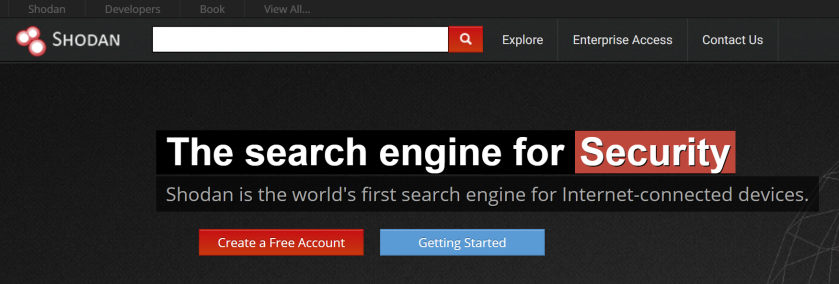
1. Shodan

Shodan was originally launched in 2009 by developer John Matherly and bills itself as “the world’s first search engine for Internet-connected devices.” This simple idea has grown from a basic list of IPs and ports to maps showing where devices are located to screenshots taken from these devices (including webcams, unsecured servers and workstations). The original focus for Matherly’s scans was to highlight the growing problem of the “Internet of Things,” but his research also uncovered industrial control systems, wide open computer systems, unsecured security cameras and more.

shodan

Researchers using Shodan frequently find publicly-exposed data that leads to breach notifications. Just one example is MacKeeper security researcher Chris Vickery discovering personal information from child tracking platform uKnowKids earlier this year.

“One of the uKnowKids databases was configured for public access, requiring no level of authentication or password and providing no protection at all for this data,” Vickery wrote. “There’s no way for me to know for sure how long this data was exposed to the public internet, although the information collected by Shodan.io suggests that the database had been up for at least 48 days.”

uKnowKids CEO Steve Woda reacted by describing Vickery as a hacker whose method “puts customer data and intellectual property at risk.” However, malicious actors can just as easily utilize Shodan to find opportunity for attacks.

As SurfWatch Labs’ paper summarized: “If it’s online, Shodan will find it. The lesson to be learned from this site, without a doubt, is secure something before it goes online.”

2. VirusTotal

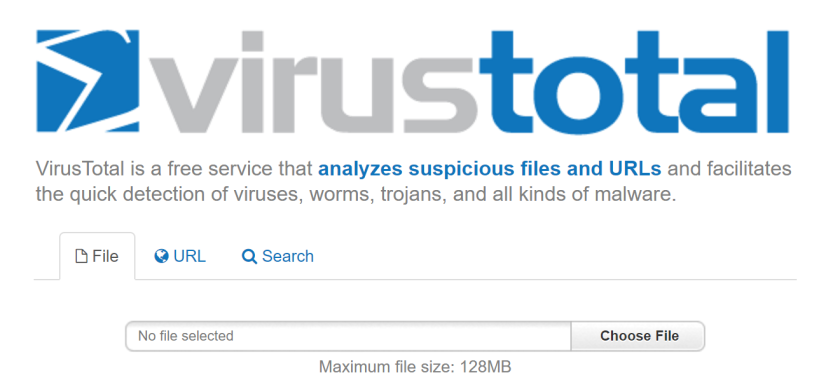
VirusTotal describes itself as “a free service that analyzes suspicious files and URLs and facilitates the quick detection of viruses, worms, trojans, and all kinds of malware.” But that simple tagline masks a deeper set of capabilities.

vius-total

Security researchers have previously suspected that malicious actors use VirusTotal as a tool to help test and hone malware before sending it out in the wild, and in 2014 researcher Brandon Dixon confirmed those suspicions by discovering several hacking groups using the tool, including two nation-state groups.

Dixon said nation-state actors using a free online service to fine-tune their attacks was ironic and unexpected, but that speaks to the usefulness of VirusTotal.

“The power behind VirusTotal is how it adds and saves the metadata and behaviors of the files it analyzes,” noted SurfWatch Labs’ paper. “You can use the domain search to look at the IP history of the domain and get the current WHOIS for the domain, but VirusTotal will also show you a list of every time it detected something malicious on the site, as well as list all of the samples that attempted to communicate with the searched for domain.”

In addition to organizations using VirusTotal to help identify if they’ve been previously targeted, VirusTotal should be seen as a baseline site that can be used for detecting and analyzing suspicious and malicious files.

3. Your Own Company Website

The best way to get information about a particular company is often directly from the source: your own company website. Company websites can provide a treasure trove of information that can be leveraged by attackers to target a specific organization. This includes names of VIPs, email addresses of company executives and other employees, photographs, links to LinkedIn profiles and other social media, and more.

But beyond the surface level, there may be even more valuable information, as the paper explained:

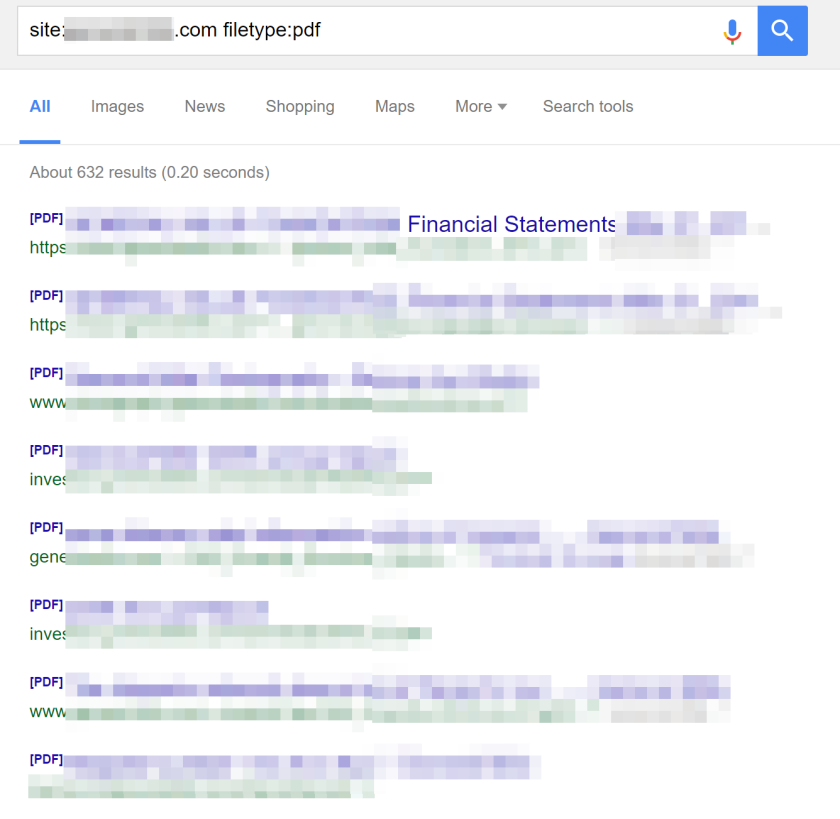
Are you hosting any PDFs for people to download? Word documents, or PowerPoint presentations? Did you remember to remove potential metadata from those documents that could potentially contain additional names, email addresses, usernames, or software versions of the program used to create it? Some pretty simple Google searches (just type “site:yourpublicsite.com filetype:pdf” into the google search box) can reveal much more information that you may not have been aware you were “leaking.”

These types of leaks can lead to costly data breaches.

public

Free tools and services such as the ones described above provide malicious actors with valuable insight into the opportunity for cyber-attacks, and they are certainly one of the first places those actors turn to gather information on your organization. To make matters worse, all of this information can be discovered with minimal effort or expertise.

The good news is that those same tools can be used to gather cyber threat intelligence and to ensure that you are performing the same level of diligence as the threat actors who are trying to harm your organization.

Download SurfWatch Labs Top Sources of Information for Cyber Criminals: Where the Bad Guys Go to Conduct Research on Their Targets for more information.

Weekly Cyber Risk Roundup: Yahoo One of Many New Data Breaches

2016-09-23-riskscores

The past week has been full of various data breach announcements that have flown mostly under the radar. One exception is the breach at the World Anti-Doping Agency (WADA). New batches of information on Olympic athletes continue to be leaked, and the Entertainment sector’s cyber risk score has steadily risen to reflect those leaks. Another exception, and one of the biggest data breach stories of the year, is Thursday’s announcement from Yahoo that 500 million users had their information stolen in late 2014 by alleged state-sponsored hackers.

The theft includes names, email addresses, phone numbers, dates of birth, hashed passwords and, in some cases, encrypted or unencrypted security questions and answers.

The New York Times described the Yahoo breach as “the biggest known intrusion of one company’s computer network.” U.S. Sen. Richard Blumenthal said that if claims that Yahoo knew about the breach since August are true, taking two months to inform users is “a blatant betrayal of their users’ trust.” Sen. Mark Warner is using the incident to push for the adoption of a uniform data breach notification standard.

The Yahoo breach is just the latest example of years-old breaches that have come to light in recent months and affected tens or, in Yahoo’s case, hundreds of millions of individuals. The already massive list of potentially exposed passwords continues to grow, making good password hygiene more important than ever. But the Yahoo breach highlights another nagging problem: the use of static, knowledge-based authentication questions.

From Yahoo’s announcement:

“We invalidated unencrypted security questions and answers so they cannot be used to access an account. … Change your password and security questions and answers for any other accounts on which you used the same or similar information used for your Yahoo account.”

Except unlike passwords, static-based questions cannot be changed. How do you change your mother’s maiden name, your favorite teacher, or the name of your first pet? Fake answers can be used – and they are more secure – but what percentage of people will actually take that extra step?

A February survey from password manager LastPass indicates the majority of people are still reusing passwords. Fifty-nine percent of respondents said they reuse passwords across multiple services and 61% said they are more likely to share work passwords than personal passwords.

Organizations need to be aware of recent credential breaches, inform and train users about the threat, and ensure that password policies and procedures reflect the current level of risk surrounding compromised credentials.

What’s Everyone Talking About? Trending Cybercrime Events

2016-09-23-groups

In addition to the highly-publicized data breaches from Yahoo and WADA, many other companies made data breach announcements over the past week.

Some of those apparent breaches are sparse on details – such as the FBI seizing computers at Camden County Courthouse in Missouri or office supplies firm AF Smith taking its Apple website offline after fears of a payment card breach – however, many of this week’s announcements showcased the various ways in which data breach can occur.

Data breaches were caused by:

  • Unauthorized access: Codman Square Health Center is notifying patients of a data breach after an unauthorized individual accessed information through the New England Healthcare Exchange Network. Mobile review site MoDaCo said a data breach of 875,000 accounts likely occurred by way of a compromised administrator account. A Florida man has been arrested on charges of hacking into computers operated by the Linux Kernel Organization and the Linux Foundation using compromised credentials. A Kennesaw State University student used a professor’s account to hack into the school’s system to change grades and steal personal information. Police also discovered the usernames and passwords of at least 36 faculty members in a notebook in his home. The Pokemon battle simulator Pokemon Showdown was breached and the hacker was able to steal a database dump by compromising administrator’s credentials via social engineering and then using a privilege escalation vulnerability.
  • Improper court filings: WakeMed Health and Hospitals has been ordered by a federal judge to notify thousands of patients that their personal and medical information was disclosed in court filings over a six-year period.  Most of WakeMed’s bankruptcy claims were filed by now-retired employee Valeria Soles. In court testimony, Soles said she had no training and no supervision with regard to filing claims and that no one else in her department knew how to file bankruptcy claims.
  • Missing devices: The University of Ottawa is investigating the disappearance of an external hard drive containing the personal information of approximately 900 students. According to CBC News, the hard drive was used to back up personal information on students with physical or learning disabilities or mental health issues that applied for special academic accommodations.
  • Employee error: The recent leak of NSA hacking tools by a group known as Shadow Brokers is suspected to have originated with an employee or contractor who made the mistake three years ago. The theory is that tools were left on a remote computer during an operation and that Russian hackers eventually found them.
  • Third parties: A data breach at the payroll service used by Oconee County, South Carolina, led to 230 county employees not receiving their scheduled direct deposits. The investigation is ongoing and the source of the breach is currently unknown.
  • Cybercriminal hackers: Hackers claim to have stolen a database from Australian point-of-sale vendor H&L Australia, and the alleged 14.1 gigabytes of data along with an active backdoor to the company’s network was apparently offered for sale more than two months ago.

In addition to the data breaches listed above, SurfWatch Labs also collected data on many different companies tied to cyber-attacks and illegal trading over the past week. Some of those newly seen targets are shown in the chart below.

2016-09-23-ittnew

Closing the C-Suite Knowledge Gap with Cyber Threat Intelligence

I spend my work days digging through SurfWatch Labs’ cybercrime data and writing blogs and reports on the latest cyber threat intelligence trends, so it should come as no surprise that among my friends and family, I’ve become the “cybersecurity guy.”

In fact, many of those same people in my personal life would be happy to shove everything “cyber” in a box and put it far out of sight to never deal with again. Because of this, I’m not shocked when I read the latest studies about those in the C-suite having that same attitude — such as 90 percent of corporate executives saying they cannot read a cybersecurity report.

I have a confession to make myself: I’m not much of a technical IT guy either.

I view myself as more of a business analyst, and through that lens, the separation of cyber risk and business risk doesn’t make much sense. My sister getting Craigslist messages trying to dupe her out of money is no different than the scammers on the street pitching their elaborate stories in person. Likewise, a competitor stealing employee credentials in order to access valuable intellectual property isn’t much different than the paper-driven corporate espionage that existed before the Internet.

It’s the same risk, just in a different medium. If anything, the main difference is in volume. Actors halfway across the globe can target your organization, and expanding digital supply chains means there is a growing number of attack vectors and an ever-changing list of exploits that can be used to steal that information.

You may not be an expert on a specific threat or a risk out of the box, but that’s where cyber threat intelligence can help. With the right intelligence you can make more informed decisions that can dramatically improve your cybersecurity and resiliency.

screenshot-1474406400130
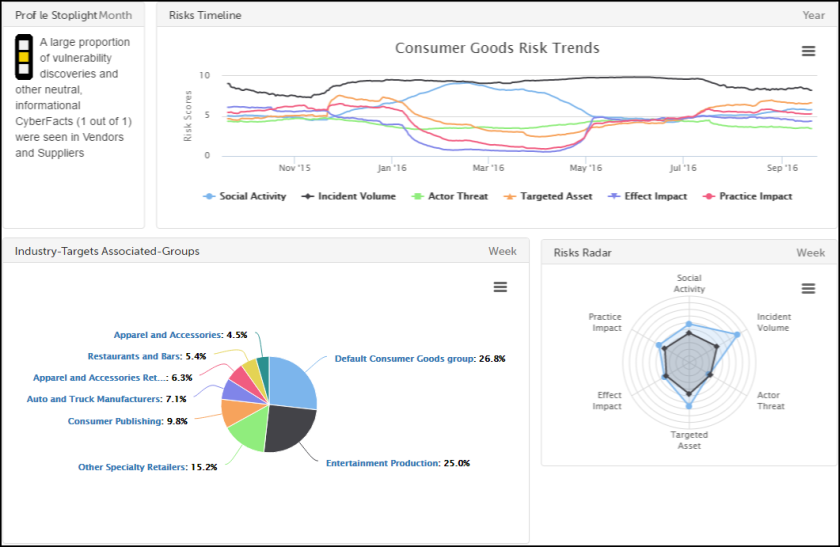
Dashboard of Consumer Goods risk from SurfWatch Threat Analyst

I’m reminded of a famous quote attributed to Socrates: “The only true wisdom is in knowing you know nothing.” Cyber threat intelligence is the wisdom that although individually we may know nothing, collectively we have great knowledge that can be leveraged.

Much has been written about cybercrime-as-a-service model and the way that malicious actors leverage past successes and individual expertise to create more effective tools and tactics. Cyber threat intelligence is about having that same effective and coordinated approach to risk management that the bad actors have when it comes to trying to exploit cyber risk.

The cybersecurity conversation has come a long way over the past few years, but what’s still missing from many organizations is that coordinated approach to cybersecurity — one that begins at the board of directors and goes down to the newest employee. As we previously noted, a proactive strategy backed by an engaged C-suite and board of directors has been shown to reduce the growth of cyber-attacks and data breaches.

It’s easy to berate the clueless executive, but I try to imagine them with the same level of knowledge that I once had — before I first picked up the phone, began interviewing cybersecurity experts, and had all of this cyber threat data at my fingertips.

We don’t all have to be experts. There are plenty of experts out there already. What those organizations need is a way to harness that collective knowledge, to compare that external data against their own internal intelligence, and to have that cyber threat information presented in an ongoing, easy-to-understand manner.

When customers ask our analysts about new threats or use our threat intelligence to improve their organization’s cybersecurity, we’re all working together to better defend against malicious actors by focusing resources on the threats that directly impact each organization. That collaboration and sharing of knowledge is what cyber threat intelligence is all about.

Weekly Cyber Risk Roundup: Ransomware Ups the Ante and Other Headlines

2016-09-16-ITT.png

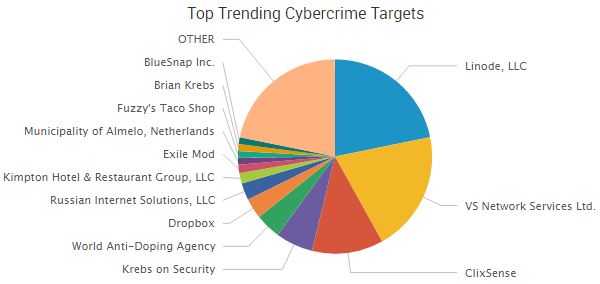
Three of this week’s top four trending industry targets centered around DDoS attacks. Linode, which made last week’s roundup over reported DDoS attacks, was targeted once again. The cloud hosting company has seen DDoS attacks throughout the month, with the latest attack coming on September 13, according to company logs. Additionally, Brian Krebs’ website was hit with DDoS attacks after his reporting on the booter service VDoS led to the arrest of two young Israeli men who allegedly ran the cybercrime-as-a-service operation.

Trending new data breaches and cyber-attacks recently observed in SurfWatch Labs’ data are shown below.

2016-09-16-ittnew

Noteworthy cybercrime events from the past week include:

    • Variety of New Breaches Reported: Dutch news sources are reporting that hackers have stolen 22 gigabytes of data from municipal servers in Almelo, though at the moment it is unclear what data may have been compromised. London-based VoIP Talk is emailing customers about a potential breach after discovering “attempts to exploit vulnerabilities in our infrastructure to obtain customer data.” The paid-to-click site ClixSense suffered a data breach in which a hacker exposed 2.2 million subscriber identities and put another 4.4 million up for sale. The Exile Mod gaming forum website was hacked and the personal details of nearly 12,000 users was posted online by a group going by the name “Expl.oit.” EurekAlert!, which is used to distribute scientific press releases, temporarily shut down their website after a breach compromised usernames and passwords and two embargoed news releases were prematurely released. The personal information of 29 Olympic athletes has been stolen from the World Anti-Doping Administration. Finally, a data breach at Regpack, an online enrollment platform serving the private education industry, has led to 324,000 people having personal information exposed.
    • More Extortion Attacks: A hacker attempted to extort Bremerton Housing Authority in Washington for 6 bitcoins (around $3,700) after gaining access to its website and stealing a database of 1,100 client names and the last four digits of Social Security numbers. University Gastroenterology in Rhode Island is notifying patients of a data breach after what sounds like a ransomware attack. In its notification letter, it wrote that an unauthorized individual had gained access to an electronic file storage system from  Consultants in Gastroenterology, which it acquired in 2014, and “encrypted several files.”
    • Political Parties Continue to be Targeted: State Democratic Party officials are being breached and impersonated by hackers, according to a warning from the Association of State Democratic Chairs. The message urged recipients to avoid searching the leaked DNC information posted by WikiLeaks due to concerns over malware being embedded in the links. Additionally, a “serious misconfiguration” on Donald Trump’s website exposed the resumes of prospective interns, according to security researcher Chris Vickery.
    • Stolen Laptops Continue: M Holdings Securities, a subsidiary of M Financial Holdings, had a password-protected laptop with information on 20,000 clients stolen from the trunk of an employee’s car on July 29. Roughly 2,000 of those clients had Social Security numbers potentially compromised. U.S. Healthworks began notifying 1,400 patients of a data breach earlier this month after a laptop and the laptop’s password were stolen from an employee.

Other Noteable Cyber Risk News

2016-09-16-RiskScores.png

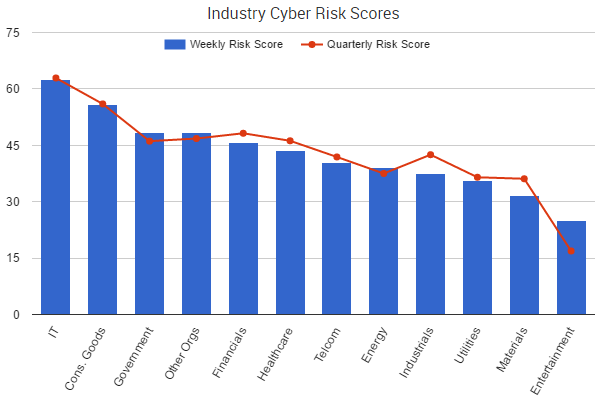
This week saw little movement among most sectors’ overall cyber risk scores. Other Organizations – which includes groups such as political parties, schools, and charities – saw the week’s biggest rise in risk, up 1.6%.

Ransomware was at the forefront of much of the week’s cybercrime news. CBC News reported that a school board and a support group for cancer patients, both in Canada, were infected with the Zepto ransomware, and the actor behind the attack demanded $20,000 in payment to decrypt the files. Those high prices may become more commonplace, the FBI warned in an alert published on Thursday. Recent ransomware variants have been seen targeting vulnerable business servers rather than individual users, and the actors behind these targeted attacks have been upping their ransom demands as the data they encrypt grows more valuable.

“This recent technique of targeting host servers and systems could translate into victims paying more to get their decryption keys, a prolonged recovery time, and the possibility that victims will not obtain full decryption of their files,” the alert warns. “Recent victims who have been infected with these types of ransomware variants have not been provided the decryption keys for all their files after paying the ransom, and some have been extorted for even more money after payment.”

The FBI isn’t the only government agency warning of the threat. In July, the Department of Health and Human Service stated that PHI being encrypted by ransomware qualifies as a “breach” in most circumstances, and FTC chairwoman Edith Ramirez warned this week that “a company’s unreasonable failure to patch vulnerabilities known to be exploited by ransomware might violate the FTC Act.”

It’s worth taking a moment to review this week’s advice on combatting ransomware from the FBI alert:

  • Regularly back up data and verify the integrity of those backups. Backups are critical in ransomware incidents; if you are infected, backups may be the best way to recover your critical data.
  • Secure your backups. Ensure backups are not connected to the computers and networks they are backing up. Examples might include securing backups in the cloud or physically storing them offline. It should be noted, some instances of ransomware have the capability to lock cloud-based backups when systems continuously back up in real-time, also known as persistent synchronization.
  • Scrutinize links contained in e-mails and do not open attachments included in unsolicited e-mails.
  • Only download software – especially free software – from sites you know and trust. When possible, verify the integrity of the software through a digital signature prior to execution.
  • Ensure application patches for the operating system, software, and firmware are up to date, including Adobe Flash, Java, Web browsers, etc.
  • Ensure anti-virus and anti-malware solutions are set to automatically update and regular scans are conducted.
  • Disable macro scripts from files transmitted via e-mail. Consider using Office Viewer software to open Microsoft Office files transmitted via e-mail instead of full Office Suite applications.
  • Implement software restrictions or other controls to prevent the execution of programs in common ransomware locations, such as temporary folders supporting popular Internet browsers, or compression/decompression programs, including those located in the AppData/LocalAppData folder.

Tracking the exact number of ransomware victims is difficult, the FBI said, since many attacks go unreported. The FBI is urging victims to report ransomware incidents regardless of the outcome so that they can better understand who is behind the attacks and how they operate.