Weekly Cyber Risk Roundup: DDoS Attacks Disrupt Services and SEC Probes Yahoo

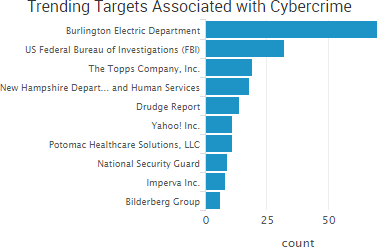
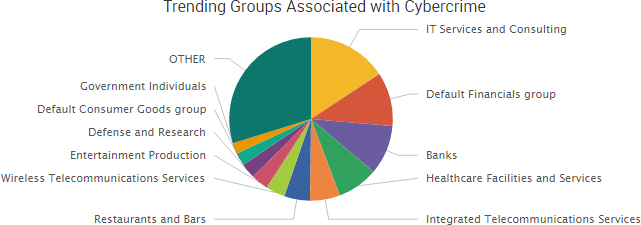
A series of distributed denial-of-service (DDoS) attacks against financial institutions led to customers of Lloyds Banking Group experiencing intermittent outages over a 48-hour period and was the top trending cybercrime event over the past week.
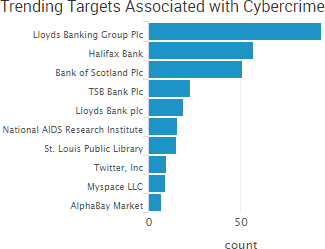
2017-01-27_ITT.pngThe Guardian reported that the attacks hit Lloyds, Halifax and Bank of Scotland from January 11 to January 13. IBTimes reported that other unnamed lenders were targeted, but experienced no down time. Motherboard spoke to a hacker who claimed to be behind the attack and allegedly tried to ransom Lloyds over the incident. However, Lloyds issued a statement saying it was able to provide normal service for “the vast majority” of customers and that “only a small number” experienced any issues during the attack.

In other DDoS news, the ticketing systems for the Sundance Film Festival were taken offline due to a cyber-attack on January 21. “We have been subject to a cyberattack that has shut down our box office,” the festival tweeted. “Our artist’s voices will be heard and the show will go on.” According to The Hollywood Reporter, “although the festival was able to get its ticketing systems back online within an hour of the Saturday breach, multiple other denial-of-service (DDoS) attacks on Sundance’s IT infrastructure followed.”

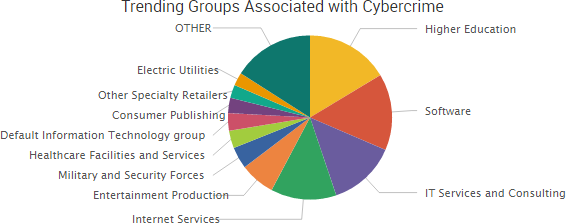
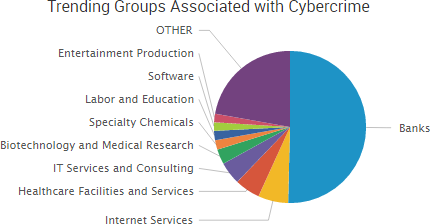
Finally, the Korea Internet & Security Agency recently issued a report echoing concerns shared by other security professionals, including SurfWatch Labs Adam Meyer: expect DDoS attacks leveraging Internet-of-Things devices to rise in 2017. South Korea has recently faced political turmoil, and in December the country’s Constitutional Court began its first hearings on the impeachment of President Park Geun-hye. The agency report predicted that DDoS attacks may occur against key government agencies and social infrastructure-related facilities with the goal of stirring the political and social instability brought on by the impeachment proceedings and potential upcoming election. According to SurfWatch Labs’ data, government was the third highest trending sector related to DDoS attacks in 2016, behind only information technology and consumer goods.
2017-01-27_ittgroups

Other trending cybercrime events from the week include:

  • Another year of W-2 breaches begins: Approximately 1,400 Campbell County Health employees had their W-2 information stolen when an employee fell for a phishing email impersonating a hospital executive. Eight Missouri school districts were targeted with identical phishing messages impersonating the superintendent and requesting employee W-2 information, and an employee at the Odessa School District fell for the scam and forwarded the information. The Argyle Independent School District in Texas and the Tipton County School District also reported breaches due to similar phishing emails.
  • Media outlets hit with political attacks: The Twitter accounts of BBC Northampton and The New York Times video were both hijacked and used to spread fake messages saying that President Donald Trump was injured in the arm by gunfire at his inauguration and that Russia was planning to attack the U.S. with missiles. Crescent Hill Radio WCHQ said its FM feed was hacked and a song titled “Fuck Donald Trump” was played on repeat for 15 minutes before the station could shut down the broadcast.
  • Exposed databases reveal sensitive data: Security researchers have found nearly 400,000 audio recordings belonging to VICI Marketing exposed to the Internet, and as many as 17,649 of those recordings include customer payment card numbers and private customer information. The other 375,368 audio recordings are “cold calls,” some of which contain personal information. A misconfigured database used by The Candid Board, a subscription website dedicated to images and video of women who appear unaware they are being recorded, led to the leak more than 178,000 members’ information. The source also said that he or she is in possession of “a large chunk of data from multiple boards operated by this group,” which IBTimes explained was in reference to another leaked database holding tens of thousands of records from a website called NonNudeGirls.
  • Arrests and charges:  A former employee of First Niagara call center admitted to using his position to steal callers’ personal information and then using that information to transfer $15,492.59 from customer accounts to his own. An IT worker employed by the New York Police Department accessed personnel files of police officers and then attempted to sell that information to an undercover informant. A 32-year old Russian programmer suspected of developing the NeverQuest banking Trojan was arrested in Barcelona, according to Spanish authorities.

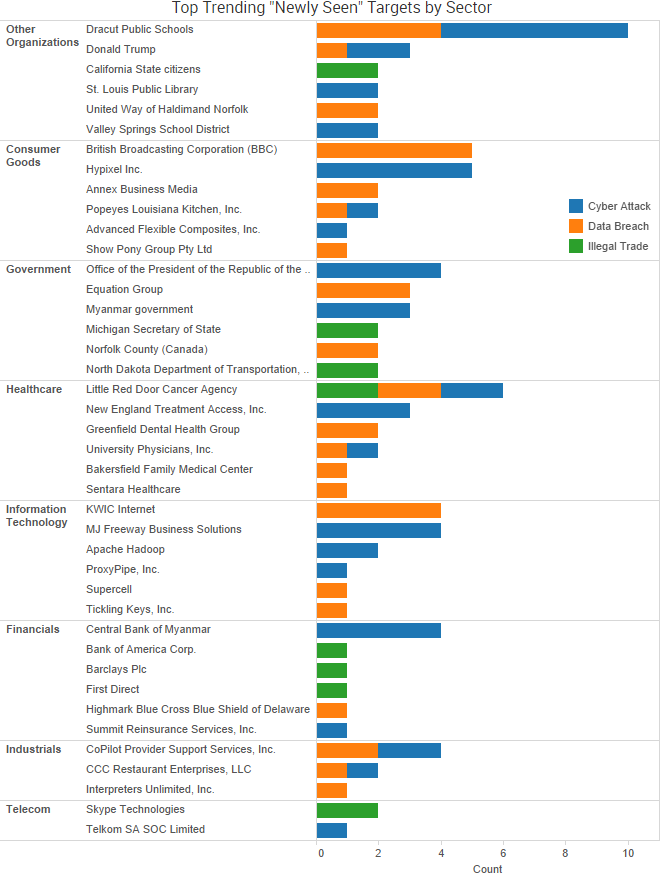
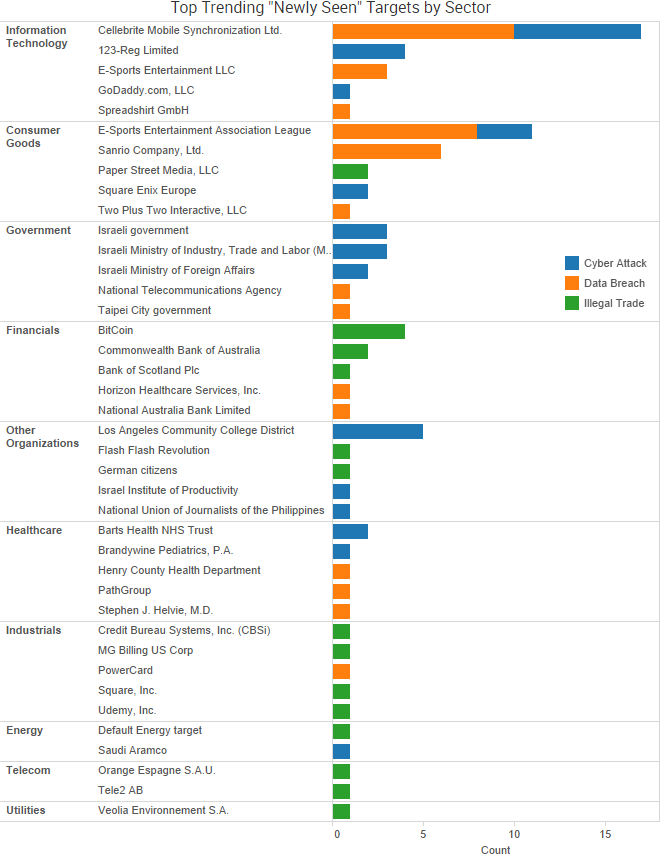
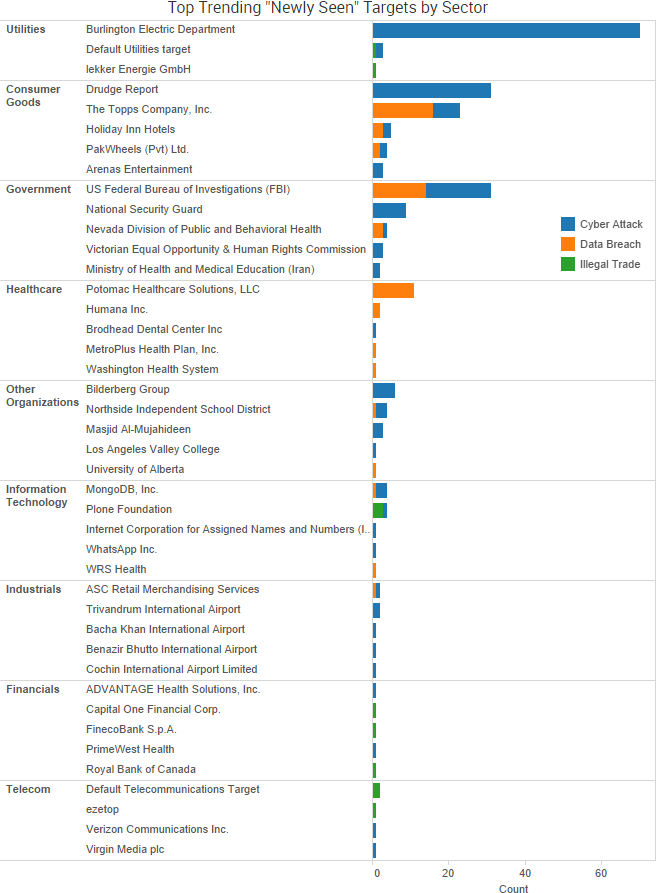
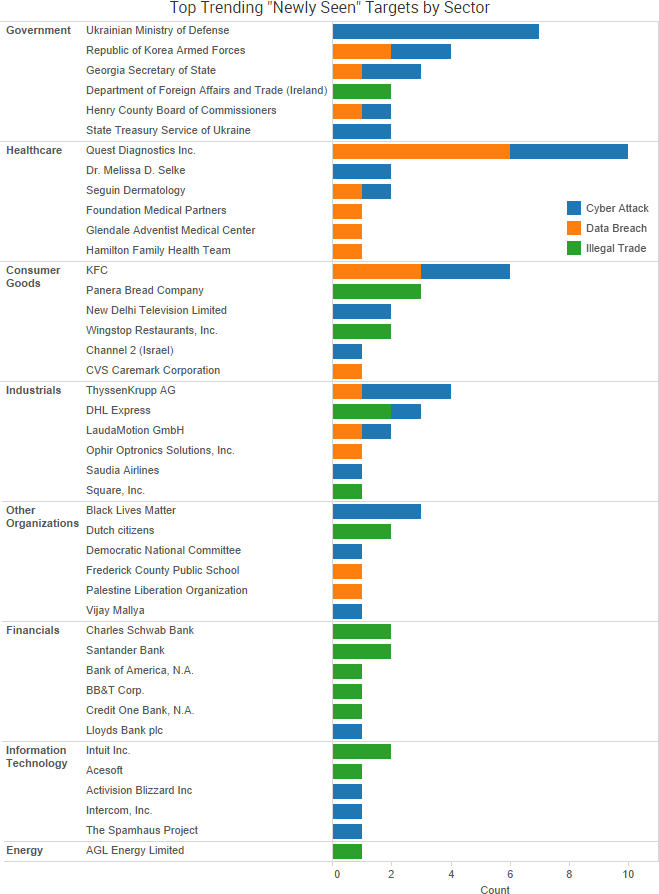
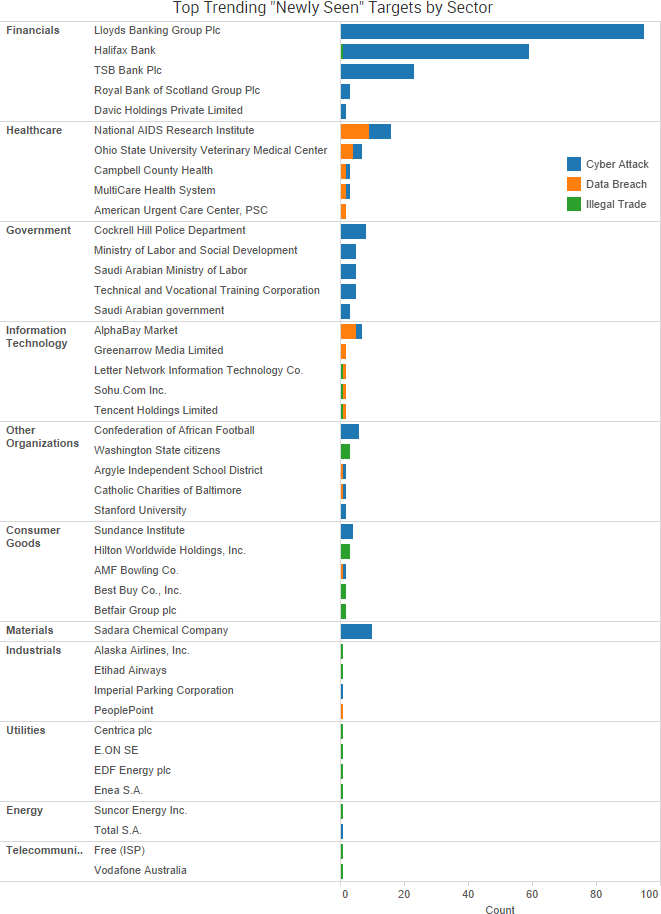
SurfWatch Labs collected data on many different companies tied to cybercrime over the past week. Some of those “newly seen” targets, meaning they either appeared in SurfWatch Labs’ data for the first time or else reappeared after being absent for several weeks, are shown in the chart below.
2017-01-27_ittnew

Cyber Risk Trends From the Past Week

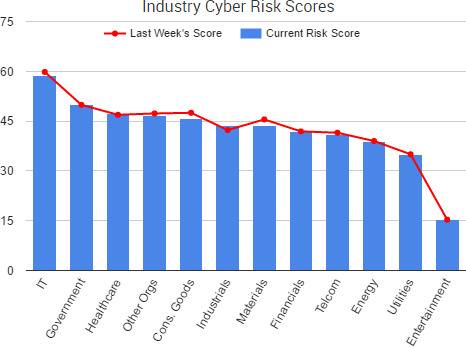
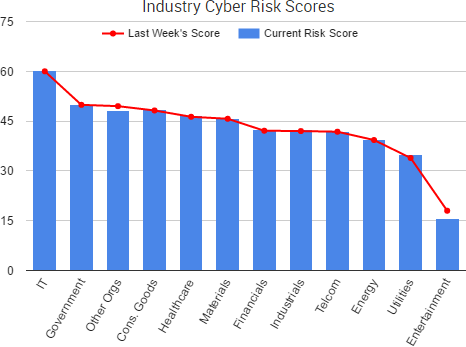
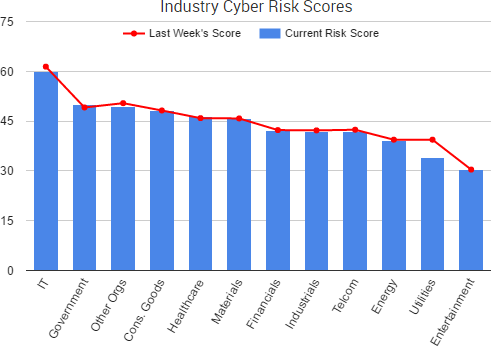
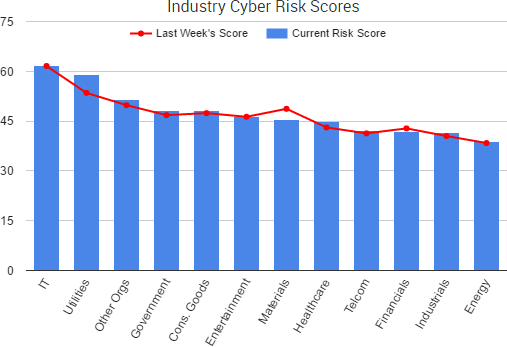
2017-01-27_riskscoresThe fallout over two massive data breaches at Yahoo continued this past week as it was reported that the Securities and Exchange Commission (SEC) opened an investigation into the timeline of Yahoo’s data breach disclosure and that the sale of Yahoo’s main web operations to Verizon has been delayed until the next quarter.

Sources told The Wall Street Journal that the SEC issued a request for documents from Yahoo in December and is looking into whether Yahoo’s breach disclosures may have violated civil securities laws. The investigation will likely focus on Yahoo’s 2014 data breach affecting 500 million users, which was announced in September 2016. Yahoo is said to have linked the 2014 breach to state-sponsored actors two years before the public disclosure. In December 2016 Yahoo disclosed a separate breach affecting more than one billion users.

The SEC has never brought a case against a company for failing to disclose a data breach, the Wall Street Journal reported, but experts said the SEC has been looking for a case to clarify guidance issued in 2011. That guidance requires the disclosure of material information about cybersecurity risks and incidents if it could affect investors, but what is “material” is still a question – a question that this case may potentially help answer.

Those two data breaches have led to speculation over the past few months of how they may impact Verizon Communication’s acquisition of Yahoo, which was valued at $4.83 billion last July. Yahoo said it is “working expeditiously” to finish the deal; nevertheless, the sale has been pushed back until next quarter.

“Yahoo has been an interesting process,” Verizon Chief Financial Officer Matt Ellis said in an interview last Tuesday with Bloomberg. “There’s been good progress, but we are still awaiting the final reports and therefore we haven’t reached any conclusions yet.”

Weekly Cyber Risk Roundup: Ransomware Disrupts Organizations and Massive Data Leaks

Extortion is once again the top trending cybercrime issue as concern continues around the theft, destruction and blackmail related to thousands of insecure MongoDB, Elasticsearch, CouchDB and Hadoop Distributed File System installations. While those stories led much of the past week’s discussion, there was also a steady stream of reports of organizations being infected with ransomware.

2017-01-20_ittThe most impactful, publicly known ransomware attack of late involves the St. Louis Public Library. The attack hit 700 computers across all 17 of the library’s locations on Thursday, forcing the library to temporarily stop all book borrowing. A $35,000 ransom demand was made, but the library said it will wipe its computer system rather than pay. Checkout service was restored to all locations on Saturday, according to the St. Louis Post Dispatch, and the library’s next priority is to restore service to the publicly available computers – although as of Sunday morning the library’s website stated that the “use of reservable computers is suspended.” A spokesperson said the criminals managed to infect a centralized computer server, which also disrupted the staff’s email system.
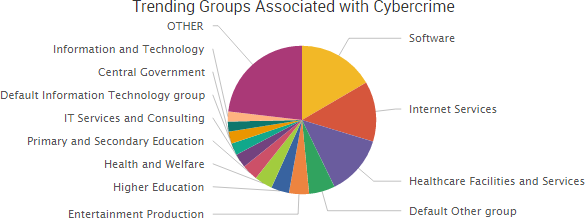
Other organizations to report disrupted services due to apparent ransomware attacks include Advanced Flexible Composites in Illinois, Valley Springs School District in Arkansas, and Kanawha County Schools in Virginia. Advanced Flexible Composites notified its customers that a January 17 hack of its computer system prevented the company from receiving emails and processing quote requests or orders. Not much information was provided about the attack; however, on the surface it sounds like a ransomware infection. Valley Springs School District’s superintendent said the school’s infection may lead to some information saved by teachers being lost such as lessons plans, curriculum and tests. Kanawha County Schools said that it was able to restore internal documents after its incident but that its website would take longer to bring back online.

Finally, the Delaware Department of Insurance is investigating an incident involving a ransomware infection and the unauthorized access of customer data at Summit Reinsurance Services and BCS Financial Corporation.

2017-01-20_groups

Other trending cybercrime events from the week include:

  • New type of SWIFT attack: Malicious actors compromised the SWIFT systems of three Indian banks and created fake trade documents that may have been used to raise finance abroad or facilitate dealings in banned items. “There was fraudulent duplication of trade documents like letters of credit (LC) and guarantees which the hackers may have or planning to encash with some offshore banks,“ a source told ET Tech. “It’s also possible that hackers did not present the fake LCs to raise funds but to carry out trade of prohibited or illegal commodities.”
  • Popeye’s point-of-sale breach: Point-of-sale malware was discovered at the restaurant chain Popeyes, and customers who used their payment cards at one of 10 infected locations between May 5, 2016, and August 18, 2016, likely had their information stolen, the company said in a press release. The ten locations include seven in Texas, two in North Carolina, and one in Georgia.
  • More employee and third-party breaches: Police in the Netherlands are alerting 20,000 potential victims about a man who worked at various companies as a website builder and used his position to insert a special script that allowed him to steal usernames and passwords. Online fashion store Showpo is suing a former employee and an online retailer over allegations the graphic designer exported a database of 306,000 customers from MailChimp and passed the information along to online retailer Black Swallow. Customers of the Victorian Game Management Authority in Australia had their personal information potentially exposed when the authority accidentally sent customer data to eight individuals who were renewing their game license. A third-party advertiser that promotes Canada’s Grey Eagle Resort and Casino was hacked and fake text messages were sent to the casino’s VIP members telling them the casino “will be closed for the remainder of January due to infestation and rodent problems.”
  • Healthcare-related breaches: TheDarkOverlord said it stole data from Little Red Door Cancer Services of East Central Indiana and attempted to extort the organization by threatening to release the data. CoPilot Provider Support Services announced a breach affecting approximately 220,000 individuals due to a database being illegally accessed in October 2015. Sentara Healthcare is notifying 5,454 vascular and thoracic patients that their medical information was compromised due to a breach at an unnamed third party. The orthopedics practice at The University of Maryland Faculty Physicians Inc. is notifying 1,500 patients that their information may have been accessed when an email account belonging to a physician assistant’s email account was hacked. Barts Health NHS Trust experienced a malware infection that led to taking numerous hard drives offline “as a precautionary measure” and using a manual backup for its computerized pathology results service.
  • Other announcements: Hackers targeted a laptop belonging to the special investigation team probing South Korean President Park Geun-hye’s political scandal. Current and former employees of Dracut Public Schools had their Social Security numbers and other personal information compromised due to an employee falling for a phishing attack. A Russian-language version of the series finale of Sherlock circulated online before the episode was broadcast. The forums of Clash of Clans developer Supercell and MrExcel, both of which use vBulletin, announced data breaches.

SurfWatch Labs collected data on many different companies tied to cybercrime over the past week. Some of those “newly seen” targets, meaning they either appeared in SurfWatch Labs’ data for the first time or else reappeared after being absent for several weeks, are shown in the chart below.

2017-01-20_ittnew

Cyber Risk Trends From the Past Week

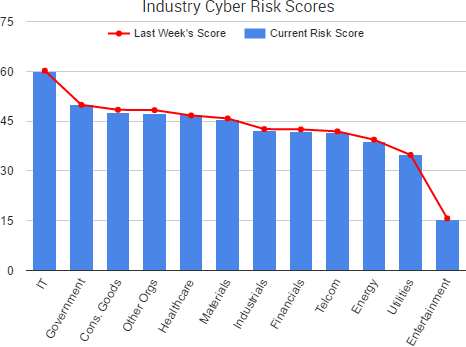
2017-01-20_riskscoresSecurity researchers frequently discover private data being exposed to the Internet due to technical errors such as poorly secured data backups, and this past week several new incidents along those lines.

Chris Vickery’s discovery of multiple misconfigured Rsync instances at Canadian ISP KWIC appears to be truly massive potential breach, with CSO Online reporting that terabytes of information for all of its customers was exposed. The issue was fixed after the company was notified of the problem; however, it is unclear how long the information was available before the fix. The data exposed included credit card details, email addresses, passwords, names, home and business addresses, phone numbers, email backups, VPN details and credentials, internal KWIC backups, and more.

In last week’s roundup we noted that incorrectly configured databases exposed the data of 3.3 million Hello Kitty fans as well as thousands of patients of Canadian plastic surgery company SpaSurgica. The week before that data related to healthcare professionals deployed within the U.S. Military’s Special Operations Command (SOCOM) was exposed in a similar fashion. The week before that data belonging to Ameriprise clients was exposed due to an advisor synchronizing data between between his home and work and neither drive requiring a password.

This past week saw a similar story of a poorly configured backup drive. Interpreters Unlimited, a California-based translation and interpreter company, exposed thousands of sensitive documents due to an Internet-connected backup drive used by an IT manager that had no password protection and was online for four to six months. Files seen by ZDNet showed that the drive contained dozens of usernames, email addresses and passwords stored in plain text for the company’s infrastructure, including its website, hosted email and domain name servers, and remote desktop apps. The drive also contained the private data of clients and employees such as Social Security numbers and the amount of money translators earned.

The constant trickle of company, customer and employee data being leaked due to the poor practices of employees and partners should serve as a reminder for all organizations that data breaches often spring from mistakes made within the organization — not just external cybercriminals.

2017 Cyber Forecast: Threat Intel Will Play Major Role in Helping Organizations Manage Risk

There are a lot of cybersecurity trends to reflect on as we kick off the new year — the growth of ransomware and extortion, the emergence IoT-powered botnets, the evolving cybercriminal landscape — but I believe the biggest risk trend to watch in 2017 may revolve around how organizations react to dealing with those new threats as their attack surface continues to expand.

The digital presence of many companies has extended on a variety of fronts, including social media, customer engagement, marketing, payment transactions, partners, suppliers and more. That increased exposure clearly has benefits for organizations. However, it also makes it difficult for organizations to track, evaluate and take action against the constant barrage of the growing threats — many of which are at least one step removed from the direct control of internal security teams.

That theme was evident in SurfWatch Labs’ new report, Rise of IoT Botnets Showcases Cybercriminals’ Ability to Find New Avenues of Attack. Our threat intelligence analysts have observed and evaluated data connected to hundreds of incidents that emanated from outside of organizations’ walls over the past year, including:

  • accidental exposure of sensitive data by third-party vendors
  • shoddy cybersecurity practices causing breaches at vendors that house organizations’ data
  • vulnerabilities in software libraries or other business tools being exploited to gain access to an organization
  • vendor access being compromised to steal sensitive data
  • credentials exposed in third-party breaches causing new data breaches due to password reuse

It’s clear that organizations are struggling with these expanding threats. Not only are organizations at risk from threats trying to break down their front door, those threats are increasingly coming through side doors, back doors, windows — any opening that provides the path of least resistance. For example, a 2016 survey of more than 600 decision makers found that an average of 89 vendors accessed a company’s network each week and that more than three-quarters of the respondents believed their company will experience a serious information breach within the next two years due to those third parties.

SurfWatch Labs’ annual cyber threat report echoed that concern, finding that the percentage of targets publicly associated with third-party cybercrime nearly doubled from the second half of 2015 to the second half of 2016.

“Cybercrime is increasingly interconnected, and issues at one organization quickly moved through the supply chain to impact connected organizations in 2016,” the report noted. “That interconnectedness is evident in the growing pool of already compromised information being leveraged by threat actors, the expanding number of compromised devices and avenues to exploit compromised data, and the way in which data breaches and discovered vulnerabilities ripple outwards – sometimes several layers deep through multiple vendors – to touch unexpecting organizations.”

That interconnectedness is pushing organizations to try to gain more context around the growing number of threats so they can better prioritize actions. As I wrote in a previous blog, organizations are spending more money than ever around cybersecurity, yet they are not necessarily becoming more secure.

Cyber threat intelligence can help to peel back that layer of uncertainty and guide those tough cybersecurity decisions by answering questions such as:

  • What is the biggest cyber threat facing my organization and what steps can be taken to mitigate that risk?
  • Which threats are active within my industry and impacting similar organizations?
  • Have any vendors or suppliers suffered a data breach that may impact my organization in the future?
  • Is any information related to my organization being sold on the dark web?
  • Is my organization at risk from employee credentials exposed via third-party breaches?
  • What new and old vulnerabilities are currently being exploited by threat actors?
  • And other questions unique to your organization …

That context is what many decision makers say is lacking within their own organizations. Going back to that 2016 survey of key decision makers — more than half of them believed that threats around vendor access were not taken seriously and almost three quarters believed that the process of selecting a third-party vendor may overlook key risks.

A smart and thoughtful approach to cybersecurity that provides the necessary context can help to both shine a light on those new risks and filter out the excess chatter so your organization can focus on practical and relevant solutions that have an immediate impact on your cyber risk.

Cyber threat intelligence came a long way in 2016, but many organizations remain overwhelmed by the number of cyber threats and are continuing to experience data breaches. Expect the use of relevant and practical cyber threat intelligence to see continued growth in 2017 as organizations more to address their blind spots and more effectively manage their cyber risk.

Weekly Cyber Risk Roundup: More Extortion and Marijuana Retailers’ Woes

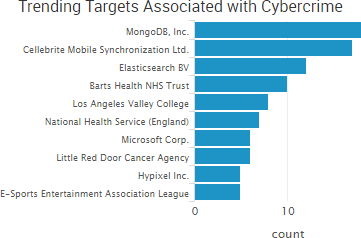
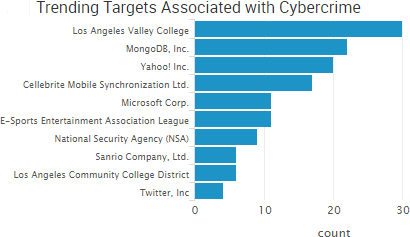
Extortion continues to dominate the cybercrime headlines in 2017 with the week’s top two trending targets being the successful ransom at Los Angeles Valley College and continued extortion attempts around MongoDB databases.

2017-01-013_ITT.pngIt was less than a year ago that Hollywood Presbyterian Medical Center became a national news story by paying a $17,000 ransomware demand so that staff could regain access to infected computers. A year later those types of stories are no longer unique; they’re routine. Los Angeles Community College District’s recent decision to pay a $28,000 ransom after an infection “disrupted many computer, online, email and voice mail systems” is just the latest of example.

“It was the assessment of our outside cybersecurity experts that making a payment would offer an extremely high probability of restoring access to the affected systems, while failure to pay would virtually guarantee that data would be lost,” the district said in a FAQ, echoing the sentiments of many other organizations who’ve decided to pay ransoms. “The District has a cybersecurity insurance policy to address these specific types of cyber intrusions and it was activated during this incident. While much time will pass before this matter is resolved, we have already availed ourselves of the resources provided by the policy, including assistance of cybersecurity experts.”

In addition, the ongoing issue of insecure MongoDB databases being stolen, deleted and subsequently extorted continues to rack up thousands of new potential victims, including Princeton University. Researchers Victor Gevers and Niall Merrigan have been tracking the various victims and ransom demands as threat actors compete to have the most up-to-date ransom notes. The problem, Merrigan told KrebsOnSecurity, is that with so many actors the victims may not know who actually has the stolen data. Merrigan advises victims not to pay unless they have proof that the extortionists actually have the files being ransomed. Lastly, it appears some of those actors have now shifted towards ElasticSearch servers, with more than 3,000 victims as of Monday morning.

2017-01-013_ittgroups

Other trending cybercrime events from the week include:

  • Another week of large-scale breaches: Mobile phone hacking company Cellebrite was breached and 900 GB of data was compromised, including customer information, databases and a vast amount of technical data regarding Cellebrite’s products. E-Sports Entertainment Association (ESEA) was hacked last December and a database containing information on 1.5 million players was stolen. The actor also attempted to extort the company for $100,000, but ESEA refused to pay. Three brokers who left the commercial real estate firm Avison Young used external hard drives to “downloaded massive amounts of data,” including client and financial information, market intelligence and strategic plans, according to a complaint filed by the firm.
  • More accidental data exposure: A MongoDB database belonging to Sanrio, the company behind Hello Kitty, was misconfigured and exposed to the public in 2015, and a copy of that database has recently surfaced online. Approximately 3.3 million Hello Kitty fans are affected, including 186,261 records related to individuals under the age of 18. Canadian plastic surgery company SpaSurgica exposed the detailed medical histories of thousands of patients due to an unprotected remote synchronization (rsync) service, according to MacKeeper researchers. The files contained medical histories, personal information, and intimate before and after pictures of breast augmentation and other surgeries. An email sent by Ball State University’s retention office to students on academic probation accidentally contained an Excel spreadsheet of 59 students on probation for the spring semester rather than planned attachment about upcoming academic help sessions.
  • Cyber-attack leads to another blackout: The December 2016 blackout in Ukraine was due to a cyber-attack, and it is connected to a similar attack in 2015, as well as hacks at the national railway system, several government ministries and a national pension fund. The head of ISSP, a Ukrainian company investigating the incident, said that the recent attack against a Ukrainian utility was a “more complex” and “much better organized” version of the 2015 attack. He also said that the different cybercriminal groups that worked together appeared to be testing techniques that could be used elsewhere in the world.
  • Other breach announcements: Outdated data management software led to the leak of financial information for at least 2,000 Taipei City Government employees, city officials said. A November data breach at TwoPlusTwo poker forum exposed the personal information of its users, and the stolen data was subsequently offered for sale on the Internet. Fraudulent login attempts were made to Spreadshirt partner accounts using previously compromised credentials with the goal of redirecting payments by changing the Paypal payout address. Dozens of Israeli soldiers had their smartphones hacked by Hamas militants impersonating attractive women. Italian police have arrested two siblings for allegedly hacking into thousands of email accounts using a customized malware known as “EyePyramid” and then using the stolen information to make investments. The Susan M. Hughes Center recently notified HHS of an August ransomware infection that affected 11,400 patients’ information.

SurfWatch Labs collected data on many different companies tied to cybercrime over the past week. Some of those “newly seen” targets, meaning they either appeared in SurfWatch Labs’ data for the first time or else reappeared after being absent for several weeks, are shown in the chart below.

2017-01-013_ittnew

Cyber Risk Trends From the Past Week

2017-01-013_riskAs SurfWatch Labs noted in its annual report, organizations are increasingly struggling with third-party and supply chain cybercrime.

This issue was highlighted once again this past week as a cyber-attack at MJ Freeway,  a popular software platform used by marijuana retailers, disrupted operations at 1,000 retailers across 23 states. A full week after the initial attack the company is still working to restore some level of services to many of its clients. A full recovery may take several weeks, Jeannette Ward, director of data and marketing for MJ Freeway, told Marijuana Business Daily.

The motivations behind the attack are unclear, but the attack appears to be aimed at corrupting the company’s data, not stealing it.

“Attackers took down both MJ Freeway’s production and backup servers, causing an outage for all of our clients,” MJ Freeway CEO Amy Poinsett said in a video uploaded on Saturday, “Current analysis shows the attackers did not extract any client or patient data and did not view any patient data thanks to encryption measures we had in place.”

However, she added that “the damage from the attack is extensive” and the company is currently trying to call customers individually to move them to alternate MJ Freeway sites, which is taking more time than she would like. A number of stores had to temporarily close due to the outage, and those that remained open have had to deal with lengthy lines and customer complaints as manual transactions increased the time for each sale.

As SurfWatch Labs noted in its 2016 Cyber Trends Report, the percentage of targets publicly associated with third-party cybercrime nearly doubled from the second half of 2015 to the second half of 2016.

“SurfWatch Labs analysts contribute this third-party growth to the expanding ecosystem of partners and suppliers that provide various products and services,” the report stated. “Cybercrime is increasingly interconnected, and the effects of one data breach or cyber-attack are difficult to isolate and contain.”

That appears to be the case with MJ Freeway.

Organizations Struggle with Third Party and Supply Chain Cybercrime, Says New Report

The past year saw organizations struggle with third-party issues as malicious actors shifted their tactics towards weak points in the supply chain and exploited the interconnected nature of cybercrime, according to a new report from SurfWatch Labs.

“One of the most telling statistics in all of SurfWatch Labs’ evaluated cyber threat data is the rise of CyberFacts related to third parties,” the report stated. “The second half of 2016 saw the percentage of targets publicly associated with third-party cybercrime nearly double compared to the same period in 2015. It is clear that malicious actors are looking for any opportunity to exploit poor cybersecurity practices, and the supply chain provides an abundance of opportunity for cybercriminals to do so.”

SurfWatch Labs annual threat intelligence report, Rise of IoT Botnets Showcases Cybercriminals’ Ability to Find New Avenues of Attack, was based on more than a hundred thousand CyberFacts collected against more than 6,000 targets – 4,066 targets publicly associated with cybercrime and an additional 2,395 observed being discussed on the dark web.

Cybercrime in 2016

CoverImage.png
SurfWatch Labs collected data on more than 6,000 targets associated with cybercrime in 2016.

Cybercrime is increasingly interconnected, the report noted, and the effects of a data breach or poor cyber hygiene at one organization often move through supply chains to impact other connected organizations. That was true when it came to the growing number of compromised Internet-of-Things devices, which we wrote about last week, and it was true for a number of other cybercrime events as well.

For example:

  • Previously stolen employee credentials were fed into remote access services in order to compromise new organizations.
  • Data stolen from one organization went on to have significant economic, political and reputational impact on other parties.
  • Threat actors used information obtained in previous attacks to establish trust and legitimacy in social engineering campaigns that lead to new data breaches.
  • Those new data breaches, some of them truly massive, led to even more private information entering the public domain.

That ripple effect was evident in many of the year’s top trending data breaches.

databreaches_itt

Breaches at Yahoo, LinkedIn and others collectively accounted for well over two billion passwords being fully or partially exposed, as well as the exposure of some users’ security questions and answers. The massive breach at Panamanian law firm Mossack Fonseca led to ongoing international probes as well as the Prime Minister of Iceland stepping down. The breach at the Democratic National Committee took center stage on the campaign trail as leaked emails and other cybersecurity issues helped to shape, in part, who would be the next president of the United States.

“The amount of private data circulating among cybercriminal groups combined with an environment in which organizations are providing more points of access for customers and employees means that many organizations are more exposed than ever,” the report stated.

Key trends and statistics from SurfWatch Labs’ 2016 cybercrime data include:

  • More cybercrime tied to third parties: SurfWatch Labs analysts contribute this third-party growth to the expanding ecosystem of partners and suppliers that provide various products and services. This business model requires a natural need to extend the “level of presence” of organizations by sharing or fully outsourcing the creation and management of sensitive data, increasing the chance of a compromise.
  • Compromised credentials surged: The amount of publicly exposed user credentials grew significantly in 2016. SurfWatch Labs collected data on more than 1,100 organizations associated with the “credentials stolen/leaked” tag across both public and dark web sources over the past year, up from 828 last year.
  • Healthcare led way for supply chain cybercrime: SurfWatch Labs collected data on more targets tied to third-party cybercrime in the healthcare facilities and services group than any other, although the numbers may be skewed due to more strict reporting requirements in the sector.
  • Infected IoT devices led to increased service interruption: Over the past two years, the “service interruption” tag has typically appeared in approximately 16% of the negative CyberFacts collected by SurfWatch Labs. However, that number jumped to more than 42% over the last half of the year due to growing concern around IoT-powered botnets such as Mirai.
To read the full, complimentary report, visit info.surfwatchlabs.com/reports/2016-cybercrime-trends-year-in-review. Join SurfWatch threat intelligence analysts for a webinar on January 11, 1pm ET for a discussion of the report findings.

Weekly Cyber Risk Roundup: Russian Hacking and New Extortion Campaigns

This week’s top trending cybercrime story is a hack that wasn’t: Vermont’s Burlington Electric Department. A December 30 Washington Post story falsely claimed that Russian threat actors had penetrated the U.S. power grid via the Vermont utility. That story has since been widely debunked, as the alleged international hacking incident was set off by a department employee simply checking his Yahoo email account. The employee’s actions triggered an alert, as it matched an IP address tied to indicators of compromise released by the Department of Homeland Security related to the alleged Russian hacking around the U.S. presidential election.

2017-01-06_ITT.png“We uploaded the indicators to our scanning system to look for the types of things specified,” Burlington Electric Department general manager Neil Lunderville told Fortune. “Then sometime on Friday morning, when one of our employees went to check email at Yahoo.com, our scanning system intercepted communications from that computer and an IP address listed in the indicators of compromise. When warned of that, we immediately isolated the computer, pulled it off the network, and alerted federal authorities.”
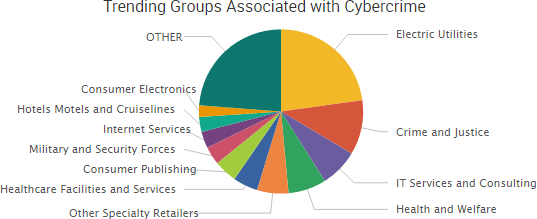
The incident involved a single computer not even connected to the grid control systems, he added.

The false story comes on the heels of a report issued by DHS and the FBI on Grizzly Steppe, the U.S. code name for the malicious cyber activity carried out by the Russian civilian and military intelligence services. That interference led President Barack Obama to sanction four Russian individuals and five Russian entities, as well as to order 35 Russian diplomats to leave the country and close two Russian compounds.

Intelligence officials testified before Congress on Thursday, and Director of National Intelligence James Clapper said that Russia’s role included hacking and the ongoing dissemination of “fake news.” Thursday also saw the resignation of former CIA director James Woolsey from Donald Trump’s transition team over what the Chicago Tribune described as “growing tensions over Trump’s vision for intelligence agencies.”

2017-01-06_ittgroups

Other trending cybercrime events from the week include:

  • Bugs and mistakes expose sensitive data: A bug in Nevada’s website portal exposed the personal data of more than 11,700 medical marijuana dispensary applications. Data related to healthcare professionals deployed within the U.S. Military’s Special Operations Command (SOCOM) was publicly exposed due to an unprotected remote synchronization service tied to Potomac Healthcare Solutions, which provides healthcare workers to the U.S. government through Booz Allen Hamilton. More than 10,000 invites to collaborate on Box.com accounts or documents were indexed and discoverable on search engines, including some documents containing sensitive financial and proprietary company information. PakWheels, an automotive classified site in Pakistan, announced a data breach due to a vulnerability in outdated vBulletin forum software.
  • Payment card breaches: British multinational hotel company InterContinental Hotels Group (IHG) is investigating a possible payment card breach after being notified of fraud patterns observed on credit and debit cards used at some IHG properties in the U.S., particularly Holiday Inn and Holiday Inn Express hotels. Topps announced a data breach affecting payment card and other data entered by customers when placing orders via its website. The incident was discovered in October and affects orders made through the Topps website between approximately July 30, 2016, and October 12, 2016.
  • Defacements and downtime: The Google Brazil domain was unavailable for 30 minutes on Tuesday afternoon due to a DNS attack that directed visitors to a defacement page. The official website of the Philippine military was defaced on December 30 by a hacker with the online handle “Shin0bi H4x0r.”
  • Ransomware updates: A ransomware infection at Los Angeles Valley College blocked access to emails, voicemail and computer systems as the computers of as many as 1,800 full-time faculty and staff could be infected. Ransomware actors are calling education establishments and claiming to be from the Department of Education, Department for Work and Pensions, and telecoms providers in order to obtain the contact information of the head teacher or financial administrator to attempt a ransomware infection.
  • Other breach announcements: Northside Independent School District is notifying 23,000 current and former students and employees that their information may have compromised after an investigation of an August 2016 compromise of employee email accounts turned out to be a more widespread breach. The founder of KeepKey said his company email and phone were temporarily compromised on December 25, and the attacker reset accounts linked to the email address and was able to access several channels for a short period. Recent widespread electricity cuts across Istanbul have been attributed to a major cyber-attack, according to sources from the Energy Ministry. The New Hampshire Department of Health and Human Services is notifying 15,000 individuals that their personal information was exposed when a former patient at New Hampshire’s state psychiatric hospital posted information he had previously stolen to a social media website. The Organization for Security and Co-operation in Europe has recently confirmed that it was hit by a major cyber-attack in the first weeks of November when hackers managed to “compromise the confidentiality” of its IT network.

SurfWatch Labs collected data on many different companies tied to cybercrime over the past week. Some of those “newly seen” targets, meaning they either appeared in SurfWatch Labs’ data for the first time or else reappeared after being absent for several weeks, are shown in the chart below.

2017-01-06_ittnew

Cyber Risk Trends From the Past Week

2017-01-06_riskOrganizations once again are being blackmailed by threat actors who are either threatening to release stolen data or else holding data hostage unless a ransom payment is made.
TheDarkOverlord is continuing its well-established tactic of hacking, extorting and then dumping data on a variety of targets. According to databreaches.net, “TDO appears to have dumped pretty much everything of any significance from two of the previously disclosed victims companies, Pre-Con Products, LTD, and G.S. Polymers, Inc. Other entities whose data TDO dumped include PcWorks, L.L.C. (in Ohio), International Textiles & Apparel, Inc. in Los Angeles, and UniQoptics, L.L.C. in Simi Valley.”

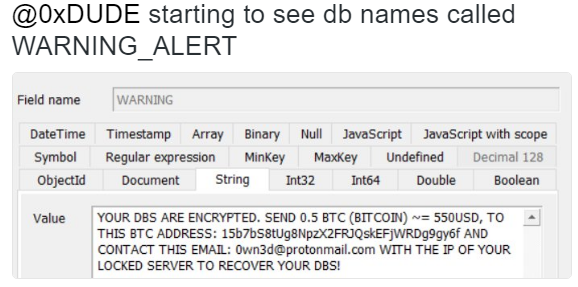
A new extortion campaign is being carried out by an actor using the name “Harak1r1.” The hacker is hijacking insecure MongoDB databases, stealing the data, and replacing the data with a single table and record called “WARNING.” The actor then attempts to extort the victims to recover their data. Researchers said the campaign is ongoing and that between Tuesday and Wednesday the number of compromised databases rose from around 2000 to more than 3500. The actor requests a 0.2 bitcoin ransom payment for victims to regain access to the files, which at least 17 companies have paid. The actor appears to be manually selecting the targets based on databases that appear to contain important data, according to Victor Gevers, co-founder of GDI Foundation.

Interestingly, it appears that a second threat actor may be using the same tactic, but charging 0.5 bitcoin instead, according to a Wednesday tweet addressed to Gevers.

2017-01-06_mongodbtweet

As of Saturday afternoon, the second bitcoin address had 11 bitcoin transactions totaling 3.31 bitcoins, so it is possible that more victims are making ransom payments.

2017 Cyber Forecast: The IoT Problem is Going to Get Worse

The new year is underway, and one of the biggest causes of concern carrying over into 2017 is the threat posed by the growing number of compromised Internet-of-Things (IoT) devices. As I stated in my previous cyber forecast blog on extortion, I prefer to base my “predictions” around actual intelligence and verifiable data. IoT-related security threats have been talked about for the past few years, but they have been relegated to the periphery of the cybercrime conversation due to the fact there wasn’t much threat data around real-world attacks. However, the second half of 2016 saw those concerns move front-and-center due to a series of incidents tied to the Mirai botnet:

  • In September, both KrebsOnSecurity and French hosting provider OVH were hit with massive DDoS attacks, reportedly hitting 620 Gbps attack and 1 Tbps in size.
  • Those attacks were quickly tied the Mirai botnet, the source code of which was subsequently released by a user on Hackforums.
  • A few weeks after the source code went public, DNS provider Dyn was hit with what appears to have been an even larger DDoS attack – causing major sites such as Twitter, Netflix, Reddit, Spotify and others to be disrupted across the U.S. and Europe.

Those attacks will certainly lead to increased scrutiny within the IoT marketplace both now and in the future, but in the meantime cybercriminals are focusing their attention on finding new ways to leverage the numerous vulnerable IoT devices for their own malicious purposes. The past few months have seen various hacking groups fighting to take control over their share of those compromised devices, as well as companies such as Deutsche Telekom and others suffering outages as those groups tried to expand their botnets by attempting to infect customers’ routers with Mirai. One group has even been observed selling IoT-powered DDoS services that claim to provide as much as 700 Gbps in traffic.

All of that activity has led to one of the clearest trends in SurfWatch Labs’ data over the past few months: an enormous rise in threat intelligence surrounding the “service interruption” category.

serviceinterruption_cfs
This chart from SurfWatch Labs’ 2016 Cyber Threat Trends Report shows a sharp increase in the amount of threat intelligence related to the service interruption category in Q4 2016.

“Over the past two years, the ‘service interruption’ tag has typically appeared in approximately 16% of the negative CyberFacts collected by SurfWatch Labs,” SurfWatch Labs noted in its annual cyber trends report, Rise of IoT Botnets Showcases Cybercriminals’ Ability to Find New Avenues of Attack. “However, that number jumped to more than 42% over the last half of the year due to growing concern around IoT-powered botnets such as Mirai.”

The problem of botnets powered by compromised IoT devices goes beyond just service interruption. It reflects many of the larger cybersecurity issues facing organizations in 2017:

  • an expanding number of vulnerable devices
  • the problem of default or easy-to-guess credentials
  • the difficulty of identifying vulnerabilities and patching them in a timely manner
  • questions of who along the supply chain is responsible for security
  • and issues outside your organization’s direct control that impact your cyber risk

Compromised IoT devices are a perfect example of the interconnectedness of cybercrime and how the poor security of one component by one manufacturer can led to hundreds of thousands of devices being vulnerable.

The sudden surge in concern around IoT devices reminds me of similar cyber risk discussions that have occurred around ICS/SCADA over the last few years. In both cases, the devices were often designed without cybersecurity in mind and those cybersecurity implications are now leading to serious potential consequences. However, unlike ICS/SCADA devices, IoT devices are primarily consumer focused. As we noted in the 2016 Cyber Trends Report, the potential of having multiple devices per household for any developed nation means that collectively these vulnerable devices are the largest digital footprint in the world not under proper security management.

DDoS attacks have always been a staple of cybercrime, but the expanding number of potentially compromised devices, along with cybercriminal tools designed to easily exploit those devices, has created growing concern around the tactic. Due to these concerns, I forecast with moderate confidence that IoT-driven botnets will affect a greater number organizations in 2017 as suppliers, manufacturers, regulators and the security community all continue to wrestle with this ongoing issue.

Weekly Cyber Risk Roundup: Unique Cyber-Attacks and Insider Theft

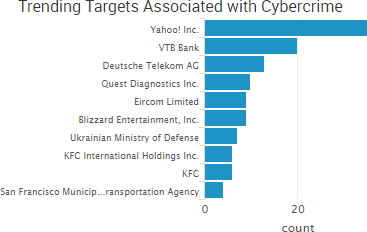
Yahoo remained as the top trending cybercrime target due to a data breach affecting more than a billion accounts. The breach is so large that regulators such as the FTC and SEC are facing uncharted territory when it comes to potential fines or other consequences related to the incident, Vice News reported.  

2016-12-23_ITT.pngLooking beyond the ongoing Yahoo story, there were several unique cybercrime-related events worth noting from the past week.
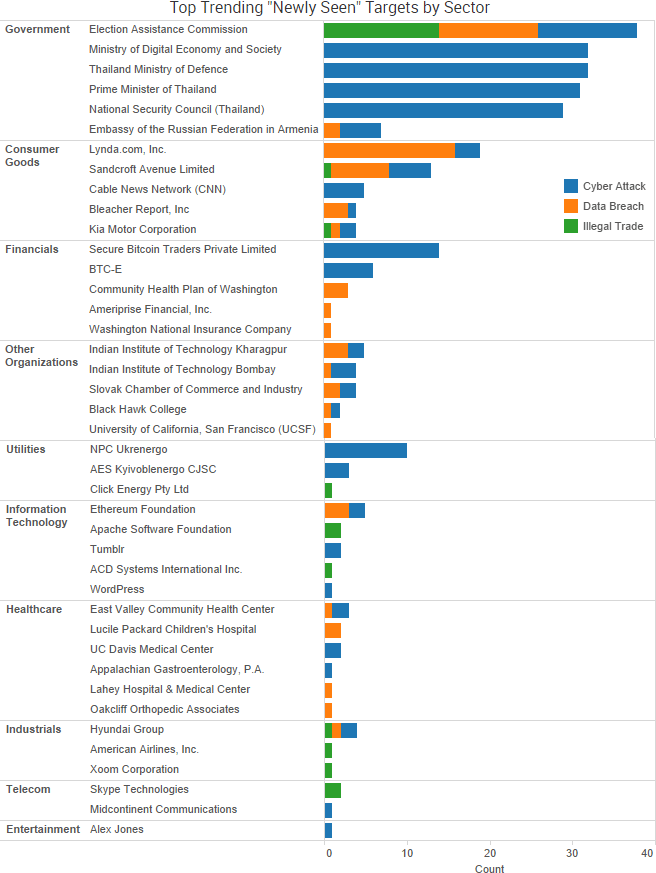
For starters, a data breach at Kia and Hyundai aided in the physical theft of dozens of cars, Israeli police said. Criminals were able to use the stolen data to make car keys for luxury cars and steal those cars directly from the owners’ homes. The three men who were arrested allegedly looked for the registration numbers on Kia and Hyundai models and then used those number along with stolen anti-theft protection numbers and other codes to make keys for each specific car. Once the keys were made they would visit the owners homes — the information was also in the stolen data — to steal the vehicles and then sell them on the Palestinian car market.

Another interesting story is the recent sudden shutdown of a power distribution station near Kiev, which left the northern part of the city without electricity. Vsevolod Kovalchuk, the acting chief director of Ukrenergo, told Reuters that the outage was likely due to an external cyber-attack. The outage amounted to 200 megawatts of capacity, which is about a fifth of Kiev’s nighttime energy consumption.

If definitively tied to a cyber actor, the incident would be the second time in a year that a Ukrainian power outage was attributed to a cyber-attack. The December 2015 outage at Prykarpattyaoblenergo has been frequently cited as the first power outage directly tied to a cyber-attack.

2016-12-23_groups

Other trending cybercrime events from the week include:

  • Education Information Compromised: Online learning platform Lynda.com is notifying its 9.5 million users of a data breach after a database was accessed that contained users’ contact information, learning data and courses viewed. The Columbia County School District in Georgia confirmed it was the victim of a data breach after an external actor accessed a server containing confidential employee information such as names, Social Security numbers and dates of birth. A malware infection at Summit Reinsurance Services may have compromised the information of 1,000 current and former employees at Black Hawk College, as well as those employees’ dependents. The University of Nebraska-Lincoln notified approximately 30,000 students that their names and ID numbers may have been compromised when a server hosting a math placement exam was breached.
  • More Healthcare Data Breaches: Community Health Plan of Washington is notifying 381,534 people that their information may have been compromised due to a vulnerability in the computer network of NTT Data, which provides the nonprofit with technical services. East Valley Community Health Center in California is notifying patients of a Troldesh/Shade ransomware infection on a server containing patient information. The server contained 65,000 insurance claims from the past six years, which included names, dates of birth, home addresses, medical record numbers, health diagnosis codes and insurance account numbers. A number of employees allegedly attempted to access the medical records of Kayne West during his recent week-long stay at the UCLA Medical Center.
  • OurMine Continues to Hijack Popular Accounts: The hacking group known as “OurMine” managed to hijack the Twitter accounts of both Netflix and Marvel on Wednesday. The group posted its usual message about how they were just testing security, along with their contact information.
  • DDoS Attacks Used to Protest New Law in Thailand: Thai government websites were hit with DDoS attacks in protest of a new law that restricts internet freedom. The websites of the Defense Ministry, Ministry of Digital Economy and Society, the Prime Minister’s Office, and the Office of the National Security Council were all targeted. In addition, a hacker going by the name “blackplans” posted screenshots of documents allegedly stolen from government websites.
  • Other breach announcements: A May 2016 phishing incident led to 108 employees of L.A. County handing over their email credentials, resulting in a data breach affecting 756,000 individuals. A hacker going by “1×0123” claims to have hacked PayAsUGym and is attempting to sell a database of information on 305,000 customers. A database backup from the forum of digital currency Ethereum was stolen after a malicious actor socially engineered access to a mobile phone number and gained access to accounts. About 350 Ameriprise clients had their investment portfolios exposed due to an advisor synchronizing data between between his home and work and neither drive requiring a password. The Bleacher Report announced a data breach affecting an unknown number of users who signed up for accounts on its website. The U.S. Election Assistance Commission (EAC) acknowledged a potential intrusion after a malicious actor was spotted selling information related to an unpatched SQL injection vulnerability.

SurfWatch Labs collected data on many different companies tied to cybercrime over the past week. Some of those “newly seen” targets, meaning they either appeared in SurfWatch Labs’ data for the first time or else reappeared after being absent for several weeks, are shown in the chart below.

2016-12-23_ittnew

Cyber Risk Trends From the Past Week

2016-12-23_riskSeveral stories from the past week once again highlighted the problem of malicious insiders stealing intellectual property and taking that stolen data directly to company rivals in order to give those rivals a leg up on the competition.


The first case involves India’s Quatrro Global Services, which recently filed a complaint with local police accusing two former employees of stealing a customer database and using that database to open a rival remote support company, MS Care Limited.

The employees left Quatrro Global Services in late 2014 and early 2015 and opened the rival company in January 2016. The complaint alleges the database was “used to derive unlawful commercial benefit by accessing our customers, leading to our commercial loss while gaining unauthorised access to our customer’s personal information, which could be used for unlawful purposes.”

A separate case involves David Kent, 41, who recently pleaded guilty to stealing more 500,000 user resumes from Rigzone.com, a company that he sold in 2010, and then using the stolen data to boost the membership of his new oil and gas networking website, Oilpro. According to the complaint, Rigzone’s database was hacked twice, and its members were subsequently solicited to join Oilpro. After building up the membership base in this manner, Kent then tried to sell the Oilpro website by stating that it had grown to 500,000 members through traditional marketing methods.

As SurfWatch Labs noted in October, insider threats are one of the most difficult challenges facing organizations. A recent survey of 500 security professionals from enterprise companies found that one in three organizations had experienced an insider data breach within the past year and that more than half of respondents believe that insider threats have become more frequent over the past year.

SurfWatch Labs data confirms those security professionals worry, having collected data on more than 240 industry targets publicly associated with the “insider activity” tag over the past year.

Cybersecurity Budgets: Does More Money Equal More Secure?

I’ve read report after report showing that security budgets were increasing, yet the number of breaches at companies of all sizes also continues to climb. This leads me to believe that somewhere there is a breakdown in how cybersecurity programs are being run — where allocating more spend and focus on cybersecurity oftentimes does NOT actually produce better outcomes.

There is an abundance of information out there that backs this up — this isn’t just me pontificating. Here are some highlights:

On security budgets increasing:

On cybersecurity issues increasing:

I think this can all be summed up best in a report by Morgan Stanley from this summer called Cyber Security: Time for a Paradigm Shift, where they stated:

“Companies are spending more to safeguard their digital assets, but cybercrimes are still growing in frequency and severity. What’s needed now isn’t more security, but better security.”

Now to be clear, this is not meant to serve as a doom and gloom piece. Certainly, there are pockets of goodness here and there and a lot of people are working hard on many good efforts, but holistically, the state of cyber security still has a long road ahead of it. And the question becomes how can we ensure that as we spend more effort and budget on cybersecurity, that we are at the very least impacting the cybersecurity outcome in a similar level of uptick?

I recognize that my own observation is just my perception, which is based on what I personally read and do each day. As such I wanted to get some additional input from my peers, so I did some crowdsourcing through LinkedIn:

We all see the news reports regarding how security budgets are increasing each year but yet for some reason nothing ever seems to get better. Why is that? I have my own specific thoughts on the question but wanted to share and see if anyone had an answer of their own.”

A wide range of opinions followed as to why cybersecurity continues to be a challenge and where we as a community need to focus our efforts.  The responses (summarized and paraphrased) to date have been interesting to say the least:

  • A handful of opinions appeared to point some attribution to cybersecurity vendors. My interpretation of those comments is that the vendor-driven FUD has generated a sense of urgency for organizations to purchase specific solutions and therefore fatten the vendor pockets — or at a minimum create a very complex marketplace which presents a challenge to those trying to navigate it.
  • Several opinions revolved around the idea that although budgets have risen, the volume and sophistication of threats are either out-pacing or out-maneuvering those security professionals who are trying bring more resources to bear.  
  • A handful of opinions appeared to state that security departments are underfunded and have an uphill battle for additional resources as security is generally viewed as a cost center as opposed to a revenue generator. Additionally, one individual stated that a potential area to look at is what budget is being used to cover past investments, therefore allowing fewer resources to be applied to emerging risks and in turn giving the appearance or possibility of a gap.
  • Poor leadership was mentioned several times, with comments stating that there are those that promote waste and will buy any new flashy thing that hits the street and that ensures that investments are not as strategic as touted to be.
  • I also had a few individuals who seem to disagree with the question and stated I was irresponsible or I was performing a disservice for even asking such a thing.  

The crux of all the input, with the exception of few outliers, revolves around a more simplified question of are we allocating “resources” to all the proper areas? Well, I think the answer to this really depends on your reality, which is ultimately your perception based on your experiences.

Everything you see or hear or experience in any way at all is specific to you. You create a universe by perceiving it, so everything in the universe you perceive is specific to you.” – Douglas Adams

I raise the perception/reality point to highlight that the responses to my Linkedin question are based on individuals’ experiences. Some folks have worked for or alongside poor leaders, have had poor experiences with vendors, or have had to do the budget defense drills. Some apparently don’t even see an issue and took offense to the question. These perceptions are also what drive a lot of these research reports that I listed above. Many of these are survey-based and while the survey structure and questions I am sure follow best practices for research processes, these surveys are being answered by people whose perceptions are their own reality.

My perception is based on my current role as head of the SurfWatch threat analyst team and from my previous role as CISO for a major transportation authority as well as a similar position for a DoD entity, where I tried to take an outcome-based model as much as reason dictates. Outcomes can be measured, they can be defended, and they can give you insight. Theoretically, if I apply more resources to a given defined problem the outcomes should change in some manner either good or bad. If the outcome does not change after putting more focus on that area, then I am going to start questioning a few things:

  1. Was the problem defined correctly?
  2. Was the problem measured correctly?
  3. Were the resources applied correctly?

Following these three key questions are a few more that hopefully prompt you to think about changing your perception/reality:

Problem Definition: The Art of The Plausible

  1. Do you use some type of analytical process to identify threats to your organization? And I don’t mean you base it off of news chatter, I mean you use a defined set of analytic inputs and analysis to determine what is true and what is not.
  2. If you have, have you analyzed what an actor’s capabilities and intentions are?
  3. If you do know what their capabilities and intentions are, have analyzed their tactics, techniques and procedures?

Problem Measurement: The Art of The Possible

  1. Have you observed using both internal and external data collection efforts any indications of previously defined threats or new undefined threats?
  2. What is your false positive rate for observing defined and undefined threats? Meaning you detected a threat, but investigation determined the threat to be untrue.
  3. What is your false negative rate? Meaning you did not detect a threat and post incident analysis determined the threat to be true.

Resources Applied To The Problem: The Art of Reality

  1. If you lead a cyber program, do you have a list of defined products and services that you deliver to the organization?
  2. Do you know what the exact budget allocation for labor and material is for every single one of those products and services?
  3. Have you defined policy, process and procedures for each one of those products and services?
  4. Can you identify what products and services specifically are applied to a defined threat?

The bottom line here is I believe that security spend is increasing and that many people and organizations are working hard and doing good things. But I also believe that we do not use intelligence enough to help define the problem area. If we can measure the problem, we know what resource to apply to it to change an outcome for the better. Instead, generally speaking we as a community deploy capabilities based on what we perceive to be the problem and hope that the outcome does not change for the worse.

As a former CISO, I have personally used intelligence-driven, analytical processes to identify what is true and then apply resources to address the “known knowns.” It takes diligence and determination, but by leveraging intel to drive our cybersecurity strategy, we can start to see a light at the end of what can be a long, dark tunnel.

Weekly Cyber Risk Roundup: Largest Breach Ever and Law Firm Lawsuits

On Wednesday, Yahoo announced a data breach that affects more than one billion user accounts. The intrusion, which Yahoo believes occurred in August 2013, comes just months after the company announced a separate breach involving “at least 500 million user accounts.” The new breach was discovered after law enforcement received Yahoo data from a third party. The compromised information includes names, email addresses, telephone numbers, dates of birth, MD5-hashed passwords, and some encrypted or unencrypted security questions and answers.

2016-12-16_ITT.pngAs The New York Times noted, the breach gives Yahoo the distinction of having the largest ever data breach – on two separate occasions.

It also appears that the intruders were able to use stolen source code to forge cookies, which allowed the malicious actors to gain access to some users’ accounts without needing a password.

Yahoo said those forged cookies have been invalidated, along with any unencrypted security questions and answers. Yahoo did not make clear how many unencrypted security questions and answers were stolen, but users who used those same questions and answers on other sites may face increased risk around those accounts being compromised in the future.

The newly announced breach has also led to more speculation about the potential impact on Yahoo’s pending $4.8 billion deal to be acquired by Verizon. Sources told Reuters that Verizon is looking for “major concessions” from Yahoo, and Verizon reiterated that it would “review the impact of this new development before reaching any final conclusions” about proceeding with the deal.

The incident may also have an affect on the size of Yahoo’s user base. Reuters reported that several cybersecurity experts and bodies such as Germany’s Federal Office for Information Security are now advising Yahoo users to consider abandoning the service for email providers that may be more secure.

2016-12-16_groups

Other trending cybercrime events from the week include:

  • Russian hacking put front-and-center: U.S. intelligence officials have “a high level of confidence” that Russian President Vladimir Putin was personally involved in the effort to interfere with the presidential election. Officials told ABC News that Russian hackers targeted as many as two email systems associated with the Republican National Committee, but the incidents didn’t raise the same level of concern as similar attacks against the DNC because the systems had long been unused. Germany’s domestic intelligence agency reported that Russia is trying to destabilize German society via targeted cyber-attacks against political parties and disinformation campaigns.  The head of the Swedish Military Intelligence and Security Service said that Russian hacking is a “serious threat” that may “influence democratic decision-making.”
  • Insiders cause more cyber headaches: The February 2016 theft at Bangladesh Bank was aided by five low to mid-level employees who were negligent and careless but not directly involved in the crime, according to a Bangladesh government-appointed panel. Hong Kong officials have arrested 29 current and former employees across five financial institutions for alleged bribery and sharing of confidential customer information. A two-year investigation found that lax privacy procedures at the Ohio Department of Rehabilitation and Correction contributed to a $422,000 scheme that used prisoners’ identities to apply for federal student loans. An employee of Banner Boswell Hospital in Arizona has been arrested for allegedly stealing patients’ credit card information and using that information to buy items online.
  • More DDoS attacks amid arrests: A series of DDoS attacks aimed at disrupting updates about the pro-Russian separatist conflict brought down the websites for Ukraine’s Finance Ministry and State Treasury. Nearly three dozen users of “booter” services were arrested in a global effort dubbed “Operation Tarpit,” a law enforcement campaign aimed at weakening demand for cybercrime-for-hire services and raising awareness of the risks of engaging in cybercrime.

SurfWatch Labs collected data on many different companies tied to cybercrime over the past week. Some of those “newly seen” targets, meaning they either appeared in SurfWatch Labs’ data for the first time or else reappeared after being absent for several weeks, are shown in the chart below.

2016-12-16_ittnew

Cyber Risk Trends From the Past Week

2016-12-16_riskThe past week saw several legal developments involving both past breaches and possible future lawsuits.

Ruby Corp, the operator of AshleyMadison, has agreed to pay $1.6 million to settle state and Federal Trade Commission charges related to its massive July 2015 data breach. The total fine was $17.5 million, but the remaining portion was suspended based on Ruby Corp.’s inability to pay.

“I recognize that it was a far lower number frankly than I would have liked,” FTC Chairwoman Edith Ramirez said on a conference call with reporters. “We want them to feel the pain. We don’t want them to profit from unlawful conduct. At the same time, we are not going to seek to put a company out of business.”

The settlement also requires the implementation of a comprehensive data-security program, including third-party assessments.

Another interesting story of note is a lawsuit that was recently filed against the Chicago-based law firm Johnson & Bell that alleges the firm failed to protect confidential customer information. According to the lawyer that filed the case, it is the first class action lawsuit against a law firm over inadequate data security measures. The same lawyer previously said he had identified a total of 15 firms lacking basic security measures that may be targeted by lawsuits, although the others have not yet been publicly named.

The Johnson & Bell lawsuit was filed back in April 2016; however, it only recently became public and moved to arbitration. Although the complaint does not claim that any data was actually stolen, it alleges that the firm put clients at risk due to using an out of date time-entry system, a VPN that was prone to man-in-the-middle attacks, and an email system that was vulnerable to the DROWN attack.

As SurfWatch Labs noted in our whitepaper, Flipping the Script: Law Firms Hunted by Cybercriminals, law firms are attractive targets for malicious actors as they often have weaker security than the clients they represent. Breaches may also be especially damaging for law offices as confidentiality is at the core of the legal process and law firms often have access to valuable data.