AlphaBay to Begin Accepting Ethereum as the Bitcoin Alternative Grows More Popular

Beginning next month, malicious actors using the dark web marketplace AlphaBay will be able to buy and sell their goods using the growing cryptocurrency platform Ethereum. Ethereum will become the third payment option available on the market, joining the longstanding cryptocurrency king bitcoin as well as the privacy-focused Monero, which was adopted by AlphaBay last September.

The announcement is good news for fans of Ethereum, whose Ether cryptocurrency has seen a continued surge of growth in 2017 and is the second most popular cryptocurrency after bitcoin.

2017-04-06_AlphaBayEthereum
AlphaBay will begin accepting Ethereum deposits and withdrawals on May 1, an administrator announced on the site’s forum in March.

Bitcoin is by far the most well-known cryptocurrency, and it has been widely adopted by malicious actors and dark web markets as a convenient and semi-anonymous form of digital payment. In fact, cryptocurrencies like bitcoin, dark web markets like AlphaBay, and extortion payments like ransomware are interconnected in that the growth of one has helped spur the growth of the others.

However, bitcoin is currently experiencing growing pains, and Ethereum has emerged over the past year as its main rival. Ethereum’s proponents claim that is it is a more versatile and scalable cryptocurrency. In fact, the idea of Ethereum goes beyond just currency, which is why it and other blockchain companies have been described as bitcoin 2.0. If bitcoin was about creating a decentralized payment system, Ethereum is about using that same concept to radically re-architect everything on the web — as Ethereum creator Vitalik Buterin describes it.

Fortune magazine explained in a September 2016 profile:

Ethereum’s power lies in its ability to automate complex relationships encoded in so-called smart contracts. The contracts function like software programs that encapsulate business logic — rules about money transfers, equity stake transfers, and other types of binding obligations — based on predetermined conditions. Ethereum also has a built-in programming language, called Solidity, which lets anyone build apps easily on top of it.

There’s ongoing debate over just how secure other cryptocurrencies are compared to bitcoin. For example, in June 2016 a hacker was able to exploit a flaw in the smart contract used by The DAO, a crowdsourced venture capital platform based on the Ethereum blockchain, in order to steal more than $50 million worth of Ether.

A controversial solution to address the theft was proposed, known as a “hard fork.” Cryptocurrencies use the concept of a blockchain, which is essentially a decentralized and agreed upon ledger of all the transactions that have occurred. The hard fork would change the agreed upon rules and create a new path forward for the currency — one that would invalidate the theft. However, some Ethereum users argued that the idea of hard fork went against the very principles of a decentralized network that was designed to combat a single authority. Those that eventually rejected the fork are now on a parallel version of the blockchain, Ethereum Classic, while the rest of the community moves forward on the other fork as Ethereum.

Despite the troubles, Ethereum continues to thrive. The concept of disrupting existing business models with decentralized blockchains has gained Ethereum interest not just from dark web markets, but from legitimate companies. In February it was announced that 30 organizations — including JPMorgan Chase, Microsoft, and Intel — would team up under the Enterprise Ethereum Alliance to enhance the privacy, security, and scalability of the Ethereum blockchain.

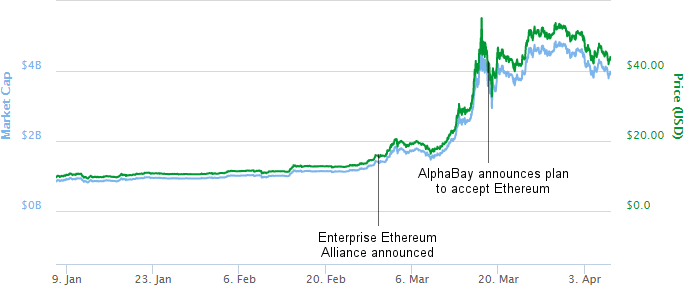
Ethereum’s Value: Past 90 Days

2017-04-06_EthereumMarketCap
Ethereum’s market cap has grown significantly on the heels of recent announcements, according to CoinMarketCap.

All of that news has helped to more than quadruple the market cap of Ethereum in 2017, from less a billion in January 2017 to around $4 billion on April 6.

It’s still nearly a month before the option goes live, so it is unclear how many security-obsessed cybercriminals on the dark web will actually use the payment option — or if they will stick with bitcoin. Nevertheless, being adopted by AlphaBay, which is by far the most popular dark web market according to SurfWatch Labs’ data, could potentially be a huge boost for Ethereum.

Weekly Cyber Risk Roundup: More CIA Leaks, New Mirai Attacks, and LastPass Vulnerabilities

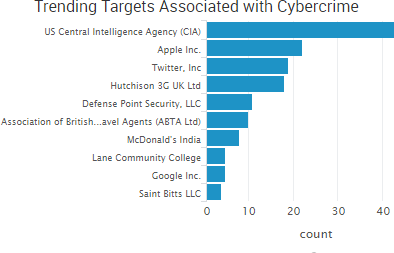
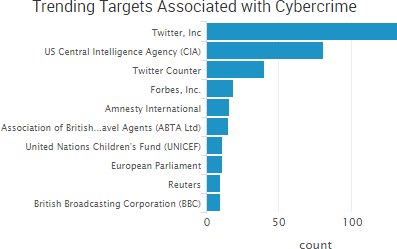
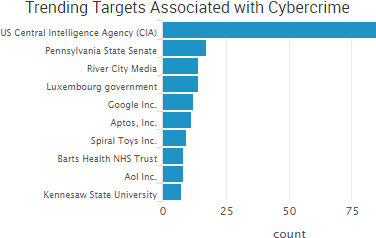
The CIA remained as the top trending cybercrime target of the week as WikiLeaks released a third set of documents related to the agency. The new release includes 676 source code files for the CIA’s secret anti-forensic Marble Framework, which WikiLeaks said “is used to hamper forensic investigators and anti-virus companies from attributing viruses, trojans and hacking attacks to the CIA.”

2017-04-01_ITT“The source code shows that Marble has test examples not just in English but also in Chinese, Russian, Korean, Arabic and Farsi,” WikiLeaks wrote in its announcement. “This would permit a forensic attribution double game, for example by pretending that the spoken language of the malware creator was not American English, but Chinese, but then showing attempts to conceal the use of Chinese, drawing forensic investigators even more strongly to the wrong conclusion.”

The fact that an intelligence agency would have tools to cover its tracks is hardly surprising. However, it appears that WikiLeaks will continue to leak CIA documents for the foreseeable future, and those leaks may have yet-to-be known implications for governments, tech companies, and cybercriminal actors. After the initial CIA leak in early March, WikiLeaks tweeted that is has released less than one percent of its Vault7 series.

Another recurring story in these roundups is the Mirai botnet, and researchers said this week that a new variant is likely behind a 54-hour long DDoS attack that targeted a U.S. college. The attack peaked at 37,000 requests per second, the most Incapsula has seen out of any Mirai botnet. The company said 56 percent of all IPs used in the attack belonged to DVRs manufactured by the same vendor. IoT devices continue to make headlines for vulnerabilities – including certain devices that were allegedly targeted by the CIA – and this past week saw new warnings of methods for hacking smart televisions as well as a vulnerability in an Internet-connected washer-disinfector. As SurfWatch Labs chief security strategist Adam Meyer recently wrote, IoT devices have potentially become the largest digital footprint of organizations that is not under proper security management.

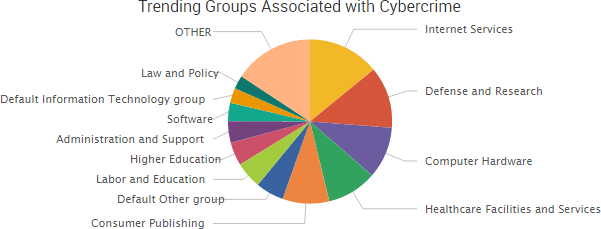
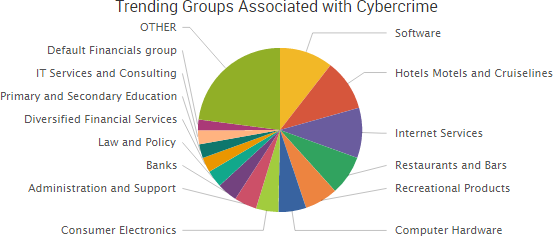
2017-04-01_ITTGroups

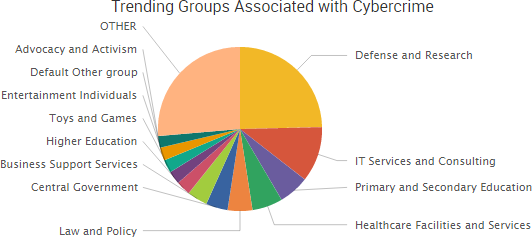
Other trending cybercrime events from the week include:

  • Data breaches expose more credentials:  A hacker has stolen the email addresses and MD5-hashed passwords of 6.5 million accounts from Dueling Network, a now-defunct Flash game based on the Yu-Gi-Oh trading card game. Although the game was shut down in 2016, the forum continued to run until recently. Nearly 14 million stolen and fake email credentials from the 300 largest U.S. universities are for sale on the dark web, a rise from only 2.8 million last year, according to the nonprofit Digital Citizens Alliance. The stolen email addresses and passwords sell from $3.50 to $10 each.
  • Warnings of skimming and keylogging devices: Carleton University in Ottawa said it discovered USB keylogging devices on six classroom computers during a routine inspection, and the university is urging staff and students to change passwords for any accounts they may have accessed from classroom computers. The San Bernardino County Sheriff’s Department has received more than 70 reports of credit card fraud tied to a suspected card skimming device in Big Bear. A Romanian citizen pleaded guilty to a scheme to defraud customers of Bank of America and PNC Bank via ATM skimming.
  • Ransomware notifications continue: Urology Austin has notified 200,000 patients of a January 22 ransomware attack that may have compromised their information. Ransomware encrypted files belonging to Forsyth Public Schools and information such as lesson plans and schedules stored by teachers on the district server is likely lost due to the incident. Estill County Chiropractic is notifying 5,335 patients of unauthorized access to its system and a ransomware infection that may have compromised their personal information. Ransomware was found on the computer systems of the Tweede Kamer, the lower house of Dutch parliament.
  • Former employee causes serious problems: A former IT administrator of the Lucchese Boot Company pleaded guilty to hacking the servers and cloud accounts of his employer after he was fired, and the company claims it lost $100,000 in new orders in addition to the extra IT costs it had to endure due to the attack. According to the complaint, the former employee logged into an administrator account after being fired and proceeded to shut down the corporate email and application servers, deleted files on the servers to block any attempts for a reboot, and then began shutting down or changing the passwords on the company’s cloud accounts.
  • Other notable cybercrime events: The personal information of 3.7 million Hong Kong voters and the city’s 1,200 electors may have been compromised when two laptops were stolen. Approximately 95,000 individuals who applied online for a job at McDonald’s in Canada had their information compromised due to unauthorized access to the company’s database. Multiple employees of the Washington University School of Medicine fell for phishing emails designed to steal credentials used to access their email. While investigating a data breach related to employees’ W-2 forms, Daytona State College discovered a second data breach involving student financial aid forms. A Russian citizen has pleaded guilty to his role in helping spread malware known as “Ebury,” which harvested log-on credentials from infected computer servers, allowing the criminal enterprise behind the operation to operate a botnet comprising tens of thousands of infected servers throughout the world.

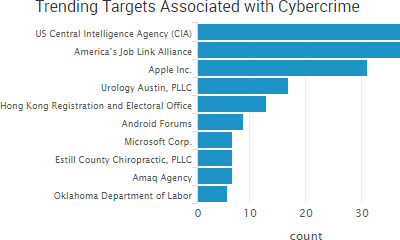
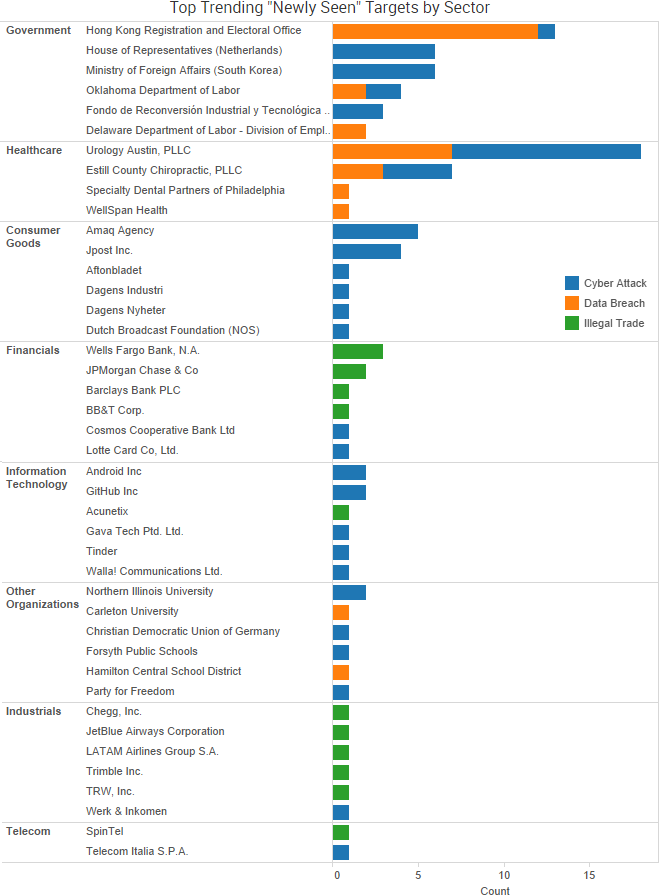
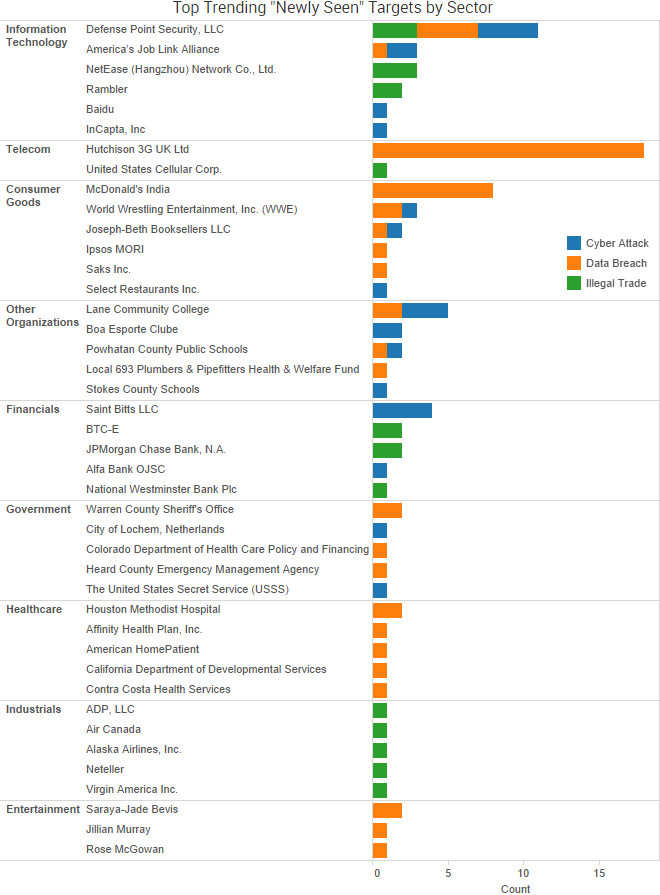
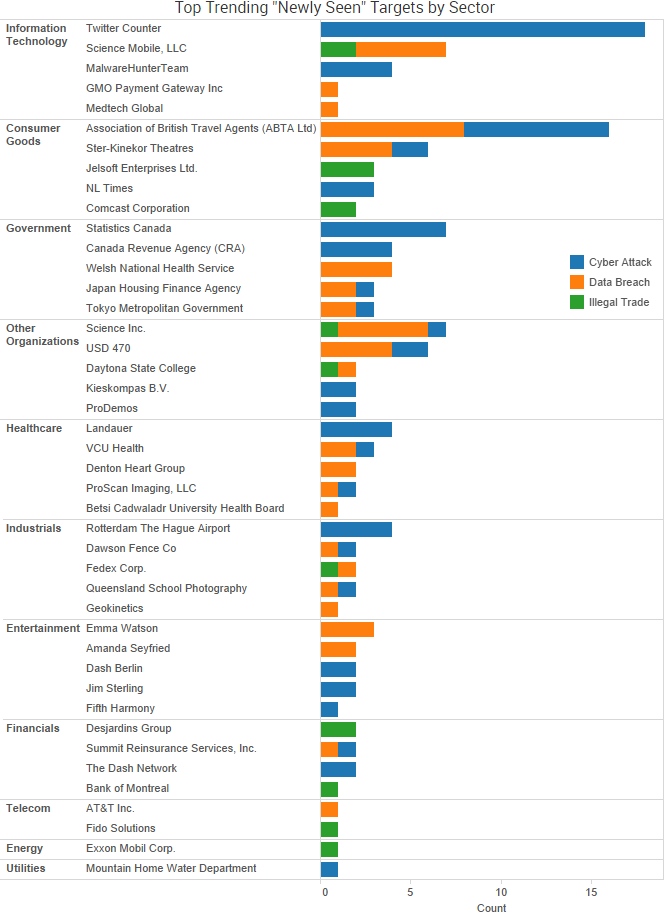
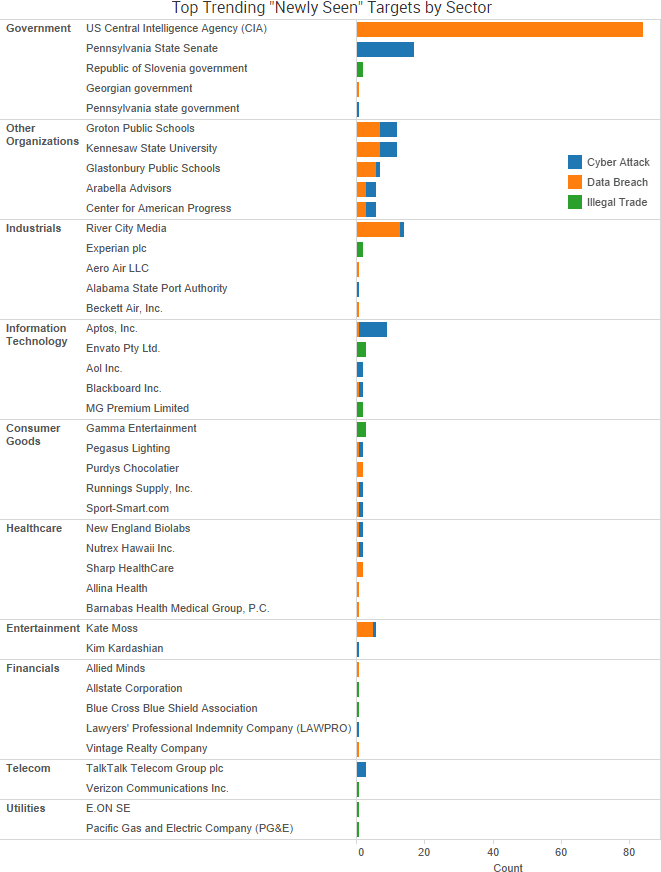
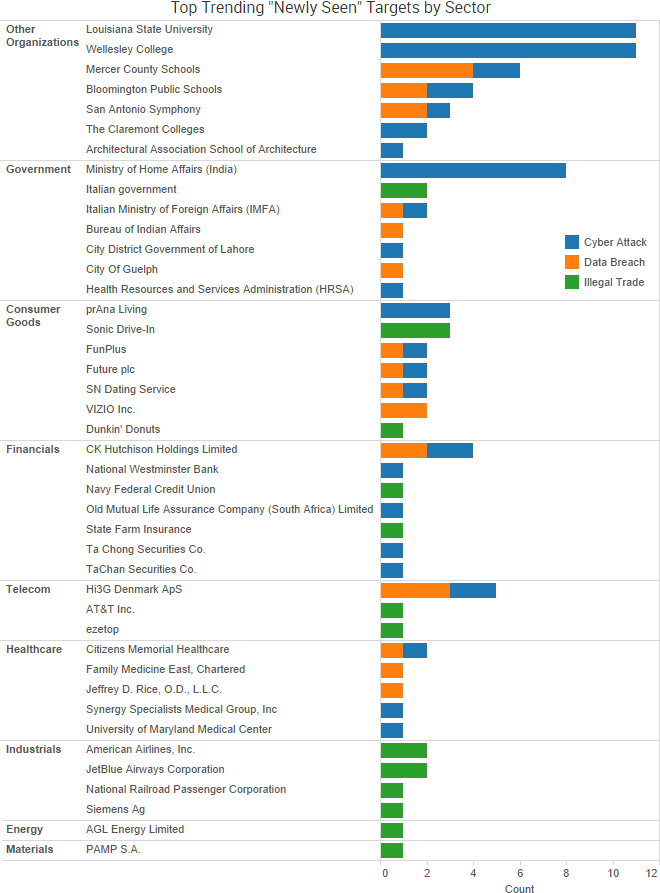
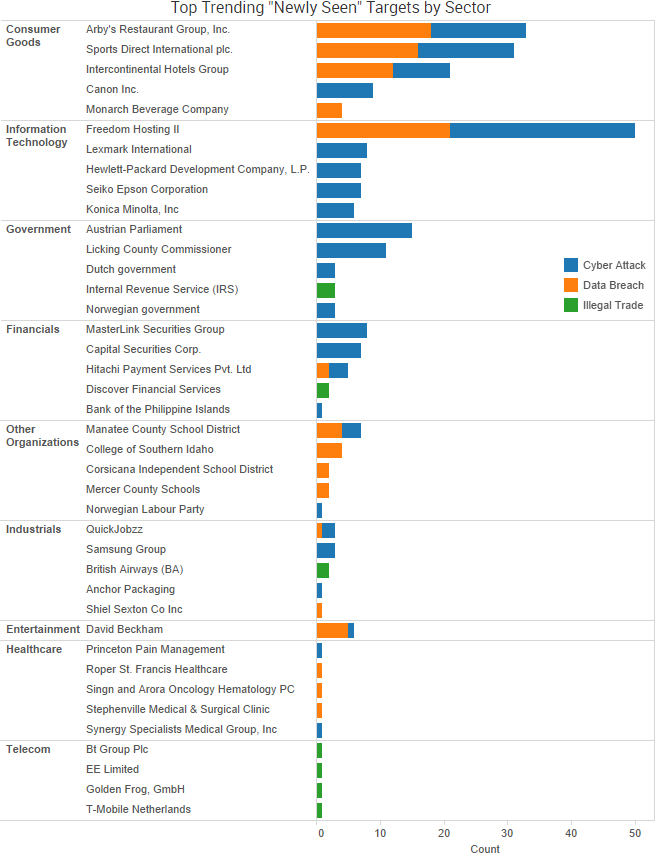
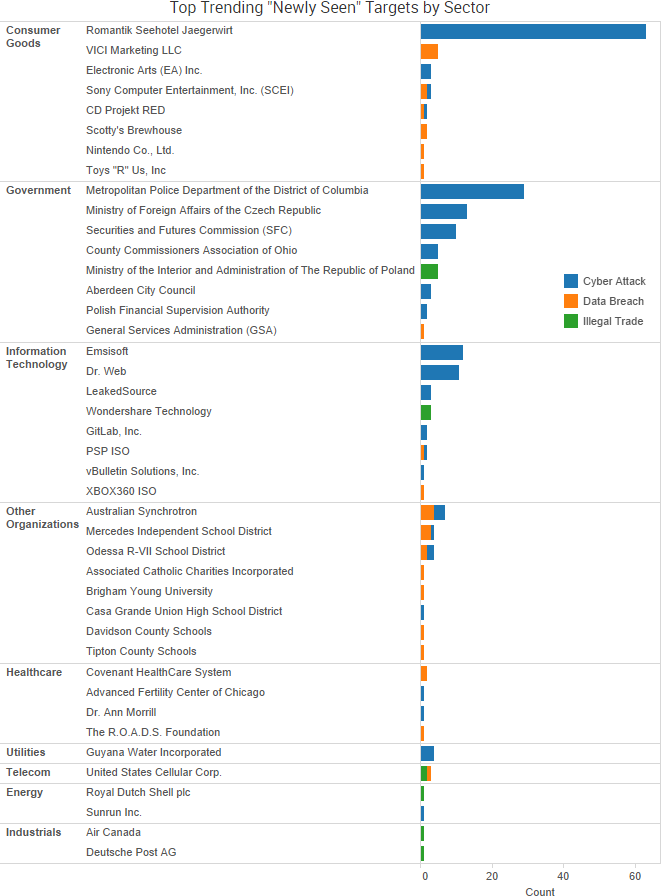
SurfWatch Labs collected data on many different companies tied to cybercrime over the past week. Some of those “newly seen” targets, meaning they either appeared in SurfWatch Labs’ data for the first time or else reappeared after being absent for several weeks, are shown in the chart below.

2017-04-01_ITTNew

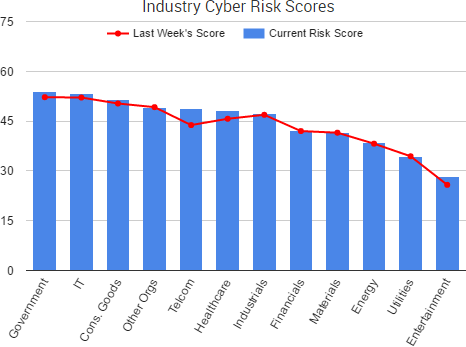
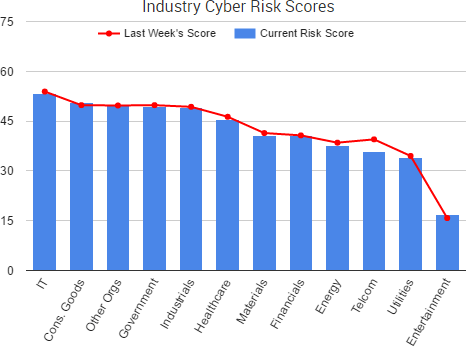
Cyber Risk Trends From the Past Week

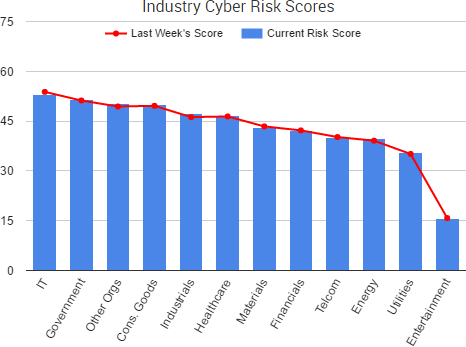
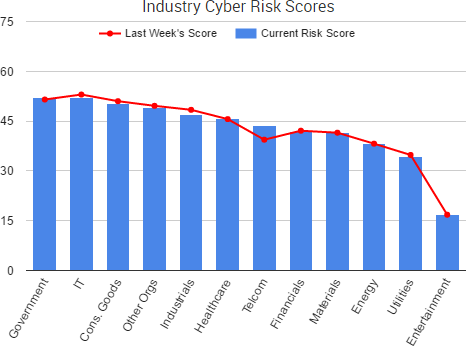
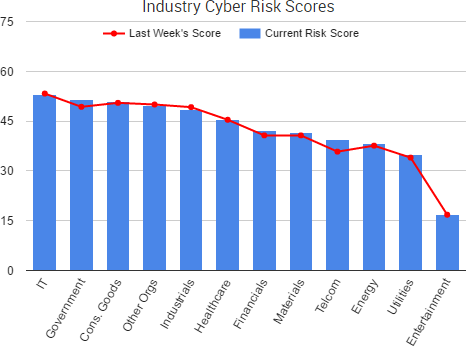
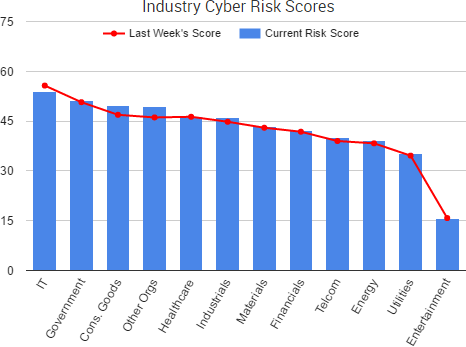
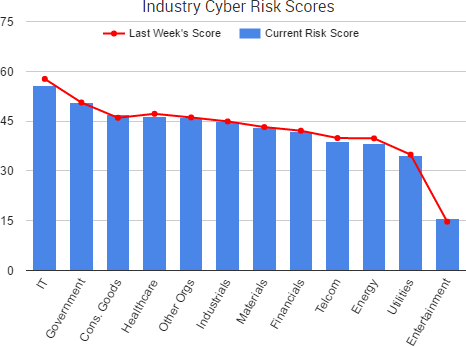
2017-04-01_RiskScoresThe password manager LastPass has addressed a series of vulnerabilities that were discovered by Google Project Zero researcher Tavis Ormandy, including one now-patched “unique and highly sophisticated” client-side vulnerability in the LastPass browser extension.

In a March 31 update, LastPass advised its users to ensure they are running the latest version (4.1.44 or higher) of the extension so that they are protected.

The vulnerability, which could be exploited to steal data and manipulate the LastPass extension, required first luring a user to either a malicious website or a website running malicious adware and then taking advantage of the way LastPass behaves in “isolated worlds,” the company said.

An isolated world is a JavaScript execution environment that shares the same DOM (Document Object Model) as other worlds, but things like variables and functions are not shared. LastPass explained:

The separation is supposed to keep both sides safer from external manipulation. In some cases, these variables can influence the logic of the content script. It is difficult to inject arbitrary values into JavaScript using this technique. But in a particularly clever move, the report demonstrated that arbitrary strings could be injected, and one of these was enough to trick the extension into thinking it was executing on lastpass.com. By doing so, an attacker could manipulate the LastPass extension into revealing the stored data of that user, and launch arbitrary executables in the case of the binary version.

Fixing the issue required “a significant change” to the browser extensions and LastPass urges other extension developers to look for this pattern in their code and ensure that they are not vulnerable to a similar attack.

The patch came just 10 days after LastPass issued another update to address two other issues discovered by Ormandy that could allow the attacker to potentially retrieve and expose information from the LastPass account, such as user’s login credentials.

The incident serves as a reminder that vulnerabilities continue to be discovered in a variety of products, including the tools used to help keep individuals and organizations safe. Having a full accounting of an organization’s technology infrastructure as well as policies and procedures to track new vulnerabilities and patch software is one of the most effective ways to combat malicious actors who rely on exploiting well-known vulnerabilities.

Weekly Cyber Risk Roundup: JobLink, $100 Million BEC Scam and Other Breaches

Third-party cybersecurity issues were once again front and center this past week as America’s JobLink, a web-based system that links jobs seekers with employers, was compromised by a malicious actor, leading to a series of data breach announcements from states that use the system.

2017-03-24_ITT.png“On February 20, 2017, a hacker created a job seeker account in an America’s JobLink (AJL) system,” the company wrote. “The hacker then exploited a misconfiguration in the application code to gain unauthorized access to certain information of other job seekers.”

Millions of individuals may have been affected by the vulnerability, which was introduced in an AJL system update in October 2016. When exploited, it allowed the malicious actor to view the names, Social Security numbers, and dates of birth of job seekers in the AJL systems of up to ten states: Alabama (600,000), Arizona, Arkansas (19,000), Delaware (200,000), Idaho (170,000), Illinois (1.4 million), Kansas, Maine (conflicting media reports on total number affected), Oklahoma (430,000), and Vermont (186,000).

Vermont Gov. Phil Scott said at a Thursday press conference that the state was looking into the contract with ALJ, which has been in effect for about 16 years, and may potentially pursue legal recourse. At the same press conference Vermont Department of Labor Secretary Lindsay Kurrle noted potential AJL issues that may have compounded the breach, such as older Joblink accounts not being deleted.

Third-party cybersecurity issues continue to be one of the most pressing challenges facing organizations, as the numerous breaches in this roundup each week demonstrate. Despite the challenges, the digital footprints of organizations continue to grow: an issue that Adam Meyer, chief security strategist with SurfWatch Labs, and Kristi Horton, senior risk analyst with Gate 15 & Real Estate ISAC, will discuss on a Webinar tomorrow.

2017-03-24_ITTGroups

Other trending cybercrime events from the week include:

  • WikiLeaks’ dump brings legal issues, more CIA documents:  Julian Assange criticized companies for not responding to WikiLeaks’ request that they comply with certain conditions in order to receive technical information on the leaked CIA exploits; however, multiple tech companies said the issue is caught up in their legal departments. WikiLeaks also continued to leak more CIA data by publishing documents that “explain the techniques used by CIA to gain ‘persistence’ on Apple Mac devices, including Macs and iPhones and demonstrate their use of EFI/UEFI and firmware malware.” The documents are mostly from the last decade, except for a couple that are dated 2012 and 2013.
  • Variety of issues lead to oversharing, data breaches: The UK’s Information Commissioner’s Office is investigating reports that data sharing options in SystmOne may have exposed the medical records of up to 26 million patients. The system’s “enhanced data sharing” option, which doctors turned on so that medical records could be seen by local hospitals, also allowed those records to be accessed by thousands of other workers. Mobile phone company Three is investigating a technical issue that led to some customers who logged into their accounts seeing the personal data of other customers. Med Center Health in Kentucky announced a data breach due to a former employee accessing encrypted patient billing information by falsely implying it was needed for job-related reasons.
  • Bots lead to gift card fraud, stock manipulation: Nearly 1,000 customer websites were targeted by a bot named “GiftGhostBot” that automatically checks millions of gift card numbers to determine which card numbers exist and contain balances. Recent pump-and-dump spam messages from the Necurs botnet falsely claimed that InCapta was about to be bought out for $1.37 per share and that people could buy shares for less than 20 cents before the buyout would be announced.
  • Malware spread via Ask.com toolbar: For the second time in a one month period, malicious actors were able to compromise the Ask Partner Network (APN), creators of the Ask.com toolbar, in order to spread malware that was signed and distributed as though it were a legitimate Ask software update. The first attack was discovered in November 2016, and in December 2016 researchers discovered that the “sophisticated adversary” was continuing its earlier activity “to deliver targeted attacks using signed updates containing malicious content.”
  • Other notable cybercrime events: Hackers going by the name ‘Turkish Crime Family’ claim to have access to a large cache of iCloud and other Apple email accounts and say they will reset accounts and remotely wipe devices on April 7 unless Apple pays a ransom. The McDonald’s India app leaked the personal information of more than 2.2 million users, and data is still allegedly being leaked despite the company’s claims that it fixed the issue. Lane Community College health clinic is notifying approximately 2,500 patients that their personal information may have been compromised due to one of its computers being infected with malware. A gang of hackers-for-hire tried to steal Baidu’s driverless car technology. The FBI believes that North Korea is responsible for the February 2016 theft of $81 million from Bangladesh Bank, and U.S. prosecutors are building potential cases that may both formally accuse North Korea of directing the theft and charge alleged Chinese middlemen

SurfWatch Labs collected data on many different companies tied to cybercrime over the past week. Some of those “newly seen” targets, meaning they either appeared in SurfWatch Labs’ data for the first time or else reappeared after being absent for several weeks, are shown in the chart below.

2017-03-24_ITTNew

Cyber Risk Trends From the Past Week

2017-03-24_RiskScoresOne of the most profitable cybercriminal tactics is business email compromise scams, which has accounted for several billion dollars worth of actual and attempted losses over the past few years.

A reminder of that ongoing threat surfaced this past week when the Department of Justice announced the arrest of a Lithuanian man on charges that he had successfully duped two U.S.-based companies into wiring a total of over $100 million to bank accounts that he controlled.

The DOJ noted in its press release that the case “should serve as a wake-up call” to even the most sophisticated companies that they may be the target of advanced phishing attempts from malicious actors.

Evaldas Rimasauskas, the arrested Lithuanian man, allegedly registered and incorporated a company in Latvia with the same name as an Asian-based computer hardware manufacturer, and then opened and maintained various bank accounts using that copycat company name. He then is alleged to have sent fraudulent phishing emails to employees of companies that regularly conducted multimillion-dollar transactions with the hardware manufacturer, asking that those companies direct payments for legitimate goods and services to the bank accounts using the copycat name. The indictment also alleges that Rimasauskas submitted forged invoices, contracts, and letters that falsely appeared to have been executed and signed by executives and agents of the victim companies to banks in support of the large volume of funds that were fraudulently transmitted via wire transfer.

As the FBI and others have repeatedly warned, the lure of multi-million dollar payout leads to cybercriminals going to great lengths to successfully social engineer companies. This includes more time spent researching things such as the roles of employees and their language in written communications, as well as company authority figures, policies and procedures, and supply chains. This allows the social engineers to craft a message, or series of messages, that fits within the expected culture and communication patterns of an organization — increasing their chances of a large, fraudulent payday.

Weekly Cyber Risk Roundup: Third-Party Breaches and Apache Struts Issues

Twitter is the week’s top trending cybercrime target after malicious actors leveraged a third-party analytics service known as Twitter Counter to hijack a number of Twitter accounts and post inflammatory messages written in Turkish along with images of Nazi swastikas. Hundreds of accounts were compromised, the Associated Press reported.

2017-03-18_ITT.png

Forbes magazine, the Atlanta Police Department, Amnesty International, UNICEF USA, and Nike Spain were among the numerous Twitter accounts hijacked.

A Twitter spokesperson said it removed the permissions of the third-party app, which was the source of the problem. In a series of tweets on Wednesday, Tweet Counter responded to the issue: “We’re aware that our service was hacked and have started an investigation into the matter. We’ve already taken measures to contain such abuse. Assuming this abuse is indeed done using our system, we’ve blocked all ability to post tweets and changed our Twitter app key.”

Twitter hijackings are common, and we do not highlight them in this weekly report very often; however, the Tweet Counter compromise is worth noting due to the supply chain issues it represents. Organizations frequently use third-party services to help manage their numerous social media accounts, and that interconnectedness was one of the central themes of SurfWatch Labs’ annual threat intelligence report. “One of the most telling statistics in all of SurfWatch Labs’ evaluated cyber threat data is the rise of CyberFacts related to third parties,” the report stated. “It is clear that malicious actors are looking for any opportunity to exploit poor cybersecurity practices, and the supply chain provides an abundance of opportunity for cybercriminals to do so.”

Organizations should have a way to track, monitor, and address any issues pertaining to third-party tools and services so they can better manage the increased risk that stems from an interconnected world.

2017-03-18_ITTGroups

Other trending cybercrime events from the week include:

  • New point-of-sale breaches: A breach at point-of-sale vendor 24×7 Hospitality Technology appears to be behind a series of fraudulent transactions tied to Select Restaurants Inc. locations, Brian Krebs reported. 24×7 issued a breach notification letter in January saying that a network intrusion through a remote access application allowed a third party to gain access to some of 24×7 customers’ systems and execute PoSeidon malware. Multiple Australian schools are warning parents that individuals are reporting fraudulent payment card transactions after Queensland School Photography’s online ordering system was compromised.
  • Yahoo breach leads to indictments: A grand jury has indicted four individuals, including two officers of the Russian Federal Security Service (FSB), over their alleged roles in the hacking of at least 500 million Yahoo accounts. According to the Department of Justice, the FSB officer defendants, Dmitry Dokuchaev and Igor Sushchin, protected, directed, facilitated, and paid co-defendants Alexsey Belan and Karim Baratov to collect information through computer intrusions in the U.S. and elsewhere.
  • Breaches due to insecure databases and devices: Security researchers discovered hundreds of gigabytes of data from the Warren County Sheriff’s Department exposed due to an insecure network storage device, including a variety of sensitive documents and recordings. A Dun & Bradstree database containing the personal information of 33.7 million U.S. individuals has been exposed, likely due to an unsecured MongoDB database. Dun & Bradstree said that it owns the database, but stressed that the data was not stolen from its systems and that the information was approximately six months old. Thousands of sensitive U.S. Air Force documents were exposed due to an insecure backup drive belonging to an unnamed lieutenant colonel.
  • Ransomware infections continue to be announced: Summit Reinsurance is notifying individuals of a breach after discovering unauthorized access to a server as well as a ransomware infection. The city of Mountain Home, Arkansas, had to wipe the server of its water department and restore the data from a backup after a ransomware infection locked 90,000 files. Metropolitan Urology Group said a November 2016 ransomware infection exposed the health information of patients who received services between 2003 and 2010. Ransomware actors are shifting towards disrupting business services and demanding higher ransom payouts.
  • Other notable cybercrime events: A flaw in the old website of South African-based cinema chain Ster-Kinekor exposed the personal information of up to 6.7 million users. Three is notifying an additional 76,373 customers that their personal information was compromised in a November 2016 incident. Wishbone announced a data breach due to unknown individuals having “access to an API without authorization.” UK travel association ABTA announced that 43,000 individuals had their personal information compromised due to a vulnerability in the servers of a third-party hosting service. Arkansas is investigating whether malware stole the personal information of 19,000 individuals. Cincinnati Eye Institute,  Laundauer, and Virginia Commonwealth University Health System announced data breaches.

SurfWatch Labs collected data on many different companies tied to cybercrime over the past week. Some of those “newly seen” targets, meaning they either appeared in SurfWatch Labs’ data for the first time or else reappeared after being absent for several weeks, are shown in the chart below.

2017-03-18_ITTNew

Cyber Risk Trends From the Past Week

2017-03-18_RiskScoresEarlier this month, a patch was issued to address a high-impact vulnerability in Apache Struts Jakarta Multipart parser that allowed attackers to remotely execute malicious code. Shortly after the patch, an exploit appeared on a Chinese-language website,. Researchers then confirmed that attackers were “widely exploiting” the vulnerability. Since then, the issue has continued to affect numerous organizations through data breaches and service downtime.

For example, the Canada Revenue Agency was one of the week’s top trending cybercrime targets after the Canadian government took the website for filing federal tax returns offline due to the vulnerability, temporarily halting services such as electronic filing until security patches could be put in place.  

John Glowacki, a government security official, said during a press conference that there was “a specific and credible threat to certain government IT systems,” and Statistics Canada confirmed that hackers broke into a web server by exploiting the Apache Struts vulnerability. Glowacki also said it was his understanding that some other countries “are actually having greater problems with this specific vulnerability [than Canada].”

Those other instances have not been as widely reported; however, GMO Payment Gateway confirmed a data breach related to the vulnerability. The Japanese payment processing provider announced that an Apache Struts vulnerability led to the leak of payment card data and personal information from customers who used the Tokyo Metropolitan Government website and Japan Housing Finance Agency site. According to the breach notification, the Tokyo Metropolitan Government credit card payment site leaked the details of as many as 676,290 payment cards, and the Japan Housing Finance Agency payment site leaked the details of as many as 43,540 payment cards. The breach was discovered after an investigation was launched on March 9 due to alerts about the vulnerability. Less than six hours later, GMO discovered unauthorized access and stopped all systems running with Apache Struts 2.

Surfwatch Labs analysts warn that users with root privileges running on unpatched Apache Struts are at high risk of being fully compromised, and organizations are encouraged to patch Apache web servers as soon as possible.

“Unfortunately, fixing this critical flaw isn’t always as easy as applying a single update and rebooting,” Ars Technica’s Dan Goodin noted. “That’s because in many cases, Web apps must be rebuilt using a patched version of Apache Struts.”

Weekly Cyber Risk Roundup: Massive Leaks Expose CIA Secrets and Alleged Spam Operation

The week’s top trending cybercrime story was WikiLeaks’ release of more than 8,000 documents related to the U.S. Central Intelligence Agency. The dump, called “Vault 7,” contains information on the CIA’s hacking tools and methods and is “the largest ever publication of confidential documents on the agency,” according to WikiLeaks.

2017-03-11_ITT.png“Recently, the CIA lost control of the majority of its hacking arsenal including malware, viruses, trojans, weaponized ‘zero day’ exploits, malware remote control systems and associated documentation,” WikiLeaks wrote in a press release. “This extraordinary collection, which amounts to more than several hundred million lines of code, gives its possessor the entire hacking capacity of the CIA. The archive appears to have been circulated among former U.S. government hackers and contractors in an unauthorized manner, one of whom has provided WikiLeaks with portions of the archive.”

The leak has led to widespread reports on the CIA’s hacking capabilities, including tools to compromise Windows, OS X, iOS, and Android devices; ways to circumvent popular antivirus programs; an exploit that uses a USB stick to turn smart TVs into bugging devices; and efforts to infect vehicle control systems. The U.S. is investigating the source of the leaks, which a CIA spokesperson described as deeply troubling and “designed to damage the intelligence community’s ability to protect America against terrorists and other adversaries.”

WikiLeaks said it carefully reviewed the published documents and has avoided “the distribution of ‘armed’ cyberweapons until a consensus emerges on the technical and political nature of the CIA’s program and how such ‘weapons’ should analyzed, disarmed and published.” On Thursday, WikiLeaks founder Julian Assange held a press conference where he said WikiLeaks would give technology companies “exclusive access” to the details of the exploits so that they could patch any software flaws; however, Thomas Fox-Brewster of Forbes reported that as of Saturday morning companies such as Google and Microsoft had yet to receive those technical details from WikiLeaks.

2017-03-11_ITTGroups

Other trending cybercrime events from the week include:

  • Verifone investigating data breach: Verifone, the largest maker of credit card terminals used in the U.S., is investigating a breach after being alerted in January by Visa and MasterCard that malicious actors appeared to have been inside of Verifone’s network since mid-2016, a source told KrebsOnSecurity. “According to the forensic information to-date, the cyber attempt was limited to controllers at approximately two dozen gas stations, and occurred over a short time frame,” Verifone wrote in a statement to Brian Krebs. “We believe that no other merchants were targeted and the integrity of our networks and merchants’ payment terminals remain secure and fully operational.”
  • TalkTalk responds to scam center report: Two days after the BBC reported on an industrial-scale Indian scam call center targeting TalkTalk customers, the UK-based Internet service provider temporarily banned TeamViewer and other similar remote control software programs over security issues related the scammers. Teamviewer said that it is “in extensive talks to find a comprehensive joint solution to better address this scamming issue.”
  • Tax information continues to be targeted: Daytona State College is notifying employees that their W-2 information may have been stolen after some employee W-2 statements were discovered being sold on cybercriminal markets. A glitch in Rhode Island’s Department of Human Services’ computer system resulted in more than 1,000 people receiving tax forms with the wrong information. Malicious actors are sharing concerns about government efforts to combat tax fraud, as well as tips on how those protections can be circumvented, on various dark web forums.
  • Organizations face extortion demands: Since the U.S. presidential election, at least a dozen progressive groups have faced extortion attacks where malicious actors search organizations’ emails for embarrassing details and then threaten to release that information if blackmail demands ranging from $30,000 to $150,000 are not paid. A Florida man was charged with intentionally damaging computers that hosted a San Diego software company’s website. The Pennsylvania Senate Democratic Caucus computer system was shut down after a ransomware infection made the system inaccessible to caucus members and employees. Fake extortion demands and empty threats are on the rise as cybercriminals capitalize on the growing number of ransom-related attacks.

SurfWatch Labs collected data on many different companies tied to cybercrime over the past week. Some of those “newly seen” targets, meaning they either appeared in SurfWatch Labs’ data for the first time or else reappeared after being absent for several weeks, are shown in the chart below.

2017-03-11_ITTNew

Cyber Risk Trends From the Past Week

2017-03-11_RiskScoresNearly every week researchers discover new data breaches due to publicly exposed databases that require no authentication, and this past week insecure Rync backups exposed the entire operation of River City Media (RCM), providing a rare glimpse inside what security researcher Chris Vickery described as “a massive, illegal spam operation.”

The discovery led to a months-long investigation as MacKeeper Security Research Center, CSO Online, and Spamhaus came together to examine the data, which included everything from Hipchat logs to accounting details to infrastructure planning and more. Vickery said that there are enough spreadsheets, hard drive backups, and chat logs leaked to fill a book, and both CSO Online and MacKeeper have already teased future stories peeling back additional layers of the operation.

But perhaps the most alarming discovery — along with details of  abusive scripts and techniques that have been forwarded to Google, Microsoft, Apple, and others — is a database of nearly 1.4 billion email accounts combined with real names, user IP addresses, and often physical address. Those email lists are used by RCM, which masquerades as a legitimate marketing firm, to send up to a billion emails a day, much of which can be classified as spam, according to the researchers.

On Thursday RCM issued a press release addressing the “numerous false and defamatory” statements made by the researchers and news outlets. The company said that the researchers did not find RCM’s “confidential and proprietary information through an unprotected rsync backup” and that if the researchers had contacted them prior to publication “they would have realized that a number of the statements in their articles were false and easily disprovable.” However, the press release did not provide an alternative explanation for how the researchers accessed the data, and Vickery said the company was not alerted since “it was decided that we should approach law enforcement and the affected companies (like Microsoft and Yahoo) before making any attempts at contacting the spammers directly.”

“What was legal and illegal isn’t for me to decide,” said Vickery. “But there are plenty of logs where they discuss illegal scripts and research into basically attacking mail servers and tricking the mail servers into doing things that would be against the law.”

Expect additional information to be reported in the coming weeks as the researchers and reporters comb through all of the data that was exposed.

Weekly Cyber Risk Roundup: Cloudflare Aftermath and Online Stores Breached

The Cloudflare software bug that resulted in the potential leaking of sensitive data remained as the top trending cybercrime event of the past week as researchers continued to investigate and quantify the effects of the incident. In a March 1 blog post, Cloudflare CEO Matthew Prince described the “Cloudbleed” impact as “potentially massive” and said the bug “had the potential to be much worse” than the initial analysis suggested.

2017-03-03_ITT.png

Cloudflare summarized its findings as of March 1:

  1. Their logs showed no evidence that the bug was maliciously exploited before it was patched.
  2. The vast majority of Cloudflare customers had no data leaked.
  3. A review of tens of thousands of pages of leaked data from search engine caches revealed a large number of instances of leaked internal Cloudflare headers and customer cookies, but no instances of passwords, credit card numbers, or health records.
  4. The review is ongoing.

The bug was first discovered by researcher Tavis Ormandy on February 17. Ormandy wrote that the data leakage may date back to September 22, 2016, and that he was able to find “full HTTPS requests, client IP addresses, full responses, cookies, passwords, keys, data, everything.”

Price said that “the nightmare scenario” would be if a hacker had been aware of the Cloudflare bug and had been able to quietly mine data before the company was notified by Google’s Project Zero team and a patch was issued. “For the last twelve days we’ve been reviewing our logs to see if there’s any evidence to indicate that a hacker was exploiting the bug before it was patched,” Price wrote. “We’ve found nothing so far to indicate that was the case.”

2017-03-03_ittgroups

Other trending cybercrime events from the week include:

  • Political hacks and fallout continue: The daughter of political consultant Paul Manafort had her iPhone data hacked and a database containing more than 280,000 text messages, many of which shed light on the family’s views of Russia-aligned Ukrainian strongman Viktor Yanukovych and President Donald Trump, have been leaked on a darknet website run by a hacktivist collective. The files appear to have been accessed through a backup of Andrea Manafort’s iPhone stored on a computer or iCloud account. Three Russians were recently charged with treason for allegedly passing secrets to U.S. firm Verisign and other unidentified American companies, which in turn shared them with U.S. intelligence agencies. The charges come after the U.S. has accused Russia of hacking, and Reuters reported the charges may be a signal that Russia “would now take action against forms of cooperation that it previously tolerated.”
  • More payment card breaches: Hospitality company Benchmark announced a payment card breach affecting six of its properties, including the hotel front desks of Doral Arrowwood, Eaglewood Resort & Spa, and the Santa Barbara Beach & Golf Resort and the food and beverage locations of The Chattanoogan, Willows Lodge, and Turtle Bay Resort. Niagara-Wheatfield School District officials are warning individuals who purchased tickets to attend a school production of “The Lion King” that there have been several reports of credit card fraud tied to those purchases. The school sold the tickets using the ticket sales platform ShowTix4U; however, a spokesperson said there may have been other ways the credit card information could have become compromised. Touring and transportation company Roberts Hawaii is notifying customers of a payment card breach. Authorities are urging customer of Downeast Credit Union in Belfast to check their account for suspicious activity after the discovery of a skimming device in an ATM at the Down East Credit Union Belfast branch.
  • Unauthorized access due to employees and poor security: Vanderbilt University Medical Center is notifying 3,247 patients that their patient files were accessed between May 2015 and December 2016 by two staff members who worked as patient transporters. WVU Medicine University Healthcare is notifying 7,445 patients that their protected health information was compromised due to an employee accessing the data without authorization, and 113 of the patients are victims of identity theft. Chicago Public Schools students had their information potentially compromised due to a Google spreadsheet that did not require a login and included special education students’ personal information.
  • Other noteable cybercrime events: Spiral Toys sells an internet-connected teddy bear that allows kids and parents to exchange messages via audio recordings, and more than two million of those messages, as well as more than 800,000 email addresses and bcrypt-hashed passwords, have been potentially compromised due to being stored on a database that wasn’t behind a firewall or password-protected. Singapore’s Ministry of Defence said that a “targeted and carefully planned” attack resulted in a breach of its I-net system. An actor using the name “CrimeAgency” on Twitter claims to have hacked 126 vBulletin-based forums that were using outdated versions of the software. Luxury motorcoach company Hampton Jitney is advising customers to change their passwords after a security breach discovered on Wednesday compromised personal information stored by the company.

SurfWatch Labs collected data on many different companies tied to cybercrime over the past week. Some of those “newly seen” targets, meaning they either appeared in SurfWatch Labs’ data for the first time or else reappeared after being absent for several weeks, are shown in the chart below.

2017-03-03_ittnew

Cyber Risk Trends From the Past Week

2017-03-03_riskscoresSeveral companies have issued breach notification letters related to a malware incident at Aptos, Inc., which provides e-commerce solutions for a number of online stores. The breach at Aptos was discovered in November 2016, and notification by the various companies affected was delayed until recently at the request of law enforcement.

According to a notification from Mrs Prindables:

Mrs Prindables along with a wide range of major retailers, utilizes a third party company named Aptos to operate and maintain the technology for website and telephone orders. On February 6, 2017, Aptos informed us that unauthorized person(s) electronically accessed and placed malware on Aptos’ platform holding information for 40 online retailers, including Mrs Prindables, from approximately February 2016 and ended in December 2016. Aptos has told us that it discovered the breach in November 2016, but was asked by law enforcement investigating the incident to delay notification to allow the investigation to move forward.

Other companies to issue breach notification letters, as noted by databreaches.net, include: AlphaIndustries.com, AtlanticCigar.com, BlueMercury.com, Hue.com, MovieMars.com, Nutrex-Hawaii.com, PegasusLighting.com, PlowandHearth.com, Purdys.com, Runnings.com, Sport-Mart.com, Thiesens.com, VapourBeauty.com, WestMusic.com, and PercussionSource.com.

The breach announcement comes on the heels of a report that found “a steady rise” in online fraud attack rates throughout 2016. The shift in tactics toward card-not-present fraud was expected as increased security associated with the U.S. adoption of EMV technology made card-present fraud less profitable. Fraud does not go away; it only shifts. As SurfWatch Labs Adam Meyer has said, fraud is like a balloon: apply a little pressure to one area and malicious actors quickly expand into an area with less resistance.

However, card-present fraud is still impacting organizations. The past month saw a point-of-sale breach at InterContinental Hotels Group that affected the restaurants and bars of 12 properties and another breach that affected six Benchmark properties. In addition, malware was discovered on the payment systems of Arby’s corporate locations. Nevertheless, SurfWatch Labs cyber threat intelligence data, along with reports from other researchers, clearly shows a continued shift as cybercriminals move to find the sweet spot between difficulty and profit when it comes to payment card fraud — and that increasingly appears to be online.

Weekly Cyber Risk Roundup: Cloudflare Bug Discovered, Typos Lead to Theft

This week’s biggest story is the Cloudflare software bug discovered by Google researchers and disclosed Thursday that could have compromised private information such as HTTP cookies, authentication tokens, HTTP POST bodies, and other sensitive data.
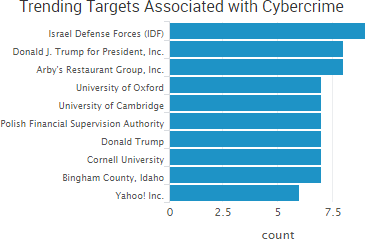
2017-02-24_ITT.png“The bug was serious because the leaked memory could contain private information and because it had been cached by search engines,” wrote John Graham-Cumming, the CTO of Cloudflare, which provides performance and security services to numerous major websites. “We have also not discovered any evidence of malicious exploits of the bug or other reports of its existence.”

The bug was discovered by researcher Tavis Ormandy on February 17, and the data leakage may date back to September 22. However, the greatest period of impact was between February 13 and February 18 “with around 1 in every 3,300,000 HTTP requests through Cloudflare potentially resulting in memory leakage,” the company said. Popular services such as Uber, 1Password, FitBit, OkCupid, and many more use Cloudflare. Uber told media outlets the impact on its customers is minimal since “very little Uber traffic actually goes through Cloudflare,” and 1Pass said the company “designed 1Password with the expectation that SSL/TLS can fail” exactly for these types of incidents.

Days before the public disclosure, Ormandy wrote: “I’m finding private messages from major dating sites, full messages from a well-known chat service, online password manager data, frames from adult video sites, hotel bookings. We’re talking full HTTPS requests, client IP addresses, full responses, cookies, passwords, keys, data, everything.” Then in another comment, “We’re still working on identifying data that needs to be purged from caches.”

As Wired reported, efforts to discover any leaked data that has been cached and not yet scrubbed “has become something of an internet-wide scavenger hunt.”
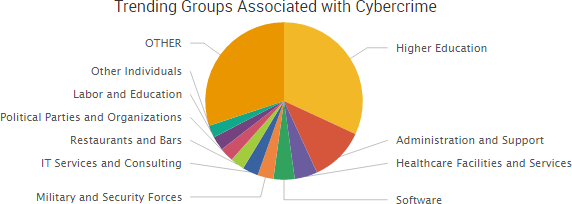
2017-02-24_ittgroups

Other trending cybercrime events from the week include:

  • Presidential campaign website defaced: A hacker going by the name “Pro_Mast3r” defaced a presidential campaign website for Donald Trump with a message that read, in part, “Peace From Iraq.” The hacker told Brian Krebs that he exploited a DNS misconfiguration to assume control of secure2.donaldjtrump.com.
  • New databases continue to be sold on the dark web: An actor using the name “Berkut” is selling a database of 950,000 user accounts for the website of the music festival Coachella that was allegedly stolen this month. Motherboard confirmed the legitimacy of the database, which contains email addresses, usernames, and hashed passwords. The $300 listing claims that 360,000 of the accounts are related to the main Coachella website and the other 590,000, which contain additional information such as IP addresses, are related to the message board.
  • Employees and students access sensitive data: Dignity Health St. Joseph’s Hospital and Medical Center is notifying approximately 600 patients that a part-time hospital employee viewed portions their medical records without a business reason between October 1, 2016, and November 22, 2016. An Ohio Department of Taxation employee was fired for accessing the confidential tax information of relatives and acquaintances dozens of times. A student of the South Washington County school district in Minnesota hacked into the district’s server and downloaded the data of more than 15,000 people to an external hard drive in January.
  • Cybercrime-related arrests and sentencing: On Wednesday, February 22, UK law enforcement announced the arrest of a 29-year old British man charged with suspicion of carrying out the cyber attack against Deutsche Telekom in November of last year, which impacted up to 900,000 customers of the ISP. SurfWatch Labs analysts have moderate confidence that this individual is the hacker known as “Bestbuy,” and additional researchers have said the actor also used the alias “Popopret.” A former systems administrator for Georgia-Pacific was sentenced to 34 months in prison and ordered to pay damages of more than $1 million after pleading guilty to remotely accessing the plant’s computer system and intentionally transmitting code and commands designed to cause significant damage to Georgia-Pacific and its operations.
  • Other cybercrime announcements:  The personal information of 55 million voters in the Philippines was compromised when a computer from the Office of the Election Officer in Wao, Lanao del Sur was stolen, but the data was encrypted using the AES-256 protocol. A spear phishing campaign against individuals in the Mongolian government used the popular remote access tool Poison Ivy as well as two publicly available techniques to evade AppLocker application whitelisting, four stages of PowerShell scripts to make execution difficult to trace, and decoy documents to minimize user suspicion. The Texas Department of Transportation said a breach of its automated administrative system affected a small number of employees whose information was compromised and potentially altered. Actress Emily Ratajkowski is the latest celebrity to have an iCloud account containing sensitive information hacked.

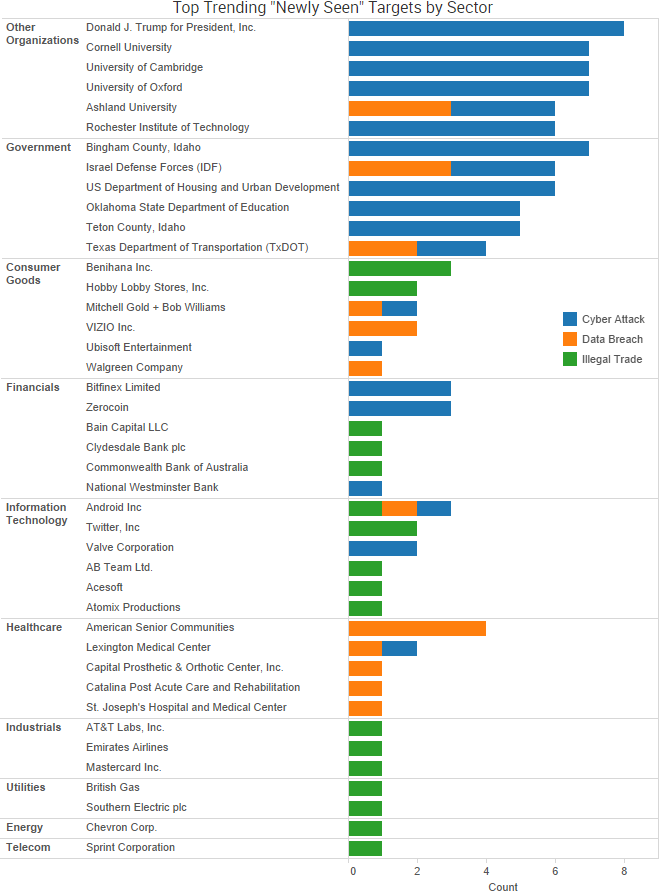
SurfWatch Labs collected data on many different companies tied to cybercrime over the past week. Some of those “newly seen” targets, meaning they either appeared in SurfWatch Labs’ data for the first time or else reappeared after being absent for several weeks, are shown in the chart below.
2017-02-24_ittnew

Cyber Risk Trends From the Past Week

2017-02-24_riskscoresThe Cloudflare bug can be traced back to a single character of code, which resulted in a buffer overrun, the company said.

“The Ragel code we wrote contained a bug that caused the pointer to jump over the end of the buffer and past the ability of an equality check to spot the buffer overrun,” Graham-Cumming said. “Had the check been done using >= instead of == jumping over the buffer end would have been caught.”

Cloudflare wasn’t the only company to face issues due to a single character. Zerocoin announced last Friday that a a typographical error of a single additional character in code allowed an attacker to create Zerocoin spend transactions without a corresponding mint, resulting in the creation of about 370,000 Zcoins. Zerocoin discovered the bug when it noticed the total mint transactions did not match up with the total spend transactions. All but around 20,000 of the Zcoins were completely sold for around 410 BTC in profit. “Despite the severity of the hack, we will not be forfeiting or blacklisting any coins,” Zerocoin wrote in an announcement. “Trading will resume once pools and exchanges have had time to update their code. A new release will be pushed out pretty soon.”

These types of small issues continue to cause major issues for organizations. This past week also saw reports that a database belonging to digital publisher Ziff Davis could have been exfiltrated due to a website configuration issue affecting itmanagement.com, potentially exposing 7.5 million records. The database contained names, phone numbers, employment details, and email and employer addresses, as well as contact information for users registered on other Ziff Davis properties. Contact information for anyone in the shared database could have been viewed by incrementing or decrementing a field in a URL belonging to one Ziff Davis publication, according to multiple researchers.

There was also the discovery that more than 1.4 million emails sent over Harvard Computer Society (HCS) email lists were found to be public, including emails divulging Harvard students’ grades, financial aid information, bank account numbers for some student organizations, advance copies of a final exam, answer keys to problem sets, and more – likely since the default setting for HCS list archives was public. In addition, New York’s Stewart International Airport publicly exposed 760GB of server backup data for over a year due a network storage drive, which was installed by a contracted third-party IT specialist, that contained several backup images of servers and was not password protected.

The week’s incidents are yet another reminder that a good portion of effective cyber hygiene revolves around looking inward at an organization’s technology, policies, and procedures and their associated cyber risk.

Weekly Cyber Risk Roundup: Yahoo’s Value Drops and New Regulations

Yahoo is once again back in the news for a variety of reasons, including a reported third data breach. However, it appears the reports of a “new breach” stem from additional notifications that were sent to some users on Wednesday regarding forged cookies being used to access accounts. Yahoo first disclosed that it was notifying affected users that “an unauthorized third party accessed our proprietary code to learn how to forge cookies” in its December 2016 breach announcement.

2017-02-20_ITT.png

“As we have previously disclosed, our outside forensic experts have been investigating the creation of forged cookies that could have enabled an intruder to access our users’ accounts without a password,” a Yahoo spokesperson said regarding the recent account notifications. “The investigation has identified user accounts for which we believe forged cookies were taken or used. Yahoo is in the process of notifying all potentially affected account holders.”

In addition to users potentially growing weary of Yahoo’s months-long series of breach notifications, two senators sent a letter to Yahoo questioning the company’s “willingness to deal with Congress with complete candor” about the recent breaches. Initial inquiries showed that “company officials have been unable to provide answers to many basic questions about the reported breaches” and a planned congressional staff meeting was cancelled at the last minute by Yahoo, wrote Sen. John Thune, chairman of the Senate Commerce Committee, and Sen. Jerry Moran, chairman of the Consumer Protection and Data Security Subcommittee. The letter requests answers to five questions related to Yahoo’s breaches and subsequent response by February 23.

All of that negative press may translate into hundreds of millions of dollars being cut from Yahoo’s pending deal to be acquired by Verizon. Bloomberg reported last Wednesday that the two companies were close reaching a renegotiated deal that would lower the price of the core Yahoo business from $4.8 billion to about $4.55 billion — a $250 million dollar discount. In addition, the remaining aspects of Yahoo, to be renamed Altaba Inc., will likely share any ongoing legal responsibilities related to the breaches, although the deal is not yet final.

2017-02-20_ittgroups

Other trending cybercrime events from the week include:

  • Variety of espionage campaigns: A campaign dubbed “Operation BugDrop” targeted a broad range of Ukrainian targets by remotely controlling computer microphones in order to eavesdrop on sensitive conversations, and at least 70 victims have been confirmed in a range of sectors including critical infrastructure, media, and scientific research. A phishing campaign against journalists, labor rights activists, and human rights defenders used fully-fleshed out social media accounts of a fake UK university graduate to engage with targets for months and make repeated attempts to bait the targets into handing over Gmail credentials. Spyware from the Israeli cyberarms dealer NSO Group has been found on the phones of nutrition policy makers, activists and government employees that are proponents of Mexico’s soda tax, leading to concerns over how the NSO Group is vetting potential government clients and whether a Mexican government agency is behind the espionage.
  • Actor breached dozens of organizations: A hacker going by the name “Rasputin” has breached more than 60 universities and government agencies by allegedly using a self-developed SQL injection tool. The targets included dozens of universities in the U.S. and the UK, city and state governments, and federal agencies like the Department of Health and Human Services.
  • Employee data compromised: In addition to a growing list of organizations impacted by W-2 phishing emails, Lexington Medical Center announced a W-2 breach involving unauthorized access to its employee information database known as eConnect/Peoplesoft. The city of Guelph, Ontario, is notifying some employees that their personal information was compromised when a flash drive containing sensitive documents was accidentally given to a former city employee as part of an ongoing wrongful dismissal lawsuit. A data breach at the San Antonio Symphony compromised the data of about 250 employees.
  • Ukraine accuses Russia of critical infrastructure attacks: Ukrainian officials accused Russia of targeting their critical infrastructure with malware designed to attack specific industrial processes, including modules that sought to harm equipment inside the electric grid. The attacks employed a mechanism dubbed “Telebots” to infect computers that control infrastructure. Researchers believe that Telebots evolved from BlackEnergy, a group that first attacked Ukraine’s energy industry in December 2015.
  • Other cybercrime announcements: FunPlus, the creators of the popular mobile game Family Farm Seaside, said it was the victim of a data breach, and the actor behind the attack claims to have stolen millions of email addresses as well as 16GB of product source code. Columbia Sportsware announced that it is investigating a cyber-attack on its prAna online clothing store. Hackers have stolen data on approximately 3,600 customers of Danish telecom company 3 and then attempted to blackmail the company for millions of dollars in return for not making the data public. Family Service Rochester, an organization that works with families with child welfare or family violence concerns, is notifying individuals of unauthorized access to their personal information, as well as a ransomware infection. Bingham County computer servers were infected with ransomware. The Russian Healthcare Ministry recently experienced its “largest” DDoS attack in recent years.

SurfWatch Labs collected data on many different companies tied to cybercrime over the past week. Some of those “newly seen” targets, meaning they either appeared in SurfWatch Labs’ data for the first time or else reappeared after being absent for several weeks, are shown in the chart below.

2017-02-20_ittnew

Cyber Risk Trends From the Past Week

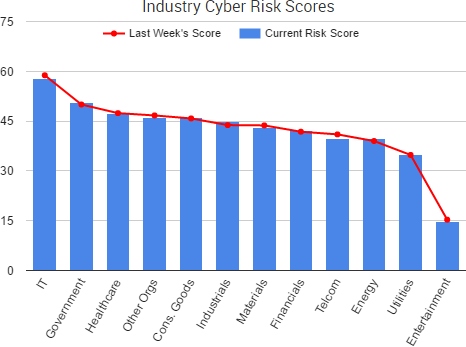
2017-02-20_riskscoresIn addition to Yahoo, the past few weeks have seen several new regulatory announcements and fines related to data breaches.

For starters, New York Governor Andrew Cuomo announced that new regulations will go into effect on March 1, 2017, “to protect New York’s financial services industry and consumers from the ever-growing threat of cyber-attacks.” The regulation includes minimum standards organizations must meet, such as:

  • Controls relating to the governance framework for a robust cybersecurity program, including adequate funding, staffing, oversight, and reporting
  • Standards for technology systems, including access controls, encryption, and penetration testing
  • Standards to help address breaches, including an incident response plan, preservation of data, and notice to the Department of Financial Services (DFS) of material events
  • Accountability by requiring identification and documentation of material deficiencies, remediation plans, and annual certifications of regulatory compliance to DFS

In addition to the New York regulations, the Australian data breach notification law passed through the Senate and will go into effect either by a proclaimed date or a year after receiving Royal Assent. Violating these soon-to-be-implemented rules can be costly for organizations. Over just the past week organizations of various sizes announced breach-related settlements — most of which were compounded by not following required security practices.

  • Memorial Healthcare Systems will pay $5.5 million for failing “to implement procedures with respect to reviewing, modifying and/or terminating users’ right of access, as required by the HIPAA Rules.”
  • Horizon Blue Cross Blue Shield of New Jersey will pay $1.1 million over the theft of unencrypted laptops.
  • Grand Buffet restaurant will pay a $30,000 over the theft of payment card information by an employee and failing to implement corrective actions after being informed about the mishandling of credit cards.

Following the cybersecurity best practices outlined by regulatory bodies can not only help prevent many security incidents from occurring in the first place, but in the event of a breach those organizations are far less likely to face the wrath of government bodies.

Weekly Cyber Risk Roundup: New PoS Breaches and Simple Attacks

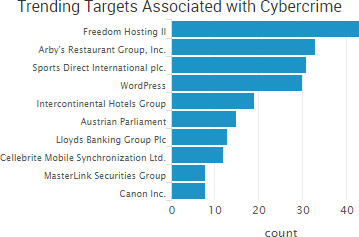
The week’s top trending event was the compromise at Freedom Hosting II, which has been estimated to host as much as 20 percent of active dark web sites. As a result, thousands of dark web sites were taken offline, and the stolen data has since been widely shared.

2017-02-12_ITT.pngSecurity researcher Troy Hunt, who reviewed some of the data, said that 381,000 email addresses were exposed along with a 2.2GB MySQL file that contained database backups of customers with “a very broad range of data from different systems.” Hunt added that “a significant amount” of that data is illegal. The hacker taking credit for the incident told Motherboard that the discovery of 10 sites hosting child pornography was the impetus for escalating the attack from read-only access to gaining system privileges, which was done using a 21-step process.

The other big news of late is the announcement of several new point-of-sale data breaches. InterContinental Hotels Group announced a point-of-sale breach affecting customers who used payment cards at the restaurants and bars of 12 properties, and fast-food chain Arby’s confirmed that malware was discovered on the payment systems of corporate locations. The incidents mirror the beginning of 2016, which saw similar breach announcement from Hyatt hotels and fast-food chain Wendy’s. The IGH breach is smaller than last year’s Hyatt announcement, which likely affected guests at 250 hotels, but the Arby’s breach may be comparable to the Wendy’s breach, which affected 1,025 locations.

More than 1,000 of the 3,300 total Arby’s restaurants are corporate owned; however, not every corporate location was affected, an Arby’s spokesperson said. Arby’s has yet to release official numbers or dates of the incident, but PSCU, a service organization that serves more than 800 credit unions, issued a non-public alert saying that more than 355,000 payment cards issued by PCSU member banks were compromised due to an incident at “a large fast food restaurant chain, yet to be announced to the public.” PCSU also estimated that the fast-food chain breach occurred between Oct. 25, 2016, and January 19, 2017.

2017-02-12_ittgroups

Other trending cybercrime events from the week include:

  • Polish financial regulator used to spread malware: A malicious actor compromised the internal systems of the Polish Financial Supervision Authority and used the financial regulator to spread malware to Polish banks. According to The Register, a modified JavaScript file likely resulted in visitors to the regulator’s site loading an external file that led to malicious payloads. A spokesperson said the regulator decided to take its entire system offline “in order to secure evidence.” Polish media have described the incident as the most serious attack ever on the Polish banking industry.
  • Extortion attacks continue: Taiwan brokerages are receiving DDoS extortion emails claiming to be from the group known as the “Armada Collective,” and several brokerages have reported DDoS attacks following those ransom demands. A malicious actor gained accessed to millions of messages and documents from the computer system of Doyen Global and leaked numerous emails from soccer star David Beckham after a failed blackmail attempt of “between €500,000 and a million.”
  • More government attacks: An attack against the Italian foreign ministry last spring compromised email communications for many months, but it did not affect the encrypted system used for classified communications. The Russian-linked APT 29 hacking group has been targeting Norwegian organizations with spear phishing emails. The attorney for Little Egg Harbor believes someone within the township is stealing data from the municipal computer systems and handing that confidential information over to a local political blogger. Hackers may have used stolen passwords to gain access to a Bureau of Consular Affairs email account that serves as a contact window to 117 Taiwanese overseas offices around the world. The former NSA contractor who faced charges in 2016 relating to the theft of 50 terabytes of highly sensitive data, allegedly stole more than 75 percent of the hacking tools belonging to the NSA’s elite hacking group known as the Tailored Access Operations.
  • Stolen and leaked databases: A database from the law enforcement forum PoliceOne was stolen in 2015 and the information of 700,000 members has been publicly distributed. A group of hackers claim to have a database of 20 million records stolen in 2014 from Bin Weevils, a British online children’s game owned by 55 Pixels. An actor using the name “zerodark70” is selling a database of 83,000 accounts from UPI.com, the website of the news agency United Press International. A large portion of the anti-piracy company Denuvo’s web database content is unsecured, and as a result information submitted via the company’s public contact form dating back to April 2014 has been posted online.
  • Other cybercrime announcements: A vulnerability in an October 2016 software update for the Michigan Data Automated System has exposed as many as 1.87 million Michigan workers’ information to a third-party vendor. UK sports retailer Sports Direct experienced a breach due to an attacker exploiting vulnerabilities in the unpatched version of the DNN platform the company was using to run a staff portal. Computer supplier Logic Supply announced there was unauthorized access to the company’s website on February 6, 2017. UK magazine publisher Future announced that its FileSilo website was breached. Singn and Arora Oncology Hematology in Michigan announced a data breach affecting 22,000 individuals.

SurfWatch Labs collected data on many different companies tied to cybercrime over the past week. Some of those “newly seen” targets, meaning they either appeared in SurfWatch Labs’ data for the first time or else reappeared after being absent for several weeks, are shown in the chart below.

2017-02-12_ittnew

Cyber Risk Trends From the Past Week

2017-02-12_riskscoresThe past week saw the continuation of several stories highlighted in recent risk reports.
For starters, malicious actors are exploiting the recently announced severe content injection vulnerability found in the WordPress REST API, which was fixed in the WordPress 4.7.2 update. At least twenty-four different campaigns are actively defacing WordPress sites. WordFence, which said that this is “one of the worst WordPress related vulnerabilities to emerge in some time,” reported that nearly 1.9 million defaced web pages have been indexed by Google as of February 10.

WordPress has an automatic update feature to protect against newly announced exploits being used by malicious actors, but a large number of websites appear to have disabled that feature and have not updated to version 4.7.2, which has been available since January 26.

As SurfWatch Labs continues to stress in blogs and articles, cyber threat intelligence clearly shows that the security threats are not as complex as some media and vendors make them out to be. Another example of simple but effective attacks is the growing number of organizations publicly tied to W-2 related breaches. Two weeks ago we wrote that the 2017 W-2 breach count had rose to 24 organizations. By last Friday that number had risen to 40. By Monday morning, it rose again to 48 – including school districts, colleges, healthcare organizations, manufacturers, payroll providers, restaurants, retailers and more.

IRS Commissioner John Koskinen warned that “this is one of the most dangerous email phishing scams we’ve seen in a long time.” These impersonation emails, also known as business email compromise scams, have proven to be effective, and they are costly for the organizations that fall victim to them. But they are not complex. They rely on three simple and straightforward aspects all good impersonators utilize:

  1. A simple backstory – The malicious actors utilize the built-in story of tax season.
  2. Appearing as though they belong – The emails matter-of-factly request information that is relevant to the payroll and human resource departments being targeted.
  3. Projecting authority – The requests appear to come from a higher-up such as a school superintendent or executive.

Many attacks that lead to data breaches are not sophisticated efforts carried out by actors using zero-day exploits; rather, they are opportunistic attacks leveraging public vulnerabilities and simple social engineering tactics. When it comes to managing cyber risk, ensure your organization can defend against these basic attacks before addressing more advanced – and often far less relevant – cyber threats.

Weekly Cyber Risk Roundup: Ransomware and Insecure Databases Dominate Headlines

Ransomware and extortion continue to dominate the headlines in 2017. The past week saw several widely reported incidents involving service outages and lost data due to infections, as well as warnings that malicious actors are attempting to extort organizations via the threat of DDoS attacks.

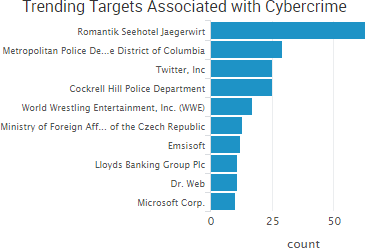
2017-02-04_ITT.pngThe Austrian hotel Romantik Seehotel Jägerwirt paid approximately $1600 in ransom after ransomware locked the hotel out of its computer systems and the hotel was unable to issue new key cards to arriving guests. The hotel’s reservation system was down for 24 hours; however, the initial media reports that customers were locked in their rooms due to the incident were false, the owner told Motherboard. The hotel’s managing director told The Verge that the issue was that the hotel could not program keycards for the guests checking in on the same day due to the system being down. The Local reported that it was the fourth time hotel had been hit by such an attack, prompting the company to go public in order to warn others about these types of cybercrime incidents.
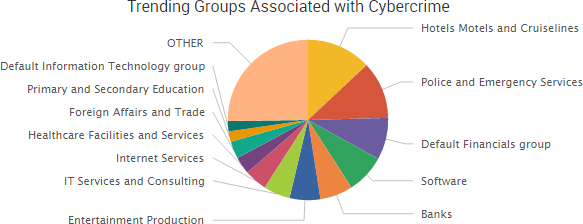
Several other ransomware-related service outages were announced this week. Licking County, Ohio, shut down more than a thousand computers due to a ransomware infection. A variety of departments, such as the 911 call center, were unable to use computers and had to switch over to other forms of communication, and services such as court house phones and the issuing of court documents were made unavailable, 10TV reported. In addition, The Washington Post reported that ransomware left 123 of the 187 Washington D.C. police surveillance cameras, which monitor public spaces across the city, unable to record from January 12 to January 15. The ransom demand was not paid as the police simply removed all software and restarted the system at each site.

Finally, Hong Kong’s Securities and Futures Commission warned that brokers across the city are being targeted with DDoS attacks and extortion demands from cybercriminals, and it is urging financial institutions to implement and review security measures.

2017-02-04_ittgroups

Other trending cybercrime events from the week include:

  • Warning issued following two dozen W-2 breach announcements: The Internal Revenue Service, state tax agencies and the tax industry issued an urgent alert on Thursday warning employers that W-2 phishing scams are spreading into sectors beyond the corporate world, including school districts, tribal organizations and nonprofits. In addition, the scammers are following up the request with a more traditional fraudulent wire transfer request, resulting in some organizations losing both employees’ W-2s and thousands of dollars due to wire transfers. SurfWatch Labs has identified at least 24 organizations publicly tied to W-2 data breaches over the past two weeks. The emails are a form of the popular Business Email Compromise scam, such as the one against Sedgwick County that led to $566,000 being fraudulently transferred.
  • Shamoon malware strikes again: Saudi Arabia’s telecom authority is warning organizations to be on the lookout for Shamoon 2 after recent attacks led to at least three government agencies and four private sector companies going offline for 48 hours. Among those targeted were multiple petrochemical and IT services companies, which reportedly shut down their networks in an attempt to protect themselves. It appears the goal of the attack was disruption, not data exfiltration, similar to previous Shamoon attacks; however, the incident was less destructive than similar attacks in November as backups were more commonplace due that previous incident.
  • Czech foreign ministry targeted with DNC-style hack: A foreign government hacked the email system of the Czech foreign ministry and accessed the email system used by employees to communicate with people outside the ministry in an attack similar to the breach of the Democratic National Committee, Foreign Minister Lubomir Zaoralek said. A spokesperson for the Czech minister said the scale of the attack is still being assessed but noted that other ministries “might be in a little bit of a problem.” Officials indirectly accused Russia of carrying out the attacks.
  • Printing company exposes 400 GB of data: A PIP Printing and Marketing Services franchise branch located in California exposed 400 gigabytes of sensitive information due to a publicly available backup server without any password protection. The exposed data includes 50 GB of scanned documents relating to court cases, medical records, well-known companies and celebrities, as well as an archive of correspondence with attached documents, some of which have credit card numbers and billing details in plain text.
  • Other cybercrime announcements: The Xbox360 ISO and PSP ISO forums, which provides gamers with links to free and often-illegal game downloads, were hacked in September 2015 and the details of 2.5 million accounts were leaked. Security firms Dr. Web and Emsisoft were targeted by DDoS attacks after publishing research related to a botnet of Linux devices and an update for the Merry Christmas ransomware (MRCR) decryptor tool. The hacking group OurMine hacked into a variety of social media accounts belonging to the WWE and CNN. Toys “R” Us is forcing reward members to reset account passwords after the vendor responsible for managing the program notified the company of attempts to access customer accounts and steal coupons using credentials reused from other data breaches.

SurfWatch Labs collected data on many different companies tied to cybercrime over the past week. Some of those “newly seen” targets, meaning they either appeared in SurfWatch Labs’ data for the first time or else reappeared after being absent for several weeks, are shown in the chart below.

2017-02-04_ittnew

Cyber Risk Trends From the Past Week

2017-02-04_riskThe past week once again saw numerous organizations exposing data due to insecure public databases, and several of those databases reportedly contained data that was no longer in use.

Security researcher Chris Vickery discovered unsecured database backup files from Indycar, which exposed the personal information of more than 200,000 users as well as Indycar employee login credentials. The user data was related to a now-retired Indycar bulletin board and contained sensitive information such as names, usernames, email and physical addresses, dates of birth, password hashes and security questions and answers.

As Vickery noted, holding that user data was unnecessary since the board was no longer in use:

Why do companies hold on to password hashes long after the associated site has been shuttered? That’s nothing but liability. They are putting customers at risk for no gain. There was absolutely nothing for Indycar to gain by holding on to these password hashes. And now they are faced with negative PR as word of the situation gets out to racing fans.

In addition, Polish game development studio CD Projekt RED, which developed the popular Witcher franchise, announced that a now-obsolete forum database was hacked and more than 1.8 million user credentials were stolen in March 2016.

“It’s the old database we used to run the forum before we migrated to the login system powered by our sister company — GOG.com,” the company wrote in a post on its forums. “At the time of the event, the database was not in active use, as forum members had been asked to create better-secured GOG.com accounts almost a year earlier.”

The incidents are reminders that when it comes to cybersecurity, less data tends to equals less risk. This is particularly true for data that is no longer required to be held and may therefore receive less scrutiny than data that is being actively used. In short, if your organization is holding on to unnecessary data, it is opening itself up to unnecessary risk.